PM Modi hails Cabinet nod to GOBARdhan Scheme for ten-fold CBG boost
Synopsis
India's Cabinet has approved an expanded GOBARdhan Scheme targeting a near ten-fold increase in Compressed Biogas production. PM Modi called the move a vital step for clean energy, rural prosperity, and self-reliance under the Atmanirbhar Bharat vision.
Key Takeaways
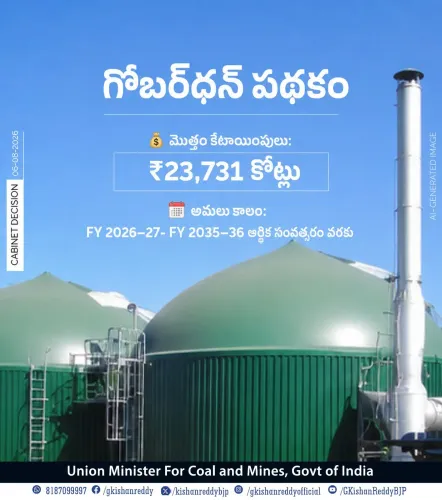
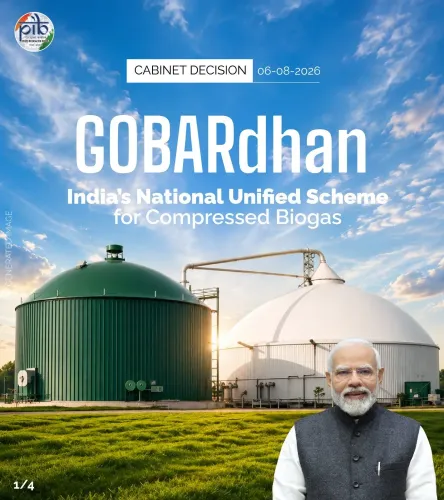
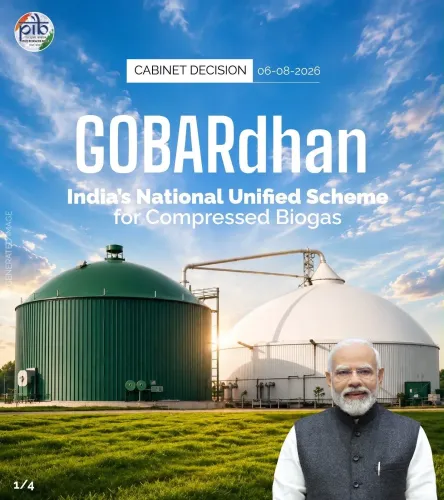
The Cabinet approved an expanded GOBARdhan Scheme on August 6, 2026 , targeting nearly a ten-fold increase in domestic CBG production.
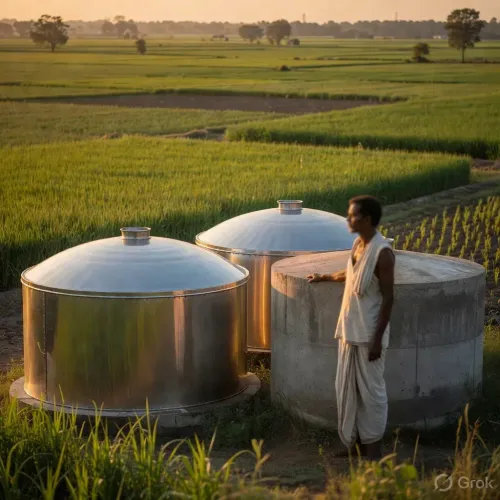
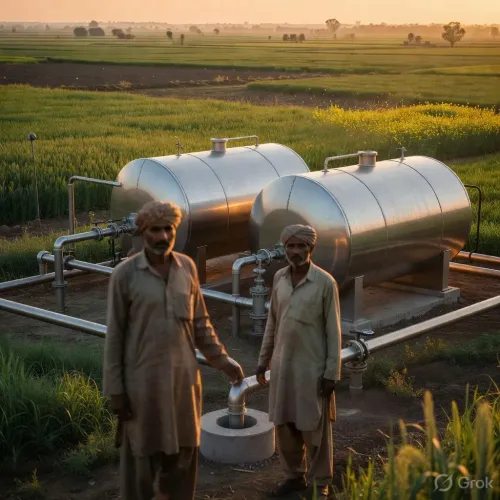
GOBARdhan converts cattle dung and organic agricultural waste into Compressed Biogas and organic fertilizer.
The scheme was originally launched in 2018 under the Swachh Bharat Mission (Gramin) .
CBG is positioned as a renewable, domestically produced alternative to imported natural gas, supporting India's energy-security goals.
The expansion aligns with the Atmanirbhar Bharat initiative launched in 2020 to reduce India's dependence on fossil fuel imports.
Key beneficiaries include rural farmers supplying organic feedstock and biogas producers building and operating CBG plants.
From cattle dung to clean fuel — Prime Minister Narendra Modi on Thursday, August 6, 2026, welcomed a landmark Cabinet decision that could reshape India's rural energy landscape, announcing approval for an expanded GOBARdhan Scheme aimed at increasing domestic Compressed Biogas (CBG) production nearly ten-fold.
What the Cabinet approved — and why it matters
The Cabinet's green light to the expanded GOBARdhan Scheme is designed to convert organic waste — cattle dung, crop residue, municipal solid waste — into CBG, a renewable substitute for imported natural gas. The target: a near ten-fold surge in domestic CBG output. That number is not incidental. India spends tens of billions of dollars annually on fossil fuel imports; every cubic metre of homegrown biogas chips away at that bill.
Prime Minister Modi called it 'a vital step towards clean energy, rural prosperity and realising our collective dream of an Atmanirbhar Bharat' (self-reliant India). The framing is deliberate — this is simultaneously an energy-security move, a rural-income story, and a climate commitment rolled into one Cabinet note.
GOBARdhan's journey from Swachh Bharat to energy backbone
The GOBARdhan Scheme — shorthand for Galvanising Organic Bio-Agro Resources Dhan — was first launched in 2018 under the Swachh Bharat Mission (Gramin), with a focus on converting bio-agro waste into biogas and organic fertilizer. The logic was circular: cleaner villages, richer farmers, greener fuel. The National Policy on Biofuels, also revised in 2018, gave CBG a formal policy home alongside ethanol and other advanced biofuels.
What the 2026 Cabinet decision signals is a shift in ambition — from a rural sanitation adjunct to a mainstream energy-supply programme. A ten-fold production target demands industrial-scale CBG plants, supply-chain investment, and offtake guarantees. The two key groups watching the rollout most closely are rural farmers, who supply the raw organic feedstock, and biogas producers, who need viable unit economics to build and operate plants at scale.
The Atmanirbhar energy calculus
CBG's appeal sits at the intersection of three of the government's stated priorities: reducing import dependence, generating rural income, and meeting India's climate commitments. Biogas from organic waste is carbon-neutral by design — the carbon released was recently absorbed by growing crops — making it a credible tool for decarbonising cooking, transport, and industrial heat.
The Atmanirbhar Bharat initiative, launched in 2020, set self-reliance as a cross-sectoral goal. Energy has always been its most consequential frontier: a country that imports the majority of its crude oil and natural gas carries a structural vulnerability in every budget cycle. An expanded domestic CBG sector, if it hits its targets, would be one of the more tangible expressions of that self-reliance doctrine.
The real test now is execution — how quickly new CBG plants come online, whether farmers receive competitive prices for feedstock, and whether the fuel reaches the distribution networks where it can displace the most imports. The scheme has the policy architecture. The ten-fold ambition gives it a measurable finish line.
Point of View
Farm income, and climate targets — three political wins in one policy note. A ten-fold CBG production target is an unusually bold quantitative commitment, raising the stakes for delivery and making the scheme's progress easily measurable by critics and supporters alike. The linkage to Atmanirbhar Bharat keeps the announcement inside the government's signature self-reliance narrative, reinforcing it as an economic-sovereignty argument rather than merely an environmental one. Whether the scheme can attract the private investment needed to build CBG plants at the required scale will be the defining test of its ambition.
NationPress
21 Sept 2026
Frequently Asked Questions
What is the GOBARdhan Scheme?
The GOBARdhan Scheme — Galvanising Organic Bio-Agro Resources Dhan — converts cattle dung and organic agricultural waste into Compressed Biogas and organic fertilizer. It was first launched in 2018 under the Swachh Bharat Mission (Gramin) to promote rural cleanliness and energy generation.
What did the Cabinet approve for GOBARdhan in 2026?
The Cabinet approved an expansion of the GOBARdhan Scheme with the aim of increasing India's domestic Compressed Biogas (CBG) production by nearly ten times the current level, boosting rural income and reducing dependence on imported natural gas.
What is Compressed Biogas (CBG) and how is it different from regular biogas?
Compressed Biogas is biogas — produced from organic waste — that has been purified and compressed to a quality and pressure comparable to Compressed Natural Gas (CNG). It can be used as a direct substitute for CNG in vehicles and industry, making it more versatile than conventional low-pressure biogas.
How does GOBARdhan connect to Atmanirbhar Bharat?
Atmanirbhar Bharat, launched in 2020, is India's self-reliance initiative aimed at reducing import dependence across sectors. Expanding domestic CBG production directly reduces the need to import natural gas, making energy self-reliance one of the scheme's core goals alongside rural development and clean energy.
Who benefits from the expanded GOBARdhan Scheme?
Rural farmers benefit by earning income from supplying cattle dung and crop residue as feedstock. Biogas producers and entrepreneurs gain a larger market and policy support to set up CBG plants. Consumers and industries benefit from a domestically produced, cleaner fuel alternative.