Khattar inaugurates 1857 Martyrs Memorial in Ambala Cantonment
Synopsis
Union Minister Manohar Lal Khattar inaugurated the Shaheed Smarak honouring martyrs of India's First War of Independence at Ambala Cantonment on 5 November 2026, continuing a national effort to institutionalise the memory of the 1857 uprising at its historic military sites.
Key Takeaways
Union Minister Manohar Lal Khattar presided over the inauguration of the Shaheed Smarak at Ambala Cantonment on 5 November 2026 .
The memorial honours martyrs of the First War of Independence (1857) , which is central to India's official freedom narrative.
Ambala Cantonment has direct historical links to the early phases of the 1857 Indian Rebellion against British rule.
The event continues a broader pattern of BJP-led administrations backing physical memorials at 1857 battle and cantonment sites across northern India.
Earlier nationwide commemoration efforts, including those tied to the 150th anniversary in 2007 , spurred renovation and construction at multiple such memorial sites.
Potential follow-up announcements on additional 1857 memorials at other cantonments and parliamentary debate on cultural-heritage funding are expected.
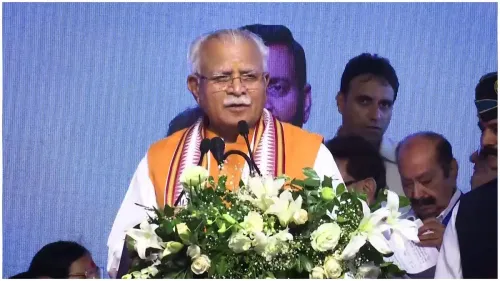
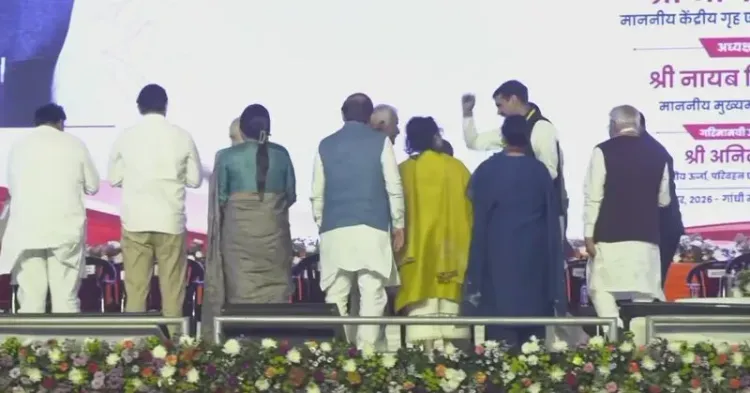
A martyr's memory, long overdue its monument, got one on Thursday, 5 November 2026 — when Union Power Minister Manohar Lal Khattar presided over the inauguration ceremony of the Shaheed Smarak dedicated to India's First War of Independence at Ambala Cantonment, Haryana.
Khattar shared the live-stream of the event on X, announcing the ceremony with the words 'Aazadi ki pehli ladai ka Shaheed Smarak ka udghatан samaroh, Ambala Chhaavni' — 'Inauguration ceremony of the Martyrs Memorial of the first war of independence, Ambala Cantonment.'
Why Ambala Cantonment carries the weight of 1857
Ambala Cantonment is not a symbolic choice — it is a historically loaded one. The cantonment holds direct links to the early phases of the 1857 Indian Rebellion, which official Indian historiography designates the First War of Independence against British colonial rule. Haryana cantonments were among the flashpoints where the uprising gathered momentum before spreading across northern India, and Ambala's military presence made it a nerve centre of that resistance.
Giving that history a permanent, physical address is precisely what this memorial does. For residents, armed forces personnel stationed there, and historians of the period, the Shaheed Smarak transforms an abstract national narrative into something you can stand in front of.
A pattern of institutionalising 1857's memory
This inauguration fits into a deliberate, decades-long project. Successive central governments — with particular emphasis under BJP-led administrations — have backed the construction and renovation of memorials, museums, and heritage sites at cantonments and battle sites associated with 1857. The 150th anniversary commemorations in 2007 triggered a wave of such initiatives across northern India, and that momentum has continued in fits and starts ever since.
Khattar, as a senior BJP leader and former Chief Minister of Haryana, brings added political and regional significance to the event. His presence signals that the Union government views this not merely as a local heritage project but as part of a broader national cultural framework — one that places the 1857 revolt at the centre of India's freedom story.
What follows from Ambala
The question now is whether this inauguration catalyses a fresh round of announcements on similar memorials at other cantonments linked to 1857 — a pattern that has emerged after such high-profile events before. Any follow-up funding commitments or references in parliamentary sessions on cultural-heritage budgets will indicate how far the government intends to extend this commemorative push.
Ambala has set the stone. The rest of 1857's map is waiting to be marked.
Point of View
Not just 1947, as the founding act of Indian resistance. For Khattar, a Haryana stalwart presiding over a memorial in Haryana's most historically charged military town, the event carries both national symbolism and local electoral resonance. The choice of a live-stream on X signals a deliberate effort to bring heritage commemoration into the digital public square, broadening its audience beyond those physically present. Watch whether this triggers budgetary commitments for similar memorials at other cantonment towns — that will reveal the depth of the political will behind the gesture.
NationPress
5 Nov 2026
Frequently Asked Questions
What is the Shaheed Smarak at Ambala Cantonment?
The Shaheed Smarak at Ambala Cantonment is a martyrs memorial dedicated to those who participated in India's First War of Independence in 1857. It was inaugurated by Union Minister Manohar Lal Khattar on 5 November 2026.
Why is Ambala Cantonment significant to the 1857 revolt?
Ambala Cantonment has direct historical links to the early phases of the 1857 Indian Rebellion against British colonial rule, making it one of the symbolic flashpoints of what India officially calls the First War of Independence.
Who inaugurated the 1857 memorial at Ambala?
Union Minister of Power and Housing & Urban Affairs Manohar Lal Khattar, a senior BJP leader and former Chief Minister of Haryana, inaugurated the memorial on 5 November 2026.
What is India's official position on the 1857 revolt?
In India's official historiography, the 1857 Indian Rebellion against British rule is designated the 'First War of Independence,' recognising it as the earliest large-scale organised uprising against colonial power.
Are there other 1857 memorials planned in India?
Successive central governments have supported memorials at multiple 1857 cantonment and battle sites across northern India. Whether the Ambala inauguration will prompt fresh announcements for similar projects at other cantonments is being closely watched.