Anurag Thakur backs Amit Shah's Karnal rally for democracy drive
Synopsis
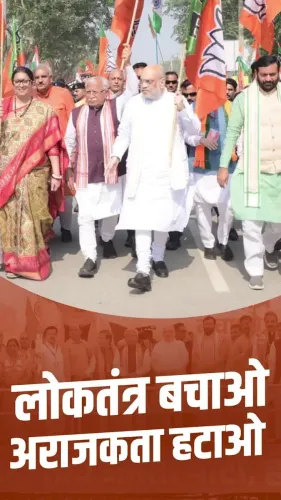
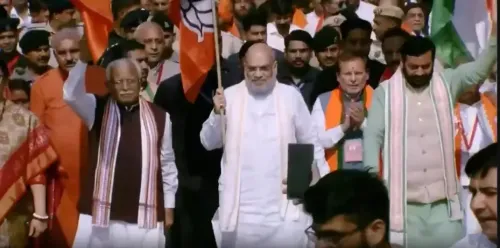
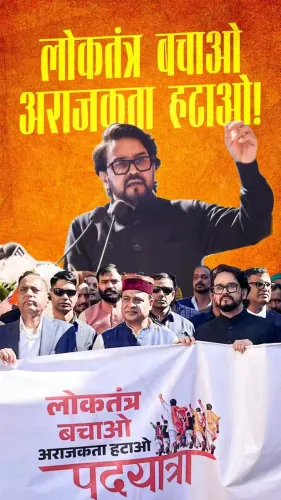
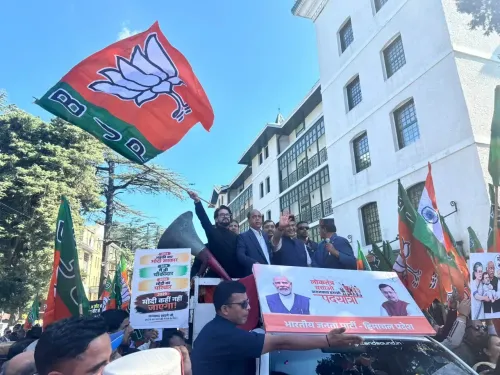
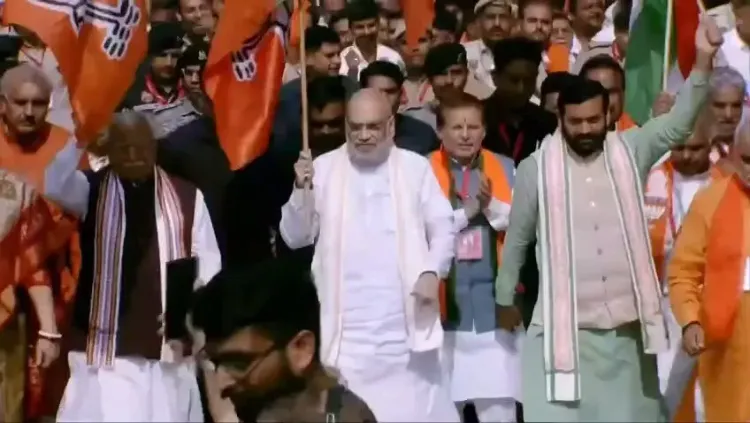
BJP MP Anurag Thakur on 5 November 2026 highlighted a massive Karnal rally led by Amit Shah under BJP's 'Save Democracy, Remove Anarchy' campaign, declaring the crowd a public rebuke to those allegedly conspiring to defame India's elected government.
Key Takeaways
Amit Shah led a large public rally on 5 November 2026 in Karnal, Haryana under the BJP's 'Loktantra Bachao, Arajakta Hatao' campaign banner.
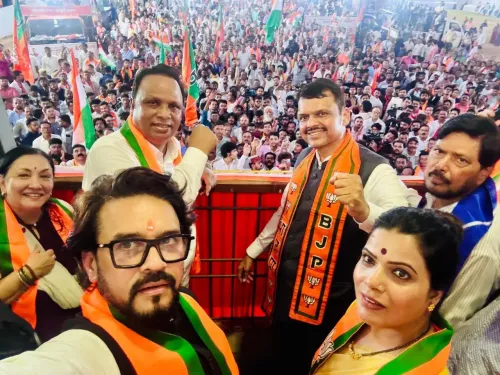
Anurag Thakur , BJP Lok Sabha MP from Hamirpur, Himachal Pradesh , amplified the rally on X, calling it the nation's roar against anti-national conspiracies.
The campaign frames the BJP's mobilisation as a defence of India's democratic mandate against what the party calls organised attempts to spread anarchy.
Karnal has previously hosted major BJP rallies, making it a strategically chosen venue for demonstrating Haryana-level organisational strength.
BJP's use of 'save democracy' language against opposition critics is a pattern that dates back to 2014 and intensifies during major protest cycles.
Opposition reactions and potential expansion of the campaign to other Haryana cities or neighbouring states remain the key developments to watch.
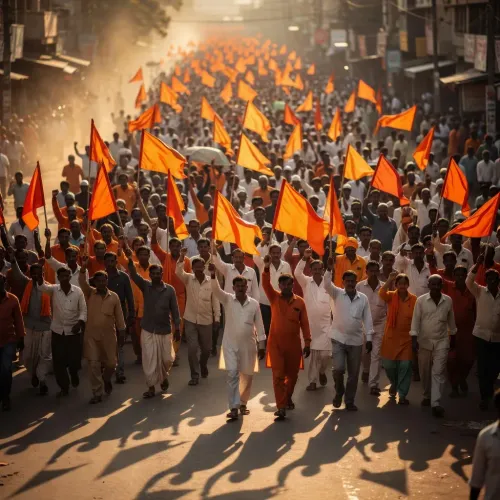
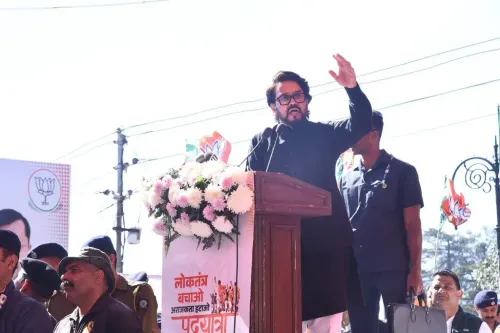
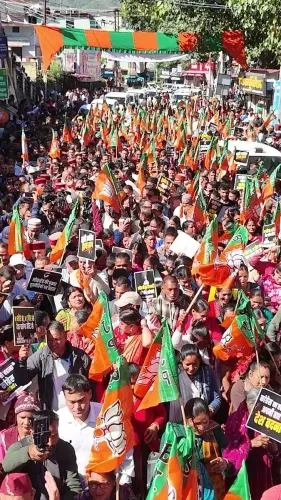
A sea of supporters flooding the streets of Karnal sent a pointed political signal on 5 November 2026 — and BJP MP Anurag Thakur made sure the message landed clearly. Sharing visuals of the mass gathering led by Union Home and Cooperation Minister Amit Shah, Thakur declared that every conspiracy to defame India's democracy would be met with a crushing public response.
Posting on X, Thakur wrote in Hindi: 'लोकतंत्र बचाओ, अराजकता हटाओ अभियान हर देशविरोधी साजिश के विरुद्ध देश की हुंकार है' — 'The Save Democracy, Remove Anarchy campaign is the nation's roar against every anti-national conspiracy.' He added that those working at the behest of their 'masters' to discredit the elected government and spread anarchy would be taught a lesson by the people.
Karnal as BJP's latest show of strength in Haryana
Karnal, a politically significant city in Haryana, has repeatedly served as a stage for national BJP leadership to demonstrate grassroots reach. The presence of Amit Shah alongside senior party leaders and office-bearers lent the rally its top-tier weight — a signal that the campaign carries central leadership's direct backing, not just state-level momentum.
BJP has used large public mobilisations in key Haryana cities as a consistent tool to project organisational depth, particularly during periods when the party faces pointed criticism from opposition groups. The optics of a packed street rally, Thakur argued, speak louder than any political accusation.
The 'Loktantra Bachao, Arajakta Hatao' campaign and its framing
The 'Loktantra Bachao, Arajakta Hatao Abhiyan' — the Save Democracy, Remove Anarchy Campaign — frames the BJP's response to what the party characterises as coordinated efforts to delegitimise the elected Central government. The language Thakur used is pointed: references to unnamed people acting on the instructions of 'their masters' and spreading 'anarchy' are a recognisable BJP rhetorical device aimed at opposition activists and critics.
This style of political counter-mobilisation — framing the ruling party's rally as a defence of democracy rather than a partisan gathering — has been a fixture of BJP communications since 2014, escalating during major opposition protest cycles. The choice of Karnal and the visible scale of the crowd are presented as organic popular validation rather than party organisation.
Thakur's amplification and what comes next
Anurag Thakur, the Lok Sabha MP from Hamirpur, Himachal Pradesh and former Union Minister of Information and Broadcasting, has consistently been among the BJP's most visible communicators on social media. His post underlines how centrally the party is pushing this campaign message across its national leadership network.
Opposition parties are likely to respond to the rally's scale and rhetoric. Whether the campaign banner extends to further events in Haryana or neighbouring states will determine whether this is a one-city moment or the opening chapter of a broader pre-election mobilisation push.
When thousands fill a city's streets, the political arithmetic shifts — and the BJP is making sure no one misses the count.
Point of View
Arajakta Hatao' rally in Karnal is part of a well-established BJP playbook: deploy large, visually striking public gatherings to invert the political narrative — turning a ruling party event into a defensive act on behalf of democracy rather than an offensive political move. Thakur's amplification signals that this campaign is a coordinated central-leadership initiative, not a Haryana-specific effort. The choice of rhetoric targeting unnamed forces acting on 'masters' instructions is calibrated to energise the base while keeping the target abstract enough to encompass multiple opposition groups. How the opposition chooses to respond — and whether they can match the optics of such mass mobilisation — will shape Haryana's political temperature heading into the next electoral cycle.
NationPress
5 Nov 2026
Frequently Asked Questions
What is the 'Loktantra Bachao, Arajakta Hatao' campaign?
It is a BJP-led political campaign framed as a public response to alleged attempts to discredit India's elected Central government, with rallies held to demonstrate popular support for democratic institutions.
Why was the Karnal rally significant?
The rally in Karnal, Haryana was significant because it was led by senior Union Minister Amit Shah and drew a large public gathering, which BJP presented as grassroots validation of its governance.
What did Anurag Thakur say about the Karnal rally?
Anurag Thakur said the mass gathering made it clear that every conspiracy to defame India's democracy would be decisively answered, and that those spreading anarchy at the behest of their 'masters' would be taught a lesson by the people.
Who is Anurag Thakur?
Anurag Thakur is a BJP Lok Sabha MP from Hamirpur, Himachal Pradesh and former Union Minister of Information and Broadcasting, and Youth Affairs and Sports.
What is BJP's broader political strategy in Haryana?
BJP has consistently used large rallies in key Haryana cities like Karnal to project organisational strength and counter opposition criticism, a pattern that has been evident since 2014 .