Cabinet Clears GOBARdhan CBG Scheme With ₹23,731 Cr Outlay
Synopsis
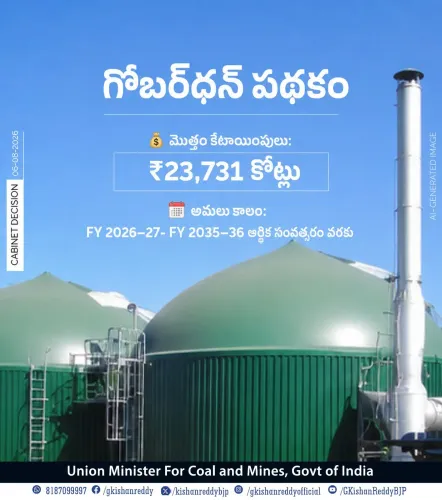
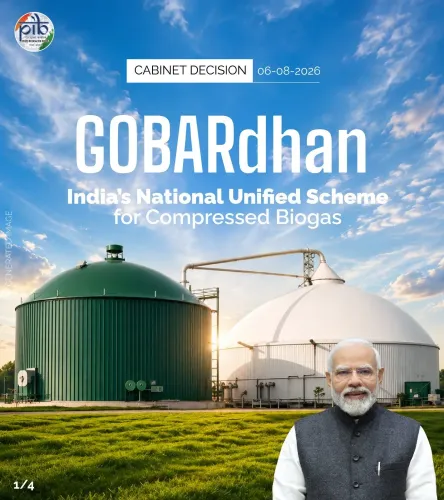
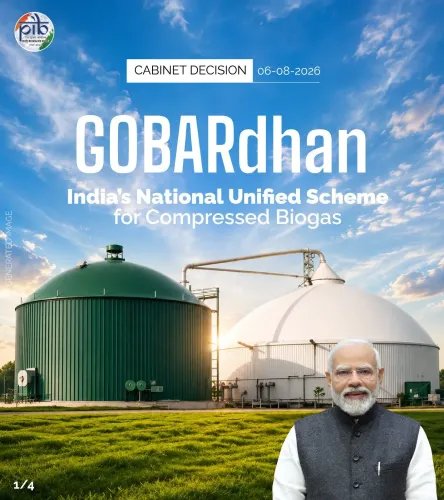
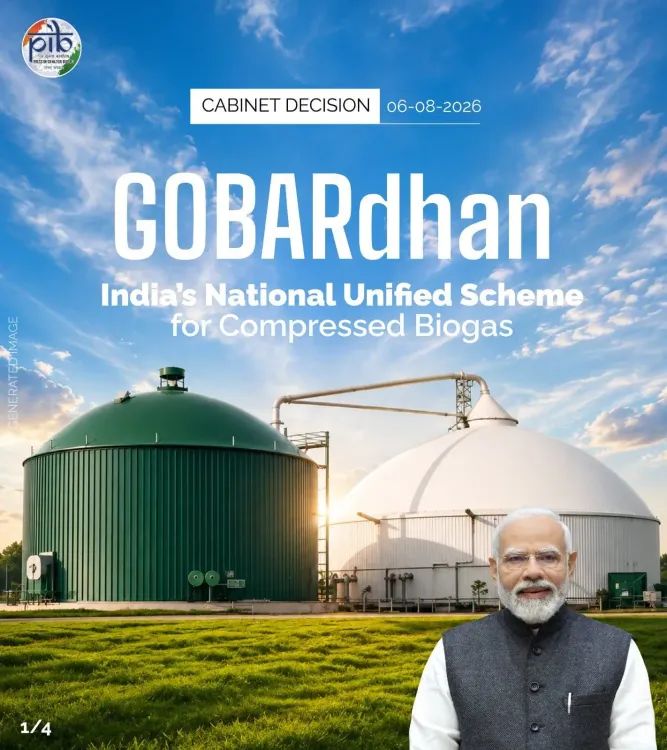
The Union Cabinet chaired by PM Narendra Modi approved the GOBARdhan National Unified Compressed Biogas Scheme on August 6, 2026, with a ₹23,731 crore outlay targeting nearly ten-fold growth in domestic CBG production to strengthen India's energy security.
Key Takeaways
The Union Cabinet approved the GOBARdhan National Unified Scheme for Compressed Biogas on August 6, 2026 .
The scheme carries a total outlay of ₹23,731 crore .
The government targets nearly ten-fold growth in domestic CBG production under the scheme.
GOBARdhan builds on the SATAT scheme (2018) , which had targeted 5,000 CBG plants, and the original GOBARdhan initiative from Budget 2018-19 .
The scheme is aligned with the National Policy on Biofuels 2018 and aims to cut India's dependence on imported fossil fuels.
Key beneficiaries include farmers (waste monetisation) and CBG producers (policy and funding certainty).
India just made a ₹23,731 crore bet on turning farm waste into fuel. The Union Cabinet, chaired by Prime Minister Narendra Modi, on Thursday, August 6, 2026, approved the GOBARdhan National Unified Scheme for Compressed Biogas (CBG) — a sweeping push to industrialise India's biogas sector and chip away at its dependence on imported fossil fuels. Union Minister of Ports, Shipping and Waterways Sarbananda Sonowal announced the decision on X, calling it a move to drive 'nearly ten-fold growth in domestic CBG production.'
From Cattle Dung to Clean Fuel: What GOBARdhan Promises
The scheme's name is no accident. GOBARdhan — Galvanizing Organic Bio-Agro Resources Dhan — has its roots in the Union Budget 2018-19, when the government first floated the idea of converting cattle dung and agricultural waste into biogas and organic fertilizer. That early avatar was modest, tied to rural sanitation under the Swachh Bharat mission. What the cabinet approved on August 6 is something far more ambitious: a unified national scheme that fuses earlier pilots into a single, funded, production-scale programme.
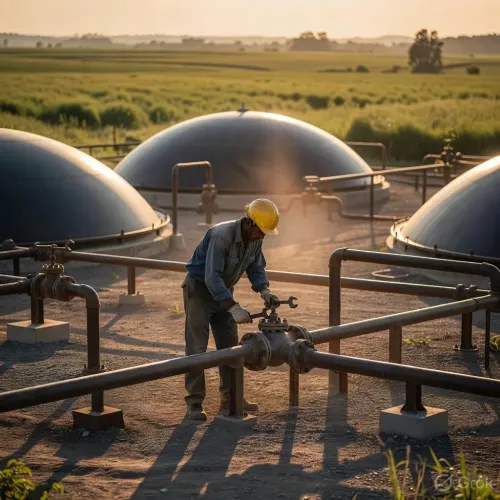
The ten-fold growth target in domestic CBG production is the headline number. Compressed biogas is chemically equivalent to CNG and can flow directly into existing gas distribution networks — which means every new CBG plant is also a node in India's energy grid, not a standalone rural experiment.
Building on SATAT, Scaling Beyond It
The government has been laying the groundwork for years. The SATAT scheme, launched in October 2018 by the Ministry of Petroleum and Natural Gas, had set a target of 5,000 compressed biogas plants across the country. Progress under SATAT was slower than projected — plant economics, feedstock aggregation, and offtake guarantees all proved harder to crack than anticipated. The new GOBARdhan unified scheme appears designed to address exactly those friction points by consolidating policy, funding, and coordination under a single national framework.
The National Policy on Biofuels 2018 provides the broader strategic canopy: reduce oil import dependence, monetise agricultural residue, and create rural income streams. Farmers and CBG producers are the two most direct stakeholders — farmers gain a revenue channel for crop stubble and animal waste that would otherwise be burned or discarded; producers gain policy certainty and, presumably, a clearer offtake mechanism through city gas distribution companies.
Energy Security as the Underlying Wager
India imports roughly 85 percent of its crude oil needs — a structural vulnerability that spikes every time global energy markets convulse. Biogas, by contrast, is produced domestically from waste streams that are essentially infinite and free. Scaling CBG production to the level this scheme envisions would not eliminate import dependence, but it would meaningfully reduce the volume of natural gas and CNG that India needs to source from abroad, particularly for the transport and cooking fuel segments.
The ₹23,731 crore outlay is the government's signal that this time, the ambition comes with matching financial firepower. The real test will be execution — how quickly new CBG plants are commissioned, whether feedstock supply chains hold, and whether the production targets translate into actual fuel reaching city gas grids. Those answers will emerge in the fiscal years ahead.
India has drawn the blueprint. The construction begins now.
Point of View
Funded programme. The ₹23,731 crore outlay signals that the government is serious about making CBG a mainstream fuel rather than a rural novelty, directly addressing the credibility gap that dogged the SATAT scheme. Politically, it allows the BJP to frame energy security, farm income, and clean energy as a single, vote-friendly package. The ten-fold production target, however, sets a high bar — and the gap between announced targets and commissioned plants has historically been the scheme's weakest link.
NationPress
21 Sept 2026
Frequently Asked Questions
What is the GOBARdhan scheme approved by the cabinet in 2026?
GOBARdhan — Galvanizing Organic Bio-Agro Resources Dhan — is India's National Unified Scheme for Compressed Biogas, approved by the Union Cabinet on August 6, 2026, with a ₹23,731 crore outlay to scale domestic CBG production nearly ten-fold and strengthen energy security.
What is the outlay for the GOBARdhan CBG scheme?
The Union Cabinet approved a total outlay of ₹23,731 crore for the GOBARdhan National Unified Compressed Biogas Scheme.
How is GOBARdhan different from the SATAT scheme?
SATAT, launched in October 2018, targeted setting up 5,000 CBG plants but faced slow implementation. The new GOBARdhan unified scheme consolidates multiple earlier programmes under one national framework with dedicated funding, aiming for far larger production scale.
Who benefits from the GOBARdhan compressed biogas scheme?
Farmers benefit by monetising agricultural waste and cattle dung instead of burning it. CBG producers gain policy certainty and financial support. Consumers and the broader economy benefit from reduced dependence on imported natural gas.
What is compressed biogas and how does it help India's energy security?
Compressed biogas (CBG) is produced from organic waste and is chemically equivalent to CNG, meaning it can feed directly into existing gas networks. Scaling domestic CBG production reduces the volume of natural gas India must import, lowering its exposure to global fuel price volatility.