Giriraj Singh Hails Cabinet Nod for GOBARdhan CBG Scheme
Synopsis
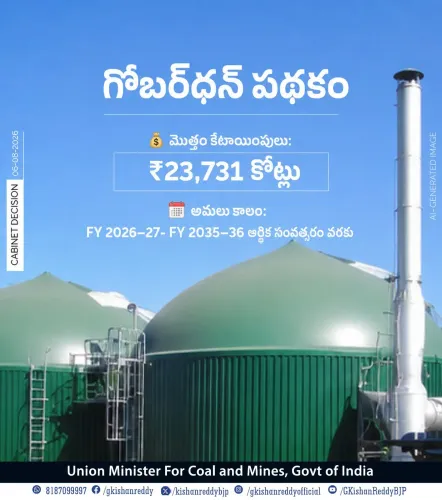
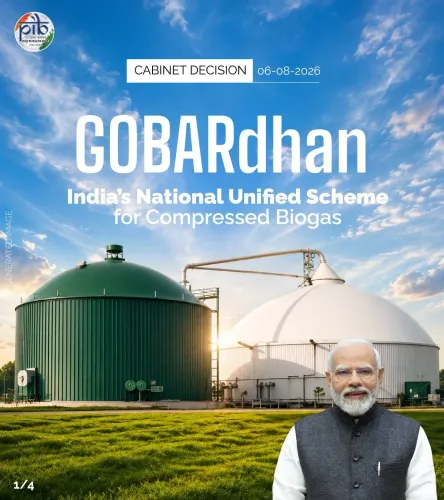
The Union Cabinet has approved the National Unified Scheme for Compressed Biogas under the GOBARdhan brand with a ₹23,731 crore outlay, aiming to grow India's CBG production nearly 10 times and strengthen energy security through farm-waste-to-fuel infrastructure.
Key Takeaways
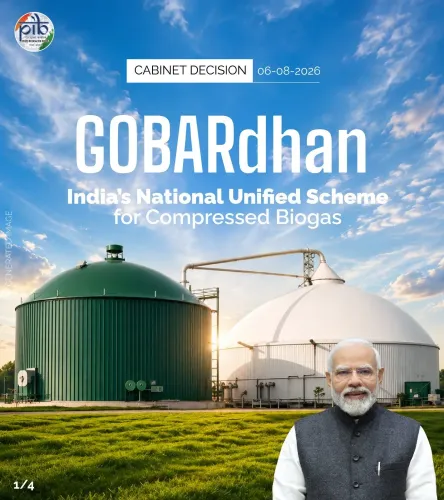
The Union Cabinet approved the GOBARdhan National Unified Scheme for Compressed Biogas on 6 August 2026 .
The scheme carries a total outlay of ₹23,731 crore .
The stated target is to increase India's CBG production by approximately 10 times current levels.
GOBARdhan was originally launched in April 2018 under the Swachh Bharat Mission-Gramin to convert cattle dung and organic waste into biogas.
The SATAT initiative (launched October 2018) had targeted 5,000 CBG plants by 2025; the new unified scheme consolidates and supersedes earlier fragmented efforts.
Key beneficiaries include farmers , rural households , and CBG plant developers across India.
India's clean-energy ambitions got a significant push on Thursday, 6 August 2026, when the Union Cabinet approved the National Unified Scheme for Compressed Biogas — branded under the GOBARdhan umbrella — with a staggering outlay of ₹23,731 crore. Union Textiles Minister Giriraj Singh was among the first to amplify the decision, calling it 'a big step towards clean energy.'
Cattle Dung to Clean Fuel: What the Scheme Does
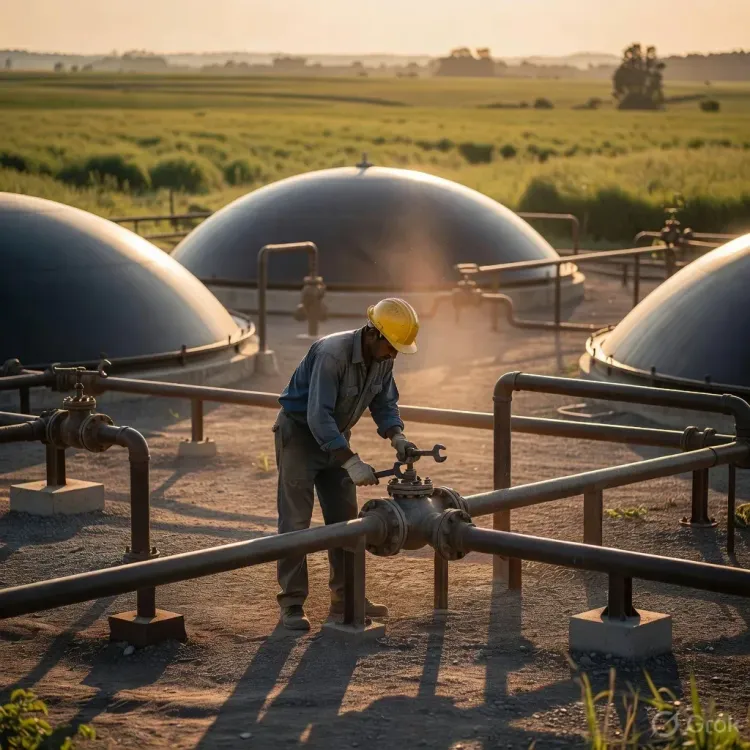
GOBARdhan — short for Galvanizing Organic Bio-Agro Resources-Dhan — has been India's flagship effort since April 2018 to convert cattle dung and organic farm waste into biogas and bio-fertilizer. The newly approved unified scheme scales that mission into a national industrial push: the government's stated target is to grow Compressed Biogas (CBG) production by approximately 10 times current levels. CBG is produced through anaerobic digestion of biomass and is positioned as a direct, cleaner substitute for fossil natural gas — in transport, in industry, and in rural kitchens.
The policy logic is straightforward. India spends heavily on natural gas imports. Every cubic metre of CBG produced domestically is a cubic metre not purchased abroad. At the farm end, the digestate left over after biogas extraction becomes organic fertilizer — cutting input costs for farmers and reducing chemical runoff.
From SATAT's 5,000-Plant Dream to a ₹23,731 Crore Mandate
The Cabinet's approval builds on nearly a decade of groundwork. The SATAT (Sustainable Alternative Towards Affordable Transportation) initiative, launched in October 2018, had set a target of 5,000 CBG plants across India by 2025 — an ambition that outpaced actual rollout. The new unified scheme is designed to consolidate fragmented programmes, direct a single large outlay, and give plant developers the policy certainty they need to commit capital.
The ₹23,731 crore figure — if deployed effectively — represents one of the largest single-scheme commitments to biogas infrastructure in India's history. Rural households, CBG plant developers, and farmers supplying feedstock all stand to benefit directly from the expanded network.
Energy Security Through the Farm Gate
India's waste-to-energy drive sits squarely within the Atmanirbhar Bharat framework — the government's broader push to reduce strategic import dependence. Biogas, derived from agricultural residue and animal waste, is one of the few renewable sources that simultaneously addresses energy security, rural income, and waste management. A 10-fold production increase, if achieved, would mark a structural shift — not just a policy announcement.
The real test will come in execution: how fast new plants are commissioned, whether feedstock supply chains hold, and how the scheme's progress is tracked in budget reviews and petroleum ministry audits. The Cabinet has set the target. The pipeline now has to deliver.
Point of View
731 crore unified scheme signals a shift from aspirational targets to funded mandates — a pattern the government has used to accelerate solar and highway rollouts. For the CBG sector, which has struggled to attract private capital under fragmented policy signals, a large unified outlay could finally de-risk project finance. The 10-fold production target is politically ambitious; whether it becomes a genuine energy-security milestone or another headline number will depend entirely on the pace of plant commissioning and feedstock logistics that follow. Singh's amplification of the announcement underscores the BJP's intent to frame waste-to-energy as a rural welfare story, not just an environmental one.
NationPress
21 Sept 2026
Frequently Asked Questions
What is the GOBARdhan scheme approved by the Cabinet?
GOBARdhan (Galvanizing Organic Bio-Agro Resources-Dhan) is India's central scheme to convert cattle dung and organic agricultural waste into Compressed Biogas (CBG) and bio-fertilizer. The Cabinet approved a new National Unified Scheme under this brand on 6 August 2026 with a ₹23,731 crore outlay.
What is Compressed Biogas (CBG) and how is it different from regular biogas?
Compressed Biogas is biogas — produced by anaerobic digestion of biomass — that has been purified and compressed to a pressure similar to CNG, making it suitable as a direct substitute for fossil natural gas in vehicles and industry.
What is the production target under the new GOBARdhan CBG scheme?
The scheme aims to increase India's CBG production by approximately 10 times current levels, significantly expanding the domestic clean fuel supply and reducing dependence on imported natural gas.
Who benefits from the GOBARdhan CBG scheme?
The primary beneficiaries are farmers (who supply feedstock and receive bio-fertilizer), rural households (who gain access to cleaner cooking and energy options), and CBG plant developers who receive policy and financial support to set up production infrastructure.
What was the SATAT initiative and how does the new scheme relate to it?
SATAT (Sustainable Alternative Towards Affordable Transportation) was launched in October 2018 with a target of 5,000 CBG plants by 2025. The new National Unified Scheme consolidates SATAT and other earlier biogas programmes into a single, larger funded mandate under the GOBARdhan brand.