CM Saini Backs ₹23,731 Cr GOBARdhan Cabinet Nod
Synopsis
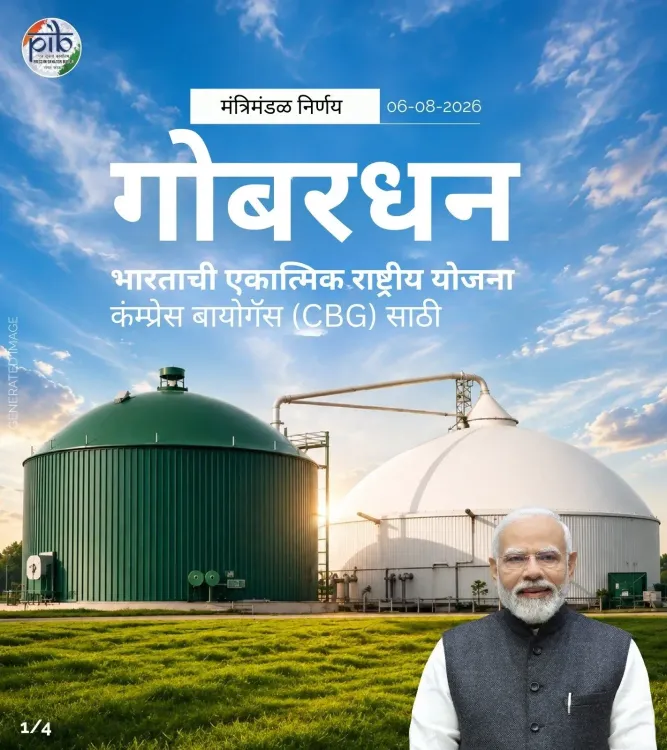
The Union Cabinet has approved a ₹23,731 crore expansion of the GOBARdhan scheme, converting cattle dung and organic waste into biogas and bio-fertiliser. Haryana CM Nayab Singh Saini praised the decision as transformative for rural incomes, employment, and clean energy.
Key Takeaways
The Union Cabinet approved ₹23,731 crore for the GOBARdhan scheme on or before August 6, 2026 .
GOBARdhan converts cattle dung and organic waste into biogas (energy) and bio-fertiliser, targeting rural households and small farmers.
The scheme was originally launched in 2018 under the Swachh Bharat Mission (Gramin) and sits within the National Bioenergy Programme .
Haryana CM Nayab Singh Saini publicly endorsed the decision, highlighting income, employment, and environmental benefits for villages.
State-wise fund allocation and commissioning timelines for new compressed biogas plants remain to be announced.
The scheme also offers an economic alternative to stubble burning , a persistent air-quality challenge in states like Haryana.
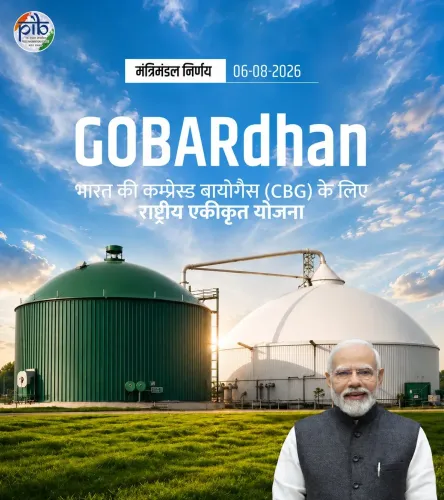
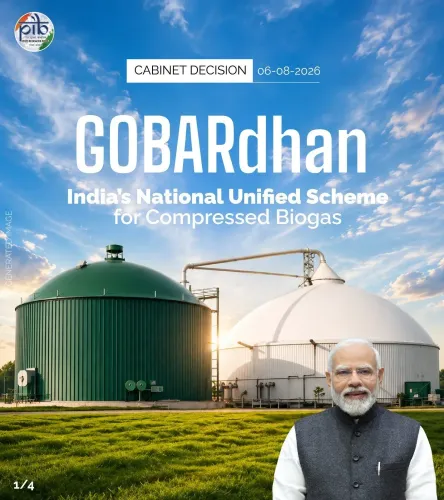
A cabinet decision worth ₹23,731 crore could quietly rewire how rural India handles its waste — and who profits from it. Haryana Chief Minister Nayab Singh Saini on Thursday, August 6, 2026, welcomed the Union Cabinet's approval of the expanded GOBARdhan scheme, calling it an 'extremely important decision' for the country's villages.
Dung into diesel: what the GOBARdhan scheme actually does
The scheme's name is both acronym and intent: Galvanizing Organic Bio-Agro Resources Dhan — GOBARdhan — turns cattle dung and organic farm waste into two commercially valuable outputs: biogas (compressed bio-gas) for energy and bio-fertiliser for fields. First launched in 2018 under the Swachh Bharat Mission (Gramin), the programme has now received a dramatically larger financial commitment from Prime Minister Narendra Modi's cabinet.
Saini, posting in Hindi, framed the approval as a three-pronged win: higher incomes for farmers, new rural employment, and a cleaner environment. 'Gobar aur jaivik kachre ko upyogi urja aur jaivik khad mein badalna' — converting dung and organic waste into useful energy and organic manure — is the mechanism he highlighted. The logic is circular-economy in the most literal sense: what the village discards becomes what it runs on.
Why ₹23,731 crore matters for small farmers
India's small and marginal farmers — who own the majority of the country's livestock — stand to gain the most. Under the scheme's architecture, village-level biogas plants purchase dung from households, giving farmers a supplemental cash stream beyond crop income. The bio-fertiliser produced can replace a portion of chemical fertiliser spending, compressing input costs from both ends.
The broader policy context matters here. GOBARdhan sits inside India's National Bioenergy Programme, which targets a significant share of renewable energy capacity from agricultural and animal waste. It also addresses stubble burning — one of north India's most stubborn air-quality crises — by offering farmers an economic alternative to torching residue. Haryana, where Saini governs, is among the states most directly implicated in stubble-burning debates every winter.
State allocations and plant timelines: the next test
The cabinet approval unlocks the funds; the harder question is deployment. How the ₹23,731 crore is distributed across states, and how quickly new compressed biogas plants and bio-fertiliser units are commissioned, will determine whether the scheme's ambitions translate into village-level reality. Saini's endorsement signals that Haryana intends to be an active participant — but the state-wise allocation figures are yet to be made public.
For a scheme built on turning waste into wealth, the proof will be in the pipeline — literally.
Point of View
731 crore commitment to GOBARdhan represents the BJP government's most significant financial push yet on the circular-bioeconomy front, tying rural welfare optics directly to renewable energy targets. For Haryana's CM Saini, endorsing the scheme publicly serves a dual purpose: aligning with the Centre's flagship agenda while signalling to a farm-heavy electorate that the party is invested in supplemental income beyond MSP debates. The scheme's real test, however, lies in state-level execution — past iterations of GOBARdhan faced absorption challenges at the district level. Whether this funding tranche produces commissioned plants or stalled tenders will define the programme's legacy more than any cabinet approval.
NationPress
21 Sept 2026
Frequently Asked Questions
What is the GOBARdhan scheme?
GOBARdhan — Galvanizing Organic Bio-Agro Resources Dhan — is a central government scheme launched in 2018 that converts cattle dung and organic farm waste into biogas for energy and bio-fertiliser for agriculture, generating supplemental income for rural households.
How much money has the cabinet approved for GOBARdhan in 2026?
The Union Cabinet approved ₹23,731 crore for the GOBARdhan scheme, as welcomed by Haryana Chief Minister Nayab Singh Saini on August 6, 2026.
How does GOBARdhan help farmers?
The scheme pays farmers for cattle dung collected at village biogas plants, creating a cash income stream, while the bio-fertiliser produced can reduce their chemical fertiliser costs.
Which ministry runs the GOBARdhan scheme?
GOBARdhan was launched under the Swachh Bharat Mission (Gramin) and is part of India's broader National Bioenergy Programme targeting renewable energy from agricultural and animal waste.
What does Haryana CM Nayab Singh Saini say about GOBARdhan?
Saini called the cabinet approval 'extremely important' for rural areas, saying the scheme will raise farmer incomes, create village employment, and promote a cleaner environment by converting dung and organic waste into energy and fertiliser.