CM Sai Hails ₹23,731 Cr GOBARdhan Cabinet Nod
Synopsis
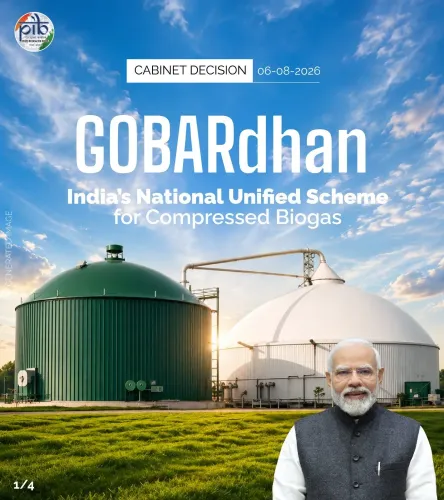
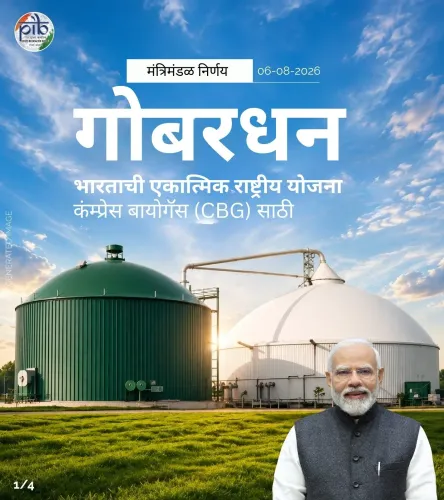
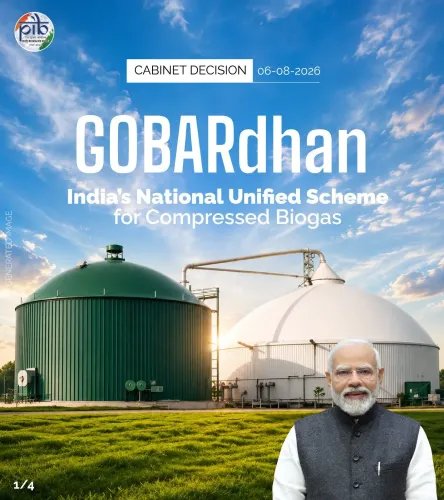
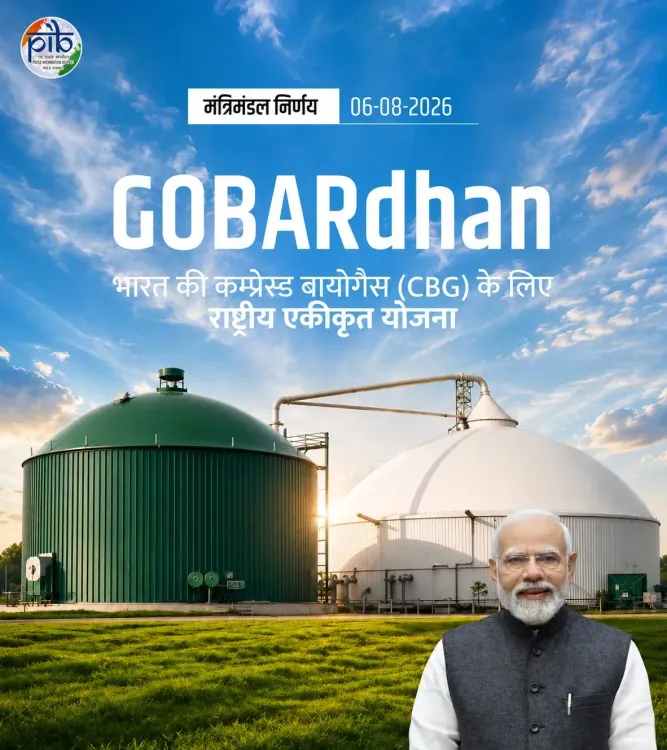
The Union Cabinet approved a ₹23,731 crore expansion of the GOBARdhan scheme on 6 August 2026, aiming to increase India's compressed bio-gas capacity nearly 10-fold. Chhattisgarh CM Vishnu Deo Sai praised the move as a milestone for farmers, livestock rearers, and India's green self-reliance mission.
Key Takeaways
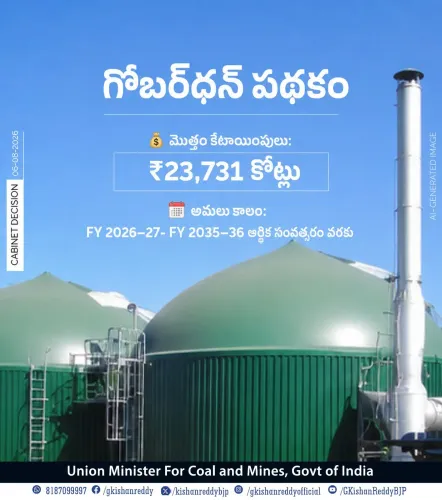
The Union Cabinet approved ₹23,731 crore for the expanded GOBARdhan scheme on 6 August 2026 .
The scheme targets a nearly 10-fold increase in domestic Compressed Bio-Gas (CBG) production capacity.
GOBARdhan was first launched in 2018 under the Swachh Bharat Mission (Gramin) as a sanitation-linked bio-energy initiative.
Primary beneficiaries are farmers and livestock rearers , who receive income for organic waste and subsidised bio-slurry as fertiliser.
The expansion aligns with national goals to reduce LPG import dependence and promote circular-economy agriculture.
Chhattisgarh CM Vishnu Deo Sai credited PM Modi and called the decision a new energy for Atmanirbhar Bharat.
Cattle dung is about to become one of India's most valuable energy assets. Chhattisgarh Chief Minister Vishnu Deo Sai on 6 August 2026 welcomed the Union Cabinet's approval of a sweeping ₹23,731 crore expansion of the GOBARdhan scheme, calling it a transformative step toward green growth and rural prosperity under Prime Minister Narendra Modi.
What the Cabinet Cleared — and Why the Numbers Matter
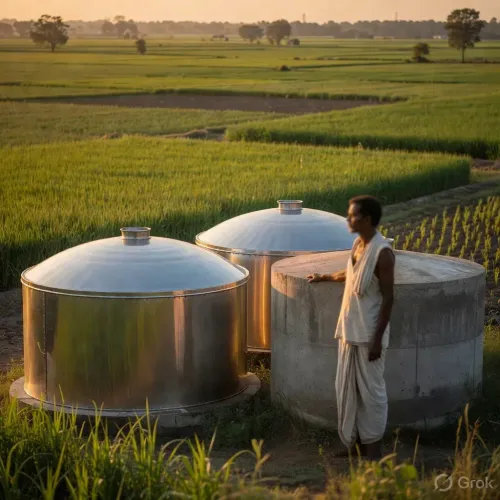
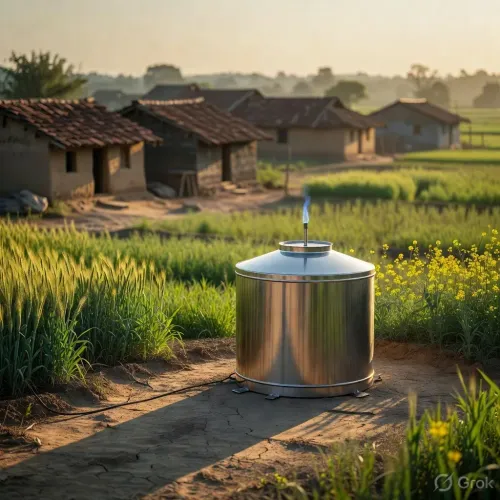
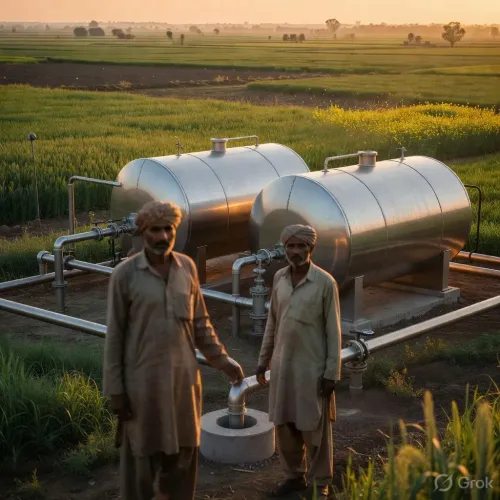
The approved outlay targets a nearly 10-fold increase in India's domestic Compressed Bio-Gas (CBG) production capacity — an ambition that, if realised, would fundamentally reshape how rural India handles organic waste and accesses clean energy. The scheme channels cattle dung and agricultural bio-waste through biogas plants, yielding CBG for cooking and transport fuel, plus organic manure that flows back to farmers as a soil supplement and an income stream.
CM Sai, posting in Hindi, framed the decision in the language of aatmanirbharta (self-reliance): 'Biological wealth is now becoming the new energy of green development and self-reliant India.' The twin payoff he highlighted — higher incomes for farmers and livestock rearers, and a stronger rural economy — tracks directly with the scheme's stated design logic.
GOBARdhan's Journey from Budget Line to ₹23,000-Crore Mission
The scheme was first announced in the 2018 Union Budget and launched under the Swachh Bharat Mission (Gramin), originally as a sanitation-linked bio-energy pilot. The logic was elegant: rural India's vast livestock population generates enormous quantities of dung, historically a disposal problem. Converting it to gas and manure turned a liability into two revenue lines simultaneously.
The 2026 cabinet decision dramatically scales that original pilot. It also slots neatly into the government's broader renewable energy push, its stated goal of cutting LPG import dependence, and the circular-economy model that has been central to agricultural policy in recent years. For states like Chhattisgarh — with a large rural and tribal population dependent on farming and livestock — the scheme's rollout will be closely watched.
What Farmers and Livestock Rearers Stand to Gain
The most direct beneficiaries are the smallholder farmers and cattle owners who will supply raw material to CBG plants. Under the scheme's model, they receive payment for dung and organic waste, while the processed bio-slurry returns to them as subsidised organic fertiliser — reducing input costs at the same time as it raises income. That dual mechanism is what gives the GOBARdhan expansion its rural-welfare weight beyond the energy headline.
The scale of the capacity target — roughly 10 times current CBG output — means the government is betting on a network of new plants across districts, with state governments expected to play a central role in land allocation, utility connection, and farmer outreach. Chhattisgarh's own progress in setting up those plants will be a key marker of whether the national ambition translates to village-level change.
From a pilot in sanitation budgets to a near-₹24,000 crore national mission — India's bet on bio-gas has just grown large enough that the world will be watching whether it delivers.
Point of View
Particularly in agrarian states like Chhattisgarh. CM Sai's swift endorsement signals that BJP-governed states are expected to position themselves as frontline delivery partners. The scheme's success will ultimately be measured not in plant numbers but in whether smallholder cattle owners see a sustained income bump — a metric that will matter heading into the next electoral cycle.
NationPress
21 Sept 2026
Frequently Asked Questions
What is the GOBARdhan scheme and what was approved in 2026?
GOBARdhan (Galvanising Organic Bio-Agro Resources Dhan) converts cattle dung and organic waste into Compressed Bio-Gas and organic manure. In August 2026, the Union Cabinet approved ₹23,731 crore for a major expansion targeting a nearly 10-fold increase in CBG capacity.
How does the GOBARdhan scheme benefit farmers?
Farmers and livestock rearers earn income by supplying dung and organic waste to CBG plants. They also receive processed bio-slurry back as organic fertiliser, reducing their input costs while adding a new revenue stream.
When was GOBARdhan first launched in India?
GOBARdhan was first announced in the 2018 Union Budget and launched under the Swachh Bharat Mission (Gramin) to link rural sanitation with bio-energy generation.
Why did Chhattisgarh CM Vishnu Deo Sai react to the GOBARdhan approval?
As a senior BJP leader and Chief Minister of a state with a large rural and livestock-dependent population, Sai welcomed the cabinet decision as aligned with PM Modi's Atmanirbhar Bharat vision and beneficial for Chhattisgarh's farmers.
How does CBG expansion help reduce India's LPG imports?
Compressed Bio-Gas can substitute for LPG in cooking and for CNG in transport. Scaling domestic CBG production reduces dependence on imported liquefied petroleum gas, contributing to energy self-reliance.