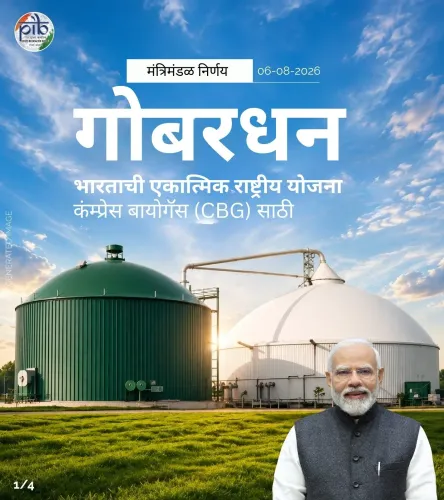
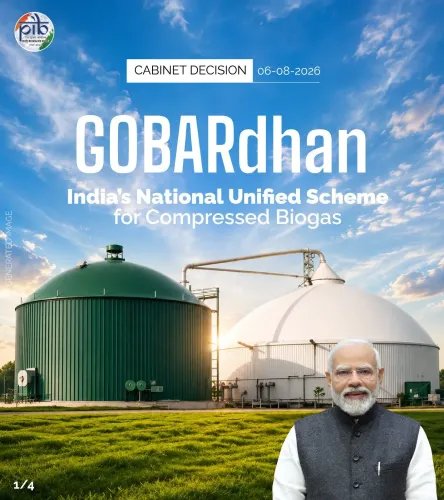
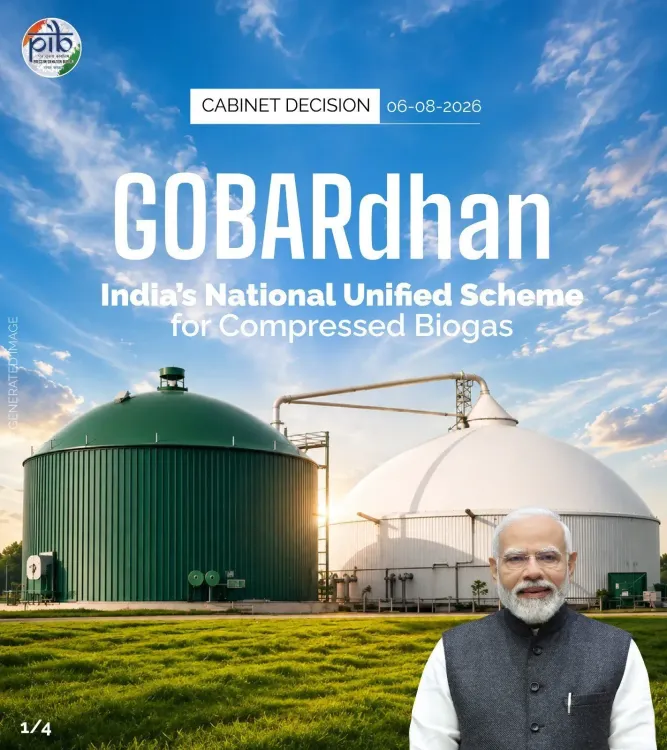
Cabinet Clears ₹23,731 Cr GOBAR-DHAN Bio-Energy Scheme
Synopsis
The Union Cabinet under PM Narendra Modi approved the National Circular Bio-Energy Scheme 'GOBAR-DHAN' with a ₹23,731 crore outlay, scaling up a 2018 rural waste-to-energy initiative that converts cattle dung and organic waste into biogas and compost for small farmers and rural households.
Key Takeaways
The Union Cabinet approved the National Circular Bio-Energy Scheme 'GOBAR-DHAN' with a ₹23,731 crore financial outlay.
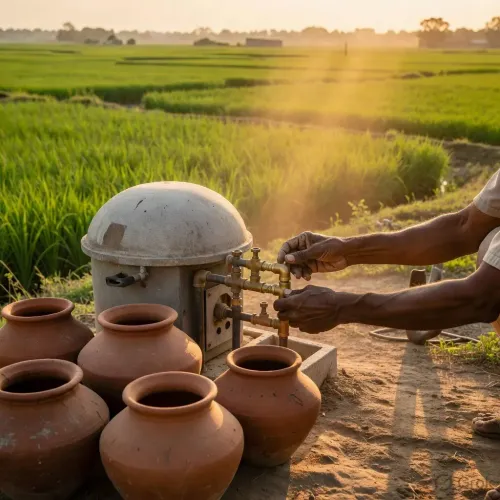
GOBAR-DHAN converts cattle dung and organic waste into biogas, compost, and bio-energy, targeting small farmers and rural households .
The scheme was originally launched in 2018 under the Swachh Bharat Mission (Gramin) and is now being scaled up as a dedicated national circular bio-energy programme.
Union Food Processing Minister Chirag Paswan announced the decision on 6 August 2026 , attributing it to PM Narendra Modi's leadership.
The programme addresses stubble burning, fossil fuel dependence, and rural sanitation simultaneously, forming part of India's broader renewable energy push.
State-level implementation guidelines and fund disbursement timelines will be critical to watch as the scheme moves from approval to execution.
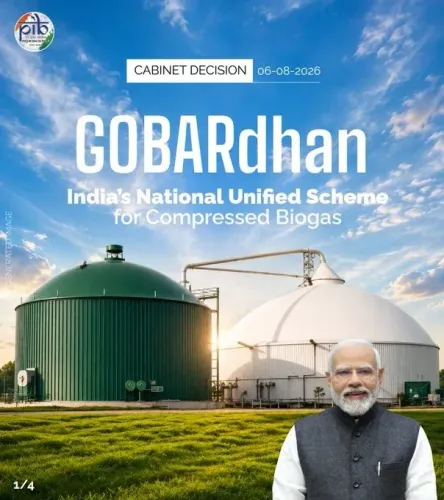
A single cabinet decision just put ₹23,731 crore behind India's most ambitious rural bio-energy bet — and it carries a name that has been in the policy vocabulary since 2018. Union Food Processing Minister Chirag Paswan announced on Thursday, 6 August 2026 that the Union Cabinet, under the leadership of Prime Minister Narendra Modi, has approved the National Circular Bio-Energy Scheme 'GOBAR-DHAN' with a financial outlay of ₹23,731 crore.
What GOBAR-DHAN actually does — and why the scale matters
GOBAR-DHAN — short for Galvanizing Organic Bio-Agro Resources Dhan — converts cattle dung and organic agricultural waste into biogas, compressed bio-gas, compost, and bio-energy. Launched in 2018 under the Swachh Bharat Mission (Gramin), the scheme was conceived as a waste-to-wealth model: the same dung that once posed a sanitation challenge in rural India becomes a fuel source and a fertiliser substitute. The cabinet's fresh approval signals a significant scaling up of that original architecture, now recast as a 'circular' bio-energy programme with a dedicated national outlay.
The financial commitment of ₹23,731 crore dwarfs the scheme's earlier budgetary footprint and positions GOBAR-DHAN as a flagship circular-economy intervention rather than a rural sanitation add-on. Small farmers, rural households, and bio-energy developers are the primary beneficiaries — groups that sit at the intersection of agricultural policy, clean energy access, and rural income generation.
Stubble burning, fossil fuels, and the circular economy thread
India's push into bio-energy is not happening in a vacuum. The country has pursued overlapping schemes linking rural sanitation, agricultural waste management, and renewable energy since 2014, with stubble burning in Punjab and Haryana and fossil fuel dependence providing the recurring pressure points. A scaled-up GOBAR-DHAN directly addresses both: organic farm waste that would otherwise be burned becomes feedstock for biogas plants, cutting both air pollution and diesel or LPG consumption in rural households.
The food processing and new and renewable energy ministries share overlapping mandates in this circular economy space — which makes Minister Paswan's amplification of the cabinet decision notable. The scheme's implementation will now hinge on state-level guidelines, fund disbursement timelines, and how tightly GOBAR-DHAN is linked to the broader National Bio-Energy Programme.
With ₹23,731 crore now formally committed, the question shifts from intent to execution — and whether India's biogas infrastructure can absorb investment at this scale fast enough to move the needle on its renewable energy targets.
Point of View
731 crore commitment marks a qualitative shift for GOBAR-DHAN — from a Swachh Bharat sanitation sub-scheme into a standalone circular bio-economy programme with serious capital behind it. This fits a broader pattern of the Modi government consolidating smaller rural-energy and waste-management pilots into larger, better-funded national missions as the 2030 renewable energy targets approach. The overlap between the food processing, agriculture, and renewable energy ministries on this scheme will be a structural test: inter-ministerial coordination has historically been the bottleneck for similar multi-stakeholder rural programmes. Whether state governments have the administrative bandwidth to translate this outlay into functional biogas plants at village level will determine whether the scheme becomes a genuine energy transition tool or another well-funded paper scheme.
NationPress
21 Sept 2026
Frequently Asked Questions
What is the GOBAR-DHAN scheme?
GOBAR-DHAN stands for Galvanizing Organic Bio-Agro Resources Dhan. It is a government scheme that converts cattle dung and organic agricultural waste into biogas, compressed bio-gas, compost, and bio-energy, primarily benefiting rural households and small farmers.
When was GOBAR-DHAN launched?
GOBAR-DHAN was first launched in 2018 under the Swachh Bharat Mission (Gramin) as a waste-to-wealth initiative for rural India.
What is the budget approved for GOBAR-DHAN in 2026?
The Union Cabinet approved a financial outlay of ₹23,731 crore for the National Circular Bio-Energy Scheme GOBAR-DHAN.
Who announced the GOBAR-DHAN cabinet approval?
Union Food Processing Minister Chirag Paswan announced the cabinet decision on 6 August 2026 via a post on X, crediting the approval to PM Narendra Modi's leadership.
How does GOBAR-DHAN help farmers and rural households?
The scheme turns cattle dung and farm waste — which would otherwise be burned or discarded — into biogas for cooking and energy, and compost for farming, reducing dependence on LPG and chemical fertilisers while generating additional rural income.