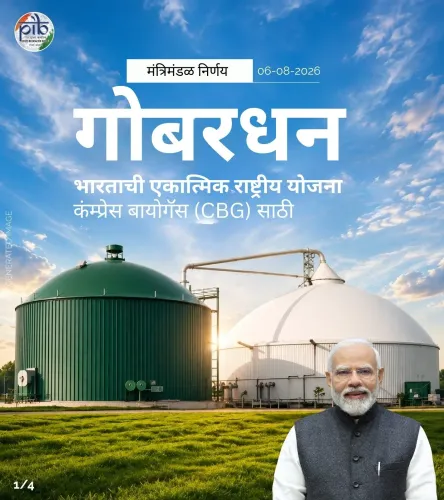
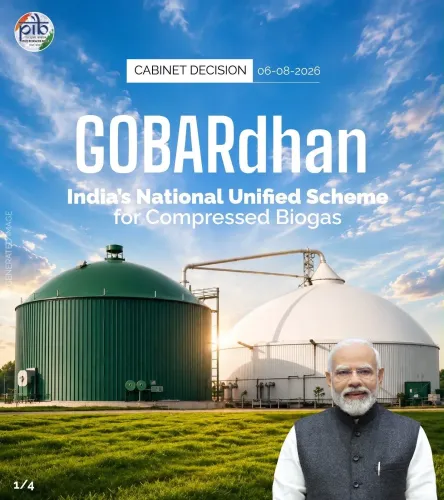
CM Samrat Choudhary Backs ₹23,731 Cr GOBARdhan Scheme
Synopsis
The Union Cabinet approved a ₹23,731 crore outlay for the GOBARdhan scheme to convert organic and agricultural waste into biogas and manure. Bihar CM Samrat Choudhary backed the decision as a major step for farmers, rural entrepreneurship, and India's circular economy goals.
Key Takeaways
The Union Cabinet approved ₹23,731 crore for the GOBARdhan scheme under PM Narendra Modi's leadership.
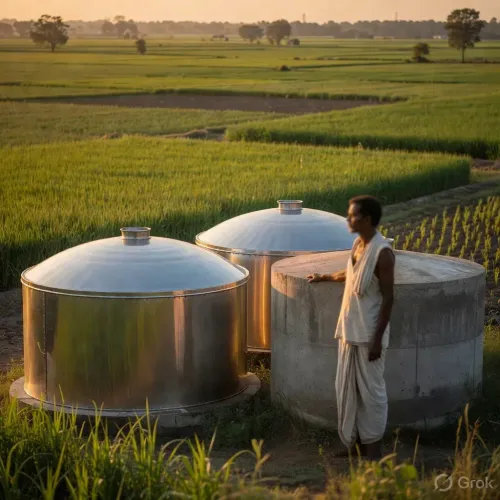
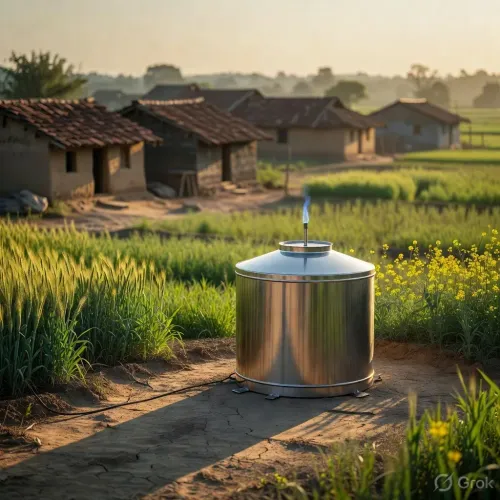
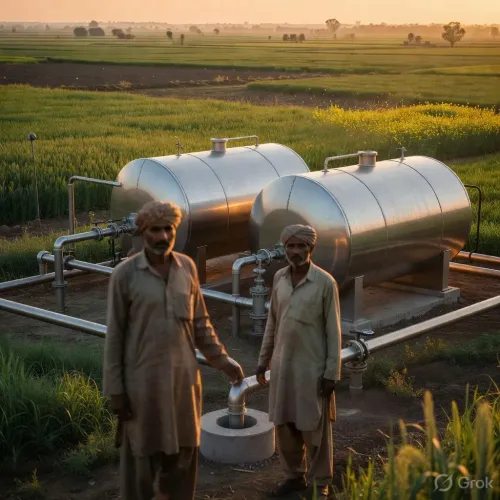
GOBARdhan converts cattle dung and crop waste into biogas, compressed biogas, and organic manure .
The scheme was first launched under the Swachh Bharat Mission (Gramin) in the Union Budget 2018-19 .
Bihar CM Samrat Choudhary called the approval a boost for farmers, rural entrepreneurs, and clean energy.
The scheme supports Atmanirbhar Bharat by reducing dependence on imported fossil fuels and chemical fertilisers.
State-wise fund disbursement and new compressed biogas plant rollouts — especially in Bihar — are the key metrics to watch.
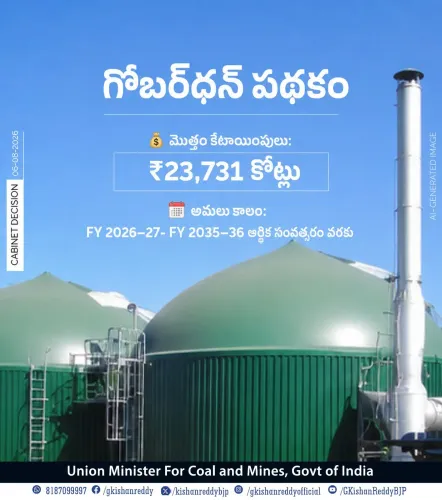
Cattle dung is now a cabinet priority. The Union Cabinet, under Prime Minister Narendra Modi, has approved a ₹23,731 crore outlay for the GOBARdhan (Galvanising Organic Bio-Agro Resources Dhan) scheme — a programme designed to convert agricultural and organic waste into biogas, compressed biogas, and organic manure. Bihar Chief Minister Samrat Choudhary welcomed the decision on Thursday, 6 August 2026, calling it a new push for farmers, rural entrepreneurship, clean energy, and the circular economy.
From Cow Dung to Clean Energy: What GOBARdhan Does
GOBARdhan is not a new idea — it was first announced in the Union Budget 2018-19 under the Swachh Bharat Mission (Gramin). The scheme's core logic is elegant: instead of letting crop residue and cattle waste pollute fields and water bodies, convert it into biogas for cooking and electricity, and into organic manure that reduces dependence on chemical fertilisers. The revised ₹23,731 crore approval signals a significant scaling of that ambition.
For states like Bihar — where agriculture employs the majority of the workforce and cattle density is high — the scheme's potential for rural income diversification is direct. New compressed biogas plants could create local value chains, turning a waste-disposal problem into an energy asset.
Circular Economy as National Strategy
CM Choudhary framed the approval in the language of 'Viksit Bharat aur Atmanirbhar Bharat' (Developed India and Self-Reliant India) — the twin slogans anchoring the BJP's economic narrative. The connection is substantive, not just rhetorical. A circular economy model that links farm waste to clean fuel to organic fertiliser reduces import bills for fossil fuels and synthetic fertilisers simultaneously. That is the kind of structural self-reliance the Atmanirbhar Bharat framework targets.
The broader pattern here is consistent: the central government has repeatedly used bio-resource schemes as a bridge between its rural welfare agenda and its clean energy commitments. GOBARdhan sits at that intersection — it is simultaneously a sanitation scheme, an energy scheme, and an agricultural income scheme.
Bihar's Stake in the Rollout
The critical question now is state-wise fund disbursement and the pace of setting up new compressed biogas infrastructure. Bihar, as a large agrarian state, stands to be a major implementation theatre. CM Choudhary's endorsement signals that the state government intends to position itself as an active partner in the rollout — not a passive recipient. Whether that translates into plant commissions and farmer enrolments on the ground will be the real test of the scheme's ambition.
A ₹23,731 crore bet on turning waste into wealth — the numbers are set, the political will is declared. Execution is where it counts.
Point of View
Clean energy, and import substitution — a political trifecta that is difficult to oppose. CM Choudhary's endorsement is strategically timed: Bihar heads into a period of heightened political activity, and aligning with a major central outlay lets the state leadership claim a share of the credit for a popular rural programme. The scheme's real test, however, is implementation speed — past iterations of GOBARdhan moved slowly on plant commissioning, and a ₹23,731 crore revised allocation will face scrutiny on whether disbursal matches the ambition.
NationPress
21 Sept 2026
Frequently Asked Questions
What is the GOBARdhan scheme?
GOBARdhan (Galvanising Organic Bio-Agro Resources Dhan) is a central government scheme that converts cattle dung, crop residue, and other organic waste into biogas, compressed biogas, and organic manure. It was first launched under the Swachh Bharat Mission (Gramin) in the Union Budget 2018-19.
How much money has been approved for GOBARdhan in 2026?
The Union Cabinet approved an outlay of ₹23,731 crore for the GOBARdhan scheme, as announced on 6 August 2026.
What did Bihar CM Samrat Choudhary say about GOBARdhan?
Bihar CM Samrat Choudhary welcomed the cabinet approval, saying the scheme will give new momentum to farmers, rural entrepreneurship, clean energy, and the circular economy, and will strengthen the vision of 'Viksit Bharat' and 'Atmanirbhar Bharat'.
How does GOBARdhan help farmers?
GOBARdhan helps farmers by converting agricultural waste into biogas for energy use and organic manure that can replace costly chemical fertilisers, creating additional income streams and reducing input costs.
What is a circular economy in the context of GOBARdhan?
In the context of GOBARdhan, a circular economy means using agricultural and organic waste — which would otherwise be discarded — as raw material to produce clean energy and fertiliser, keeping resources in use and reducing environmental and import costs.