Northeast India's terrain a 'living laboratory' for engineering: Mizoram Governor VK Singh
Synopsis
Mizoram Governor General V.K. Singh (Retd) reframed Northeast India's notorious infrastructure challenges as a strategic asset — calling the region a potential 'living laboratory for resilient engineering.' Speaking at the IEI summit in New Delhi, he tied engineering excellence directly to the Viksit Bharat @2047 goal and pushed back against a degree-count culture in engineering education.
Key Takeaways
Mizoram Governor General V.K.
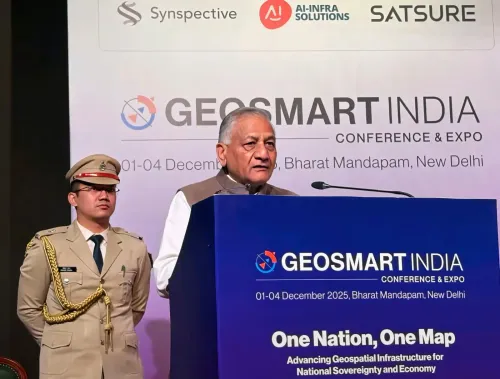
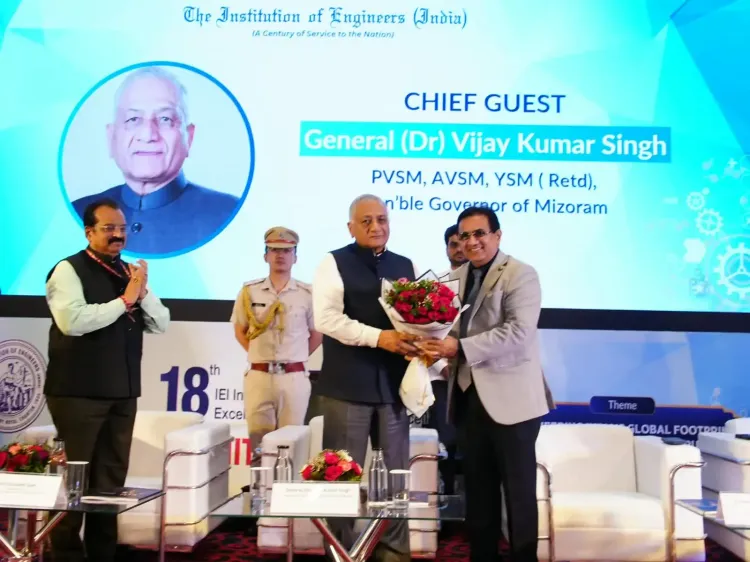
Singh (Retd) addressed the Institution of Engineers (India) Industry and Education Excellence Summit and Award-2026 on 20 September 2026 in New Delhi .
He described Northeast India as a potential 'living laboratory for resilient engineering in complex terrain.' Governor Singh urged engineers to align with the Viksit Bharat @2047 vision, emphasising quality, reliability, and trust.
He called for engineering education to be judged by what graduates can create, not by the number of degrees awarded.
The Institution of Engineers (India) , founded in 1920 , has over 2.6 lakh corporate members across 15 engineering disciplines .
Mizoram Governor General V.K. Singh (Retd) on 20 September 2026 said that Northeast India's challenging topography, ecological sensitivity, and strategic location simultaneously pose complex engineering demands and unlock significant opportunities for innovation. He made these remarks while addressing the Institution of Engineers (India) Industry and Education Excellence Summit and Award-2026 at the SCOPE Convention Centre in New Delhi.
Northeast as a Model for Resilient Engineering
Drawing on Mizoram's distinctive geography, Governor Singh argued that the region could serve as a benchmark for the rest of the country. 'The North East can become a living laboratory for resilient engineering in complex terrain. Mizoram, in particular, demonstrates why infrastructure must be terrain-sensitive, climate-resilient and digitally enabled,' he said.
The Governor stressed that terrain-sensitive design, climate resilience, and digital integration are not optional add-ons but foundational requirements for infrastructure in ecologically sensitive zones. This perspective carries weight given that Northeast India spans some of the country's most seismically active and biodiversity-rich corridors.
Engineers at the Heart of Viksit Bharat @2047
General Singh (Retd) placed engineers at the centre of India's long-term development ambitions, urging them to align their work with the Viksit Bharat @2047 vision. He observed that nations today compete not merely for markets but for technological leadership and resilience, and that India's large pool of scientific and technical talent must be harnessed so that Indian engineering becomes synonymous with quality, reliability, and trust.
He also flagged priority domains where engineering talent will be decisive: Digital India, the space programme, geospatial technology, defence engineering, and Artificial Intelligence, among other emerging technologies.
A Call to Raise Engineering Education Standards
The Governor cautioned against measuring engineering success by graduate numbers alone. 'Merely producing large numbers of engineers is not enough. The engineer of the future must combine technical depth with systems thinking. We should judge engineering education not merely by how many degrees are awarded, but by what those engineers are capable of creating,' he said.
He added that quality and standards must be treated as strategic assets if India's technology and talent are to earn the trust of partner nations globally.
About the Summit and the Institution of Engineers (India)
The 2026 summit was held under the theme 'Engineering India's Global Footprint: Technology, Talent and Trust' and brought together industry leaders, policymakers, academics, and engineering professionals. The Institution of Engineers (India), founded in 1920, is the country's largest multidisciplinary professional body of engineers, with over 2.6 lakh corporate members spanning 15 engineering disciplines.
As India deepens its push into high-technology manufacturing and frontier research, the summit's call to align engineering education with real-world innovation benchmarks is likely to shape policy conversations in the months ahead.
Point of View
Not just national-level summits in New Delhi. The push to move beyond degree counts in engineering education is overdue, but the quality metrics Singh calls for remain undefined. Until there is a verifiable framework — linked to graduate outcomes, research output, and global competitiveness — the sentiment risks remaining aspirational.
NationPress
20 Sept 2026
Frequently Asked Questions
What did Mizoram Governor V.K. Singh say about Northeast India at the IEI summit?
Governor General V.K. Singh (Retd) said Northeast India's difficult terrain, ecological sensitivity, and strategic location make it a 'living laboratory for resilient engineering in complex terrain.' He argued that Mizoram specifically demonstrates why infrastructure must be terrain-sensitive, climate-resilient, and digitally enabled.
What is the Viksit Bharat @2047 vision mentioned by the Governor?
Viksit Bharat @2047 is the Indian government's long-term development goal of becoming a fully developed nation by the centenary of independence in 2047. Governor Singh urged engineers at the summit to align their work with this vision by delivering quality, reliable, and trustworthy engineering outcomes.
What is the Institution of Engineers (India)?
The Institution of Engineers (India) is the country's largest multidisciplinary professional body of engineers, established in 1920. It has over 2.6 lakh corporate members representing 15 engineering disciplines and regularly convenes summits to shape India's engineering and technology policy.
What was the theme of the IEI Industry and Education Excellence Summit 2026?
The summit was held under the theme 'Engineering India's Global Footprint: Technology, Talent and Trust' at the SCOPE Convention Centre in New Delhi on 20 September 2026. It brought together industry leaders, policymakers, academics, and engineering professionals.
What did Governor Singh say about engineering education in India?
He cautioned that merely producing large numbers of engineering graduates is insufficient. He said the engineer of the future must combine technical depth with systems thinking, and that education should be judged by what engineers are capable of creating, not just by degrees awarded.