Gwalior telecom manufacturing zone draws 24 firms, ₹5,500 crore investment
Synopsis
Gwalior's proposed Telecom Manufacturing Zone has moved from MoU to active applications in under three months — 24 firms have formally applied for land, committing ₹5,500 crore and targeting 18,000 jobs. With investor demand already exceeding available land and a ₹500 crore common testing lab in the pipeline, the zone signals a serious industrial-decentralisation push away from established metros.
Key Takeaways
24 companies have formally applied for land in the Gwalior Telecom Manufacturing Zone (TMZ) , committing a combined ₹5,500 crore .
The zone is projected to create over 18,000 employment opportunities , according to Communications Minister Jyotiraditya Scindia .
Phase one covers approximately 170 acres across SADA and the IT Park ; additional land is being identified as demand exceeds current allocation.
Investment commitments emerged from roadshows in Delhi (₹3,500 crore, ~14,000 jobs) and Mumbai (₹2,000 crore, ~4,000 jobs) in August 2026 .
The Department of Telecommunications has proposed a Common Testing Lab package of approximately ₹500 crore .
Gwalior's 120-km Agra-Gwalior high-speed corridor and a ₹650 crore airport built in 16 months underpin the city's infrastructure pitch.
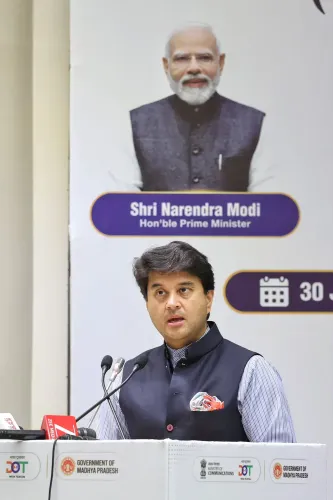
Communications Minister Jyotiraditya Scindia on Sunday, 20 September 2026, announced that Gwalior is on course to become a major hub for India's telecom manufacturing sector, with 24 companies having initiated the formal application process to set up factories in the city's proposed Telecom Manufacturing Zone (TMZ), collectively committing investments of ₹5,500 crore. The zone is expected to generate over 18,000 employment opportunities, according to the minister.
Scale and Scope of the Project
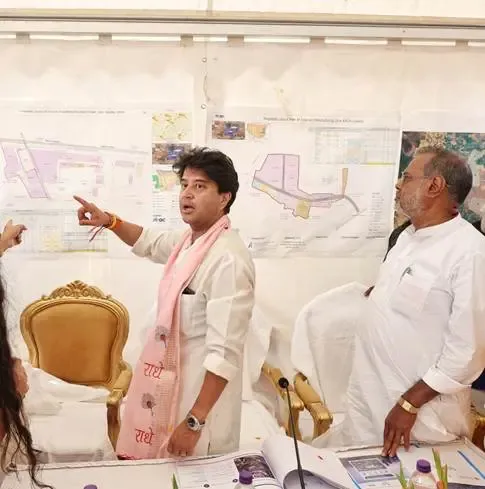
Scindia made the announcement during an on-site inspection of the land identified for the TMZ at Shrimant Madhavrao Scindia Counter Magnet City (SADA). He described the initiative as far broader than a conventional industrial park. 'The project is not about setting up a single industrial unit, but about creating a complete industrial ecosystem in Gwalior which is expected to create over 18,000 employment opportunities,' Scindia said.
For the first phase, approximately 170 acres have been earmarked — over 90 acres within the SADA campus and more than 70 acres in the adjacent IT Park. Investor interest has reportedly outpaced available land, and the minister confirmed that additional acreage will be identified to accommodate demand beyond the initial allocation.
How Investment Commitments Were Built Up
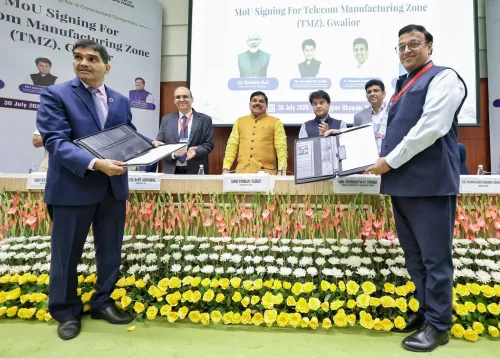
The groundwork for the TMZ was laid in July 2026, when the Department of Telecommunications (DoT) and the Government of Madhya Pradesh signed a Memorandum of Understanding. This was followed by investor roadshows in Delhi and Mumbai in August 2026.
The Delhi roadshow secured investment commitments of approximately ₹3,500 crore, with the potential to generate around 14,000 jobs. The Mumbai roadshow yielded commitments of approximately ₹2,000 crore, expected to create a further 4,000 jobs. Scindia was explicit that these are not informal pledges — companies expressing interest were required to enter the formal land application process, resulting in the current pool of 24 applicants.
Incentive Package and State Support
Scindia acknowledged Madhya Pradesh Chief Minister Mohan Yadav and the state government for structuring an incentive package tailored to the telecom manufacturing sector. The package covers concessions linked to land lease, power, employment generation, and production output, along with incentives for environmental sustainability and green development practices.
Separately, the Department of Telecommunications has proposed a Common Testing Lab infrastructure package valued at approximately ₹500 crore, which would provide shared testing facilities to companies operating within the zone — a critical cost-reduction lever for smaller manufacturers.
Infrastructure and Connectivity Advantages
The minister cited Gwalior's infrastructure pipeline as a key competitive differentiator. The approximately 120-km Agra-Gwalior high-speed corridor is under development to strengthen the city's rail-road connectivity with Delhi and key commercial centres across North India. Gwalior already sits on major railway routes, aiding logistics for both goods movement and workforce mobility.
The city's airport, developed at a cost of approximately ₹650 crore in a record 16 months, now offers direct air links to Delhi, Mumbai, and Bengaluru. On the human capital side, Gwalior's engineering institutions produce approximately 25,000 graduates annually, providing a ready pipeline of technical talent for the sector. SADA was originally conceived as a Counter Magnet City to decongest Delhi by developing Gwalior as a self-sustaining industrial centre.
What Comes Next
With land allocation underway and the formal application process already active, the next milestone will be finalising plot assignments for the 24 companies and identifying the additional land required to meet excess demand. The Agra-Gwalior corridor completion and further policy notifications from DoT are likely to be closely watched by prospective investors as indicators of project momentum.
Point of View
Since demand has already outrun the 170-acre first phase. The ₹500 crore common testing lab proposal, often the unglamorous make-or-break facility for component manufacturers, deserves as much scrutiny as the headline investment figure. India's telecom manufacturing ambitions have repeatedly stalled at the ecosystem stage — supply chains, testing infrastructure, and skilled retention — and Gwalior's 25,000-engineer annual output, while promising, needs to be matched by retention incentives if the zone is to avoid feeding talent into metros.
NationPress
20 Sept 2026
Frequently Asked Questions
What is the Gwalior Telecom Manufacturing Zone (TMZ)?
The Gwalior TMZ is a dedicated industrial zone being established in Gwalior, Madhya Pradesh, for the manufacture of telecom equipment and components. It follows an MoU signed in July 2026 between the Department of Telecommunications and the Madhya Pradesh government, and spans approximately 170 acres in its first phase across the SADA campus and the city's IT Park.
How much investment has the Gwalior TMZ attracted so far?
A total of ₹5,500 crore in investment commitments have been received from 24 companies that have formally entered the land application process. These commitments were built up through investor roadshows in Delhi (₹3,500 crore) and Mumbai (₹2,000 crore) held in August 2026.
How many jobs will the Gwalior TMZ create?
The zone is projected to generate over 18,000 employment opportunities, according to Communications Minister Jyotiraditya Scindia. The Delhi roadshow commitments alone are expected to account for around 14,000 of those jobs, with the Mumbai commitments contributing a further 4,000.
What incentives are available to companies in the Gwalior TMZ?
Companies investing in the TMZ are eligible for an incentive package covering land lease, power, employment, and production-linked benefits, along with green development incentives. The Department of Telecommunications has also proposed a shared Common Testing Lab infrastructure package of approximately ₹500 crore to reduce testing costs for zone occupants.
Why is Gwalior being developed as a telecom manufacturing hub?
Gwalior offers a combination of infrastructure, connectivity, and talent that supports industrial development. The city sits on major railway routes, has a newly developed airport built in 16 months at a cost of ₹650 crore, and is being linked to Delhi via the approximately 120-km Agra-Gwalior high-speed corridor. Its engineering institutions produce around 25,000 graduates annually, providing a ready technical workforce for the sector.