Scindia targets ₹10,000 crore for Gwalior Telecom Manufacturing Zone
Synopsis
India's first Telecom Manufacturing Zone in Gwalior has already drawn ₹3,500 crore in commitments and nearly 14,000 job pledges — and Communications Minister Scindia is now taking the pitch to Mumbai, targeting a total investment haul of over ₹10,000 crore. It is the Centre's most structured push yet to make India a global hub for telecom hardware.
Key Takeaways
Scindia will host an investors' meet and roadshow in Mumbai on Tuesday to attract investment into India's first Telecom Manufacturing Zone (TMZ) in Gwalior .
Total investment in the TMZ is expected to exceed ₹10,000 crore , per an official statement.
The inaugural New Delhi Investors' Roundtable secured commitments of ₹3,500 crore , with potential for nearly 14,000 jobs .
Madhya Pradesh CM Mohan Yadav and senior officials from the Department of Telecom will attend the Mumbai event.
The TMZ aims to reduce import dependence, boost exports, and position India as a global hub for telecom products and next-generation technologies.
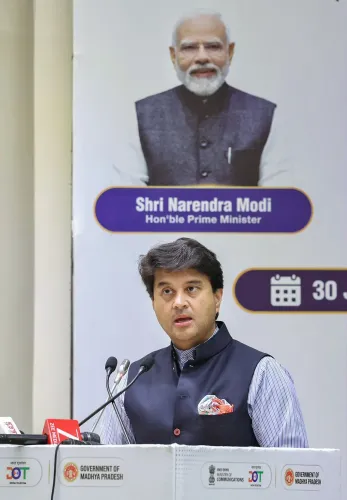
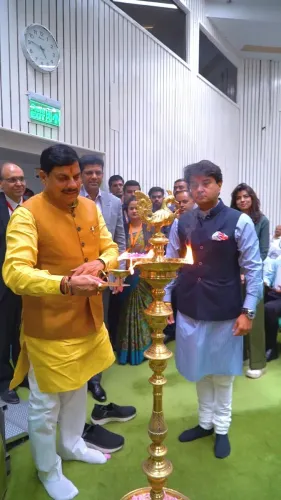
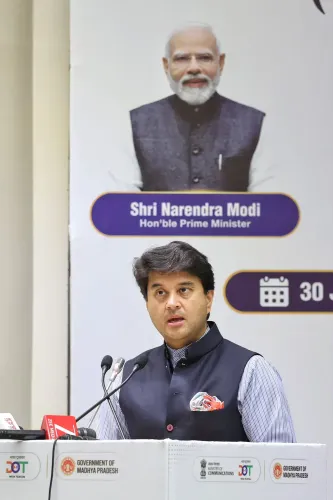
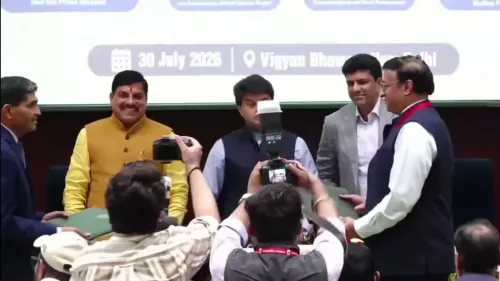
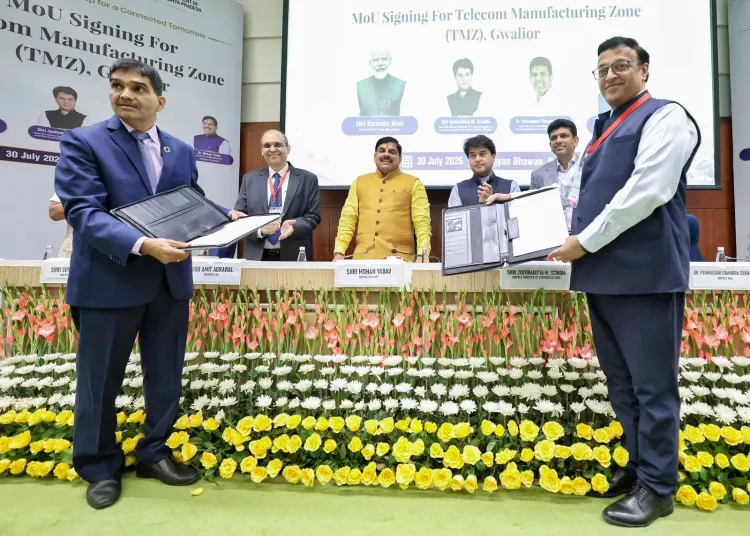
Union Communications Minister Jyotiraditya M. Scindia is set to host an investors' meet and roadshow in Mumbai on Tuesday, 5 August 2025, aimed at drawing industry participation and fresh capital into India's first Telecom Manufacturing Zone (TMZ), launched last week in Gwalior, Madhya Pradesh. Total investment in the TMZ is expected to surpass the ₹10,000 crore mark, according to an official statement.
What Has Been Committed So Far
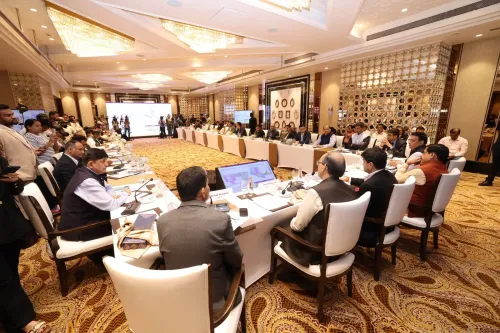
At the inaugural Investors' Roundtable held in New Delhi shortly after the TMZ launch, Scindia announced that investment commitments of ₹3,500 crore had already been secured. Those commitments carry the potential to generate nearly 14,000 employment opportunities, reflecting what the government describes as strong industry confidence in India's expanding telecom manufacturing ecosystem.
Who Will Attend the Mumbai Roadshow
Madhya Pradesh Chief Minister Mohan Yadav, Department of Telecom Secretary Amit Agarwal, and Additional Chief Secretary of the Madhya Pradesh government Neeraj Mandloi are among the senior officials expected to be present at the Mumbai event. The roadshow will bring together leading telecom manufacturers, technology companies, infrastructure providers, component makers, and institutional investors.
What the TMZ Aims to Achieve
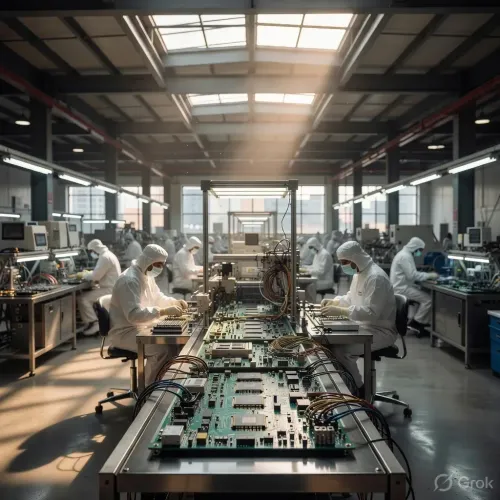
The Gwalior TMZ is designed as an integrated ecosystem covering manufacturing, research and development, design, testing, and innovation. According to the official statement, the zone aims to strengthen domestic value chains, reduce import dependence, boost exports, and position India as a trusted global hub for telecom products and next-generation technologies — a direct articulation of the Aatmanirbhar Bharat vision in the telecommunications sector.
Why This Matters for India's Telecom Sector
India's telecom hardware sector has historically been import-heavy, with a significant share of network equipment and components sourced from abroad. The TMZ initiative is the government's most structured attempt yet to reverse that trend. This comes amid broader policy momentum — including the Production-Linked Incentive scheme for telecom equipment — to build domestic manufacturing depth. Notably, the Mumbai roadshow marks the second leg of a national mobilisation drive, signalling that the Centre intends to sustain investor engagement well beyond the launch event.
The Mumbai investors' meet is expected to deepen industry partnerships further, with the government reaffirming its commitment to making India a globally competitive destination for telecom manufacturing and innovation.
Point of View
But the gap between the ₹3,500 crore already committed and the ₹10,000 crore target is substantial — and the history of Indian manufacturing zones is littered with strong launch-day numbers that softened on execution. The real measure will be how much of the committed capital translates into operational factories and verifiable jobs, not just MoU signatures. With telecom equipment imports still dominant, the structural challenge is not investor interest but supply-chain depth, skilled labour availability, and component ecosystems that take years to build. The Mumbai roadshow is a necessary next step, but the government will need a credible tracking mechanism to hold this momentum beyond the headline round.
NationPress
18 Sept 2026
Frequently Asked Questions
What is India's first Telecom Manufacturing Zone (TMZ)?
India's first Telecom Manufacturing Zone is an integrated industrial cluster launched in Gwalior, Madhya Pradesh, designed to house telecom manufacturing, R&D, design, testing, and innovation under one ecosystem. It is a central government initiative aimed at reducing import dependence and building India into a global telecom hardware hub.
How much investment has the Gwalior TMZ attracted so far?
As of the inaugural Investors' Roundtable in New Delhi, investment commitments of ₹3,500 crore have been secured, with the potential to create nearly 14,000 jobs. The government expects total investment to cross ₹10,000 crore.
What is the purpose of the Mumbai investors' meet?
The Mumbai roadshow is the second leg of a national investor mobilisation drive for the Gwalior TMZ. It aims to deepen industry partnerships and attract fresh capital from telecom manufacturers, technology companies, infrastructure providers, and institutional investors.
Who is attending the Mumbai roadshow for the TMZ?
Union Communications Minister Jyotiraditya M. Scindia will lead the event, joined by Madhya Pradesh Chief Minister Mohan Yadav, Department of Telecom Secretary Amit Agarwal, and Madhya Pradesh Additional Chief Secretary Neeraj Mandloi.
How does the TMZ connect to Aatmanirbhar Bharat?
The Telecom Manufacturing Zone is positioned as a flagship initiative under the Aatmanirbhar Bharat framework for the telecom sector. By building domestic manufacturing, R&D, and export capacity, it aims to reduce India's dependence on imported telecom equipment and components.