India's first Telecom Manufacturing Zone in Gwalior: ₹9,000 crore, 10,000 jobs
Synopsis
India has signed its first-ever dedicated Telecom Manufacturing Zone deal, placing it in Gwalior, MP — a ₹9,000 crore bet on homegrown 5G and 6G hardware that could reduce India's deep dependence on imported telecom equipment. With Dixon Technologies, HFCL, and Tejas Networks already in for ₹2,000 crore, the project has early private-sector credibility.
Key Takeaways
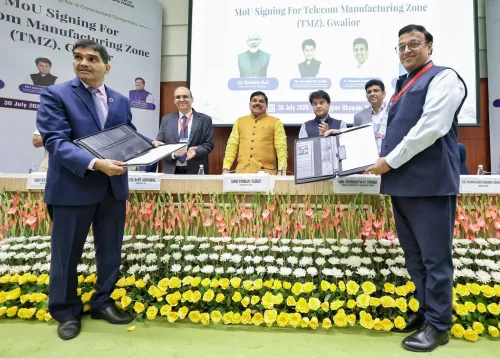
The Centre and Madhya Pradesh signed an MoU on 30 July to set up India's first Telecom Manufacturing Zone (TMZ) in Gwalior .
The project is projected to attract up to ₹9,000 crore in investment and create more than 10,000 jobs .
The Centre will provide ₹500 crore as full financial assistance for first-phase infrastructure across 350 acres .
Dixon Technologies , HFCL , and Tejas Networks have committed ₹2,000 crore in phase one, expected to yield over 4,500 jobs .
An SPV will manage the project — MP government holds 51% , DoT holds 49% .
The zone will cover mobile phones, fibre optics, semiconductors, and 5G/6G technologies.
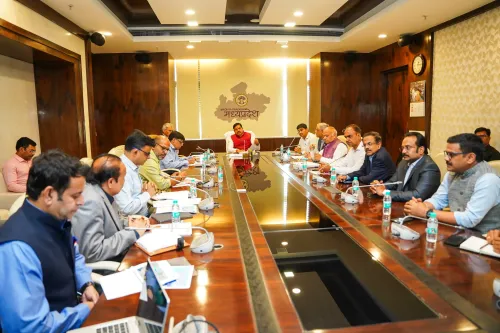
The Centre and the Madhya Pradesh government on 30 July signed a Memorandum of Understanding (MoU) to establish India's first Telecom Manufacturing Zone (TMZ) in Gwalior, a landmark project projected to attract investments of up to ₹9,000 crore and generate more than 10,000 long-term jobs. The agreement was inked between the Union Department of Telecommunications (DoT) and the Madhya Pradesh Department of Industries.
Key Developments
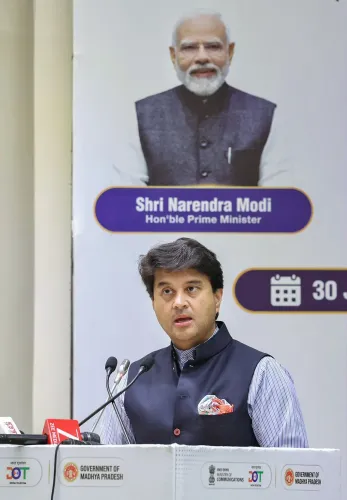
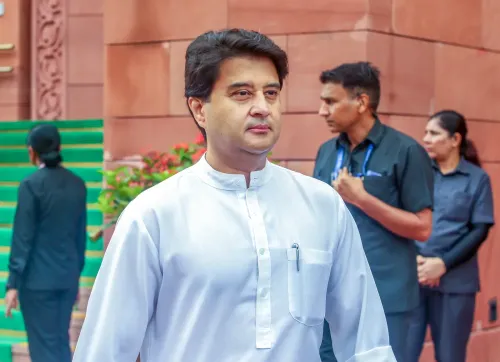
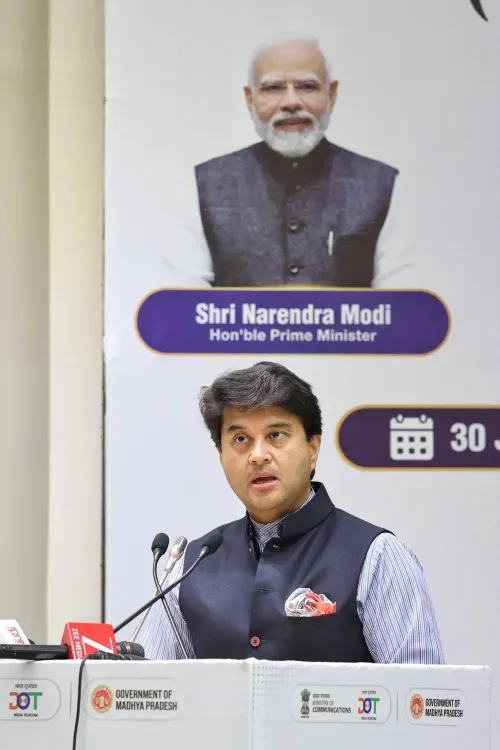
The MoU was signed in the presence of Union Communications Minister Jyotiraditya Scindia and Madhya Pradesh Chief Minister Mohan Yadav. Scindia described the project as a historic milestone, saying it would strengthen the Centre's vision of Atmanirbhar Bharat, Make in India, Digital India, and Viksit Bharat 2047, while positioning Madhya Pradesh as a pivotal telecom manufacturing hub.
'The country's first Telecom Manufacturing Zone in Gwalior is a historic achievement for both Madhya Pradesh and India. It will provide new momentum to the vision of Atmanirbhar Bharat, Make in India, Digital India and Viksit Bharat 2047,' Scindia said.
Project Structure and Centre's Investment
The TMZ will be developed across nearly 350 acres under a plug-and-play model. The Centre has committed ₹500 crore as 100 per cent financial assistance for infrastructure development in the first phase. A Special Purpose Vehicle (SPV) will oversee implementation, with the Madhya Pradesh government holding a 51 per cent stake and the DoT retaining the remaining 49 per cent.
The integrated hub is designed to host facilities for research, design, testing, and production of mobile phones, telecom network equipment, fibre optics, semiconductors, and next-generation 5G and 6G technologies.
Early Industry Commitments
Companies including Dixon Technologies, HFCL, and Tejas Networks have already committed investments of approximately ₹2,000 crore in the first phase alone, which is expected to generate more than 4,500 jobs. These early anchors signal meaningful private sector confidence in the project ahead of its formal launch.
Notably, this is the first dedicated telecom manufacturing cluster of its kind in India — distinct from broader electronics parks — and reflects a deliberate policy shift toward building indigenous capacity in high-value telecom hardware, an area where India has historically been heavily import-dependent.
What the Government Said
Scindia stressed that the telecom sector must evolve beyond service delivery. 'The telecom sector must move beyond being a service provider and become a manufacturing hub. Building a strong indigenous ecosystem is essential, and this Telecom Manufacturing Zone is a significant step in that direction,' he said.
Chief Minister Mohan Yadav said the project would accelerate industrial growth in Madhya Pradesh and help transform Gwalior into a major centre for electronics and telecom manufacturing. Scindia also framed the initiative as a symbol of cooperative federalism — a joint Centre-state undertaking aimed at reducing India's dependence on imported telecom equipment.
Broader Significance
India currently imports a significant share of its telecom hardware, including critical network components used in its rapidly expanding 5G rollout. The Gwalior TMZ is positioned to address that gap by creating an end-to-end domestic supply chain. This comes amid intensifying global competition in telecom manufacturing, with countries like Vietnam and China aggressively courting the same sector. With sectoral guidelines and SPV formation expected in the coming weeks, the pace of execution will be closely watched by industry and policymakers alike.
Point of View
Not just an MoU on paper. The real test, however, is whether anchor investors like Dixon and HFCL can catalyse a broader supplier ecosystem or remain isolated anchors in an otherwise empty zone. India has launched industrial clusters before where first-phase commitments did not translate into full-scale production. Execution timelines and the SPV's governance quality will determine whether Gwalior becomes a genuine telecom manufacturing hub or another aspirational headline.
NationPress
13 Sept 2026
Frequently Asked Questions
What is the Telecom Manufacturing Zone being set up in Gwalior?
The Gwalior Telecom Manufacturing Zone (TMZ) is India's first dedicated telecom manufacturing cluster, established through an MoU signed on 30 July between the Union Department of Telecommunications and the Madhya Pradesh Department of Industries. Spread across 350 acres, it will host production facilities for mobile phones, fibre optics, semiconductors, and 5G and 6G technologies, with projected investments of ₹9,000 crore and over 10,000 jobs.
How much is the Centre investing in the Gwalior TMZ?
The Centre is providing ₹500 crore as 100 per cent financial assistance for infrastructure development in the first phase of the project. The zone will be developed under a plug-and-play model across approximately 350 acres.
Which companies have committed to the Gwalior Telecom Manufacturing Zone?
Dixon Technologies, HFCL, and Tejas Networks have already committed investments of around ₹2,000 crore in the first phase. These commitments are expected to generate more than 4,500 jobs in the initial stage.
How will the Gwalior TMZ be governed?
A Special Purpose Vehicle (SPV) will be formed to implement the project. The Madhya Pradesh government will hold a 51 per cent stake in the SPV, with the Department of Telecommunications holding the remaining 49 per cent.
Why does India need a dedicated Telecom Manufacturing Zone?
India currently imports a significant portion of its telecom hardware, including network equipment critical to its 5G rollout. The TMZ is designed to build an end-to-end domestic supply chain for telecom products, reducing import dependence and supporting the government's Atmanirbhar Bharat and Make in India objectives.