Gwalior to host India's first Telecom Manufacturing Zone, ₹3,500 crore investment expected
Synopsis
Gwalior is set to host India's first dedicated Telecom Manufacturing Zone — a 350-acre plug-and-play cluster backed by a Centre-state MoU, targeting ₹3,500 crore in investment and over 14,000 jobs. It marks the first time a central Indian city has been chosen to anchor a nationally designated telecom manufacturing hub, a deliberate push to decentralise India's electronics industrial base.
Key Takeaways
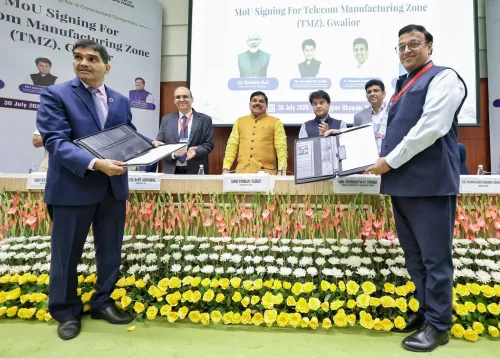
India's first Telecom Manufacturing Zone (TMZ) will come up in Gwalior, Madhya Pradesh , following an MoU signed on 30 July .
The zone will span nearly 350 acres on a plug-and-play model, targeting investments of around ₹3,500 crore .
More than 14,000 direct and indirect jobs are expected to be created.
The upcoming ₹5,500-crore Gwalior–Agra Expressway is projected to reduce Delhi-Gwalior travel time to roughly three hours .
Union Communications Minister Jyotiraditya Scindia called the project 'the foundation of India's technological future' and a model of cooperative federalism.
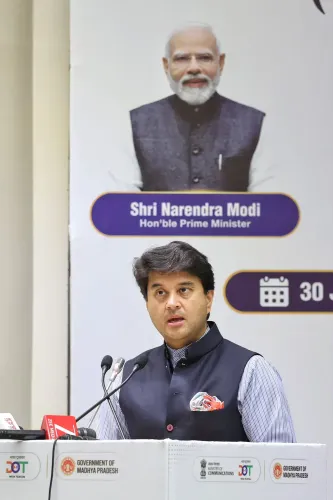
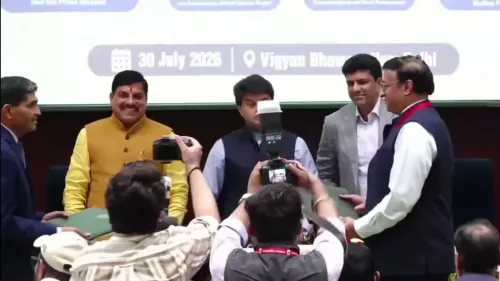
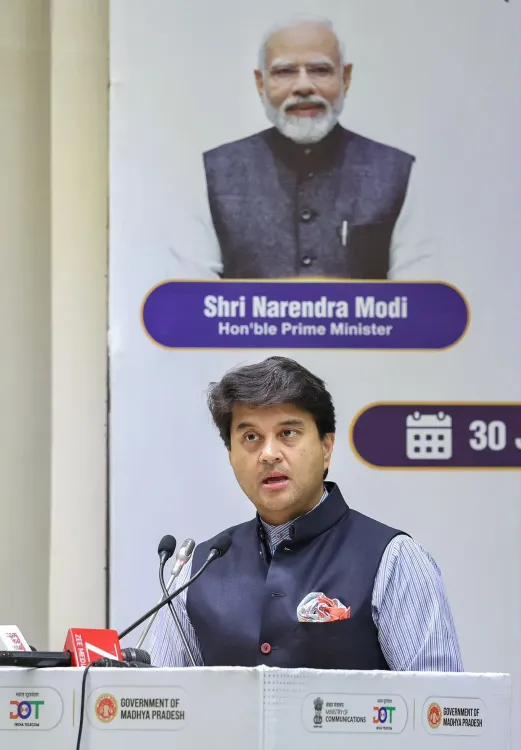
Union Communications Minister Jyotiraditya Scindia on Thursday, 30 July declared Gwalior one of Madhya Pradesh's fastest-growing cities, as the Department of Telecommunications and the Madhya Pradesh government signed a Memorandum of Understanding to establish India's first Telecom Manufacturing Zone (TMZ) in the city. The zone is projected to draw investments of around ₹3,500 crore and generate more than 14,000 direct and indirect jobs.
What the MoU Covers
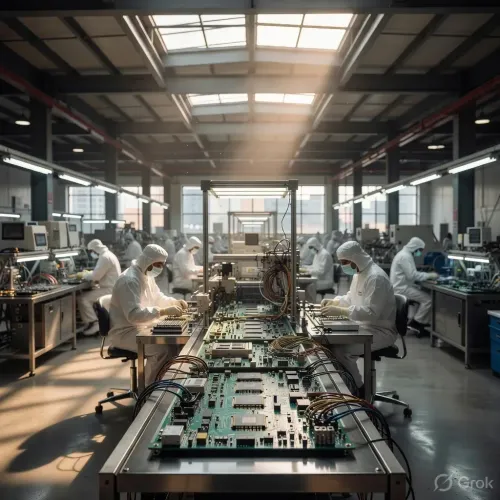
The agreement, signed between the Department of Telecommunications and Madhya Pradesh's Department of Industrial Policy and Investment Promotion, provides for a dedicated telecom manufacturing cluster spread across nearly 350 acres. The zone will follow a plug-and-play model, meaning infrastructure — power, roads, and utilities — will be ready before manufacturers move in, lowering the entry barrier for investors.
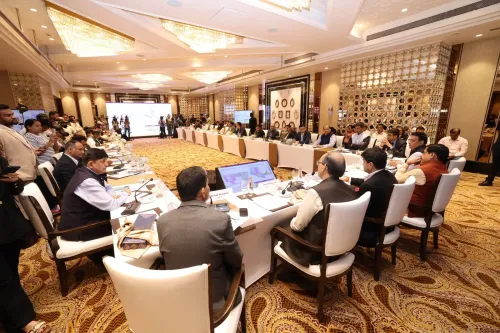
Speaking at Vigyan Bhawan in New Delhi after the signing, Scindia said the zone would strengthen domestic production of telecom equipment and advance India's self-reliance goals. 'This is not merely an industrial project but the foundation of India's technological future. It is a shining example of cooperative federalism, with the Centre and the Madhya Pradesh government working together to establish a project of national importance,' he said.
Gwalior's Connectivity Edge
Scindia pointed to Gwalior's improving infrastructure as a key enabler. The city is currently connected by air to New Delhi, Bengaluru, and several other major cities. Road access from multiple directions has also improved in recent years.
A further boost is expected from the upcoming ₹5,500-crore Gwalior–Agra Expressway, which is projected to cut travel time between Delhi and Gwalior to approximately three hours. Scindia argued that this combination of air and road connectivity makes Gwalior an increasingly attractive destination for large-scale manufacturing investment.
Strategic Fit with National Programmes
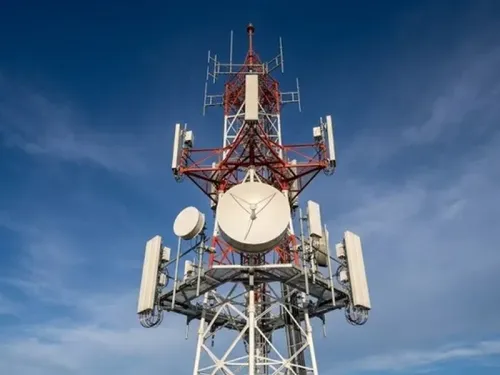
The minister positioned the TMZ as a direct expression of Prime Minister Narendra Modi's Atmanirbhar Bharat, Make in India, Digital India, and Viksit Bharat 2047 frameworks. India's telecom sector has seen rapid network expansion in recent years, yet a significant share of equipment — from base stations to optical fibre components — continues to be imported. A dedicated manufacturing zone in Madhya Pradesh could help shift that balance.
Notably, this is the first time a state in central India has been chosen to anchor a nationally designated telecom manufacturing cluster, signalling a deliberate effort to spread industrial investment beyond the traditional coastal corridors of Maharashtra, Tamil Nadu, and Gujarat.
Impact on Madhya Pradesh's Industrial Map
Scindia expressed confidence that the TMZ would firmly establish Gwalior as one of India's leading electronics and telecom manufacturing centres, elevating Madhya Pradesh's standing on the national industrial map. The state government's role in co-signing the MoU and providing land under the plug-and-play model reflects a coordinated Centre-state approach that officials described as a template for future manufacturing zones.
With sectoral guidelines and land allocation processes expected to follow the MoU, the pace of actual ground-breaking will be closely watched by industry bodies and investors tracking India's electronics manufacturing ambitions.
Point of View
And the announcement reinforces his role as the city's most prominent patron. That said, the plug-and-play model is a genuine structural improvement over earlier industrial zones that left investors to sort out utilities themselves. The harder question is whether ₹3,500 crore in projected investment will actually materialise, given that India's electronics manufacturing ambitions have repeatedly outpaced execution. Madhya Pradesh lacks the deep supplier ecosystem of Tamil Nadu or Karnataka, which means the TMZ will need active supply-chain development, not just land allocation, to become self-sustaining.
NationPress
14 Sept 2026
Frequently Asked Questions
What is the Telecom Manufacturing Zone announced for Gwalior?
It is India's first dedicated Telecom Manufacturing Zone (TMZ), to be developed over nearly 350 acres in Gwalior, Madhya Pradesh, on a plug-and-play model. The project is expected to attract around ₹3,500 crore in investment and create more than 14,000 direct and indirect jobs.
Who signed the MoU for the Gwalior Telecom Manufacturing Zone?
The MoU was signed between the Department of Telecommunications (Centre) and Madhya Pradesh's Department of Industrial Policy and Investment Promotion on 30 July. Union Communications Minister Jyotiraditya Scindia was present at the signing ceremony at Vigyan Bhawan.
How will the Gwalior–Agra Expressway benefit the project?
The upcoming ₹5,500-crore Gwalior–Agra Expressway is expected to cut travel time between Delhi and Gwalior to approximately three hours, improving logistics connectivity for the manufacturing zone and making it more attractive to investors.
Why is Gwalior being described as one of Madhya Pradesh's fastest-growing cities?
According to Minister Scindia, Gwalior has seen significant improvements in road and air connectivity in recent years, with direct flights to Delhi, Bengaluru, and other cities, alongside upgraded road access from multiple directions — factors that have made it an increasingly attractive industrial destination.
How does the TMZ fit into India's broader manufacturing goals?
The Telecom Manufacturing Zone is positioned as part of Prime Minister Narendra Modi's Atmanirbhar Bharat, Make in India, Digital India, and Viksit Bharat 2047 frameworks. It aims to boost domestic production of telecom equipment and reduce India's dependence on imported network hardware.