Karnataka opposes Maharashtra's ₹19,000 crore Krishna-Bhima water diversion plan
Synopsis
Karnataka's objection to Maharashtra's ₹19,000 crore Krishna-Bhima diversion plan cuts deeper than a routine interstate water row — it exposes a glaring inconsistency: the Centre has blocked Karnataka's own Upper Krishna Project on the grounds that KWDT-II is ungazetted, yet Maharashtra may be accessing World Bank funding for a project in the same legal void. An all-party meeting under CM Shivakumar is now on the cards.
Key Takeaways
Patil , Karnataka's Vijayapura District In-charge Minister, formally objected on 2 November 2026 to Maharashtra's plan to divert 40 TMC feet of Krishna river floodwater to the Bhima river.
Maharashtra reportedly sanctioned ₹24 crore in July 2026 for a Detailed Project Report; the total project cost is estimated at ₹19,000 crore .
The KWDT-II tribunal had earlier rejected a similar Maharashtra proposal to transfer water from the Upper Krishna (K-1) to the Bhima sub-basin (K-5).
Patil questioned how Maharashtra secured World Bank financial assistance when the KWDT-II award has not been officially notified in the Gazette.
An all-party meeting will be convened under Karnataka Chief Minister D.K.
Shivakumar to determine the state's next steps.
The diversion could affect inflows into the Almatti reservoir and water availability for other downstream states, according to Patil.
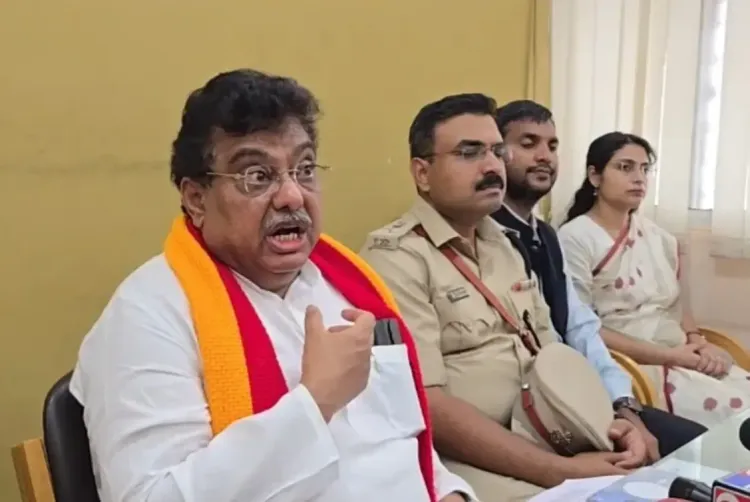
Karnataka has formally pushed back against Maharashtra's proposed plan to divert 40 TMC feet of floodwater from the Krishna river to the Bhima river, with Vijayapura District In-charge Minister M.B. Patil warning on 2 November 2026 that the project could seriously harm Karnataka's water rights. The objection centres on both the legal validity of the proposal and its potential impact on the Almatti reservoir and downstream states.
What Maharashtra's Plan Involves
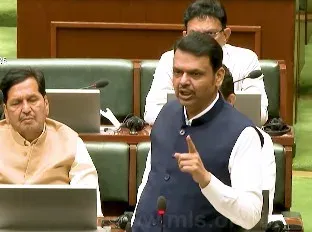
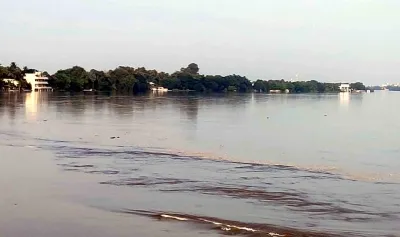
According to Minister Patil, Maharashtra Chief Minister Devendra Fadnavis spoke publicly about the project at a media conclave in Mumbai on 9 October 2026. A video clip of Fadnavis' remarks was played at Patil's press conference in Vijayapura. The plan proposes diverting floodwater from the Krishna river near Mahabaleshwar to the Ujjani reservoir on the Bhima river, with the water intended to serve two districts in Marathwada and parts of Sangli and Solapur districts in Maharashtra.
The Maharashtra government reportedly sanctioned ₹24 crore in July 2026 to prepare a Detailed Project Report (DPR), with preparations also underway for a geological survey along a route of roughly 84 km. The DPR is expected to be completed by the end of 2026, and the estimated total project cost is approximately ₹19,000 crore.
Karnataka's Legal Objections
Patil questioned how Maharashtra could proceed with the project given that the Krishna Water Disputes Tribunal-II (KWDT-II) award has not yet been officially notified in the Gazette. He noted that the same tribunal had previously rejected a Maharashtra proposal to transfer around 35 TMC feet of water from the Upper Krishna sub-basin (K-1) to the Bhima sub-basin (K-5), citing risks to water flows and utilisation in the Upper Krishna sub-basin.
Patil also pointed to Clause XVI of the KWDT-II award, which states that a competent authority or tribunal may review or revise water-sharing arrangements only after 31 May 2050. He argued that building permanent infrastructure now — in a manner that could pre-empt future redistribution of surplus water — undermines the legal framework governing Krishna river sharing among basin states.
The tribunal had allocated 2,130 TMC feet of water at 75 per cent dependability. Of an additional 448 TMC feet at 65 per cent dependability, Maharashtra was allocated 81 TMC feet, Karnataka 173 TMC feet, and undivided Andhra Pradesh 194 TMC feet.
World Bank Funding Under Scrutiny
Patil raised pointed questions about Maharashtra's reported use of World Bank financial assistance for the project. He noted that the Centre had repeatedly returned Karnataka's own DPR for Phase-3 of the Upper Krishna Project on the grounds that the KWDT-II award remains ungazetted. He demanded that the Union government clarify whether it had approved Maharashtra's project, whether required clearances had been granted, and how World Bank funding could be secured without Union government guidance in such circumstances.
All-Party Meeting and Karnataka's Response
Minister Patil announced that an all-party meeting would soon be convened under the leadership of Karnataka Chief Minister D.K. Shivakumar to deliberate on the issue. 'We will rise above party lines on matters concerning the interests of the state and take steps to protect Karnataka's interests,' Patil said at the press conference.
He warned that the proposed diversion could alter flows in the Upper Krishna sub-basin, affect inflows into the Almatti reservoir, and have adverse implications for water availability across downstream states. He urged both the Maharashtra and Union governments to provide a comprehensive clarification on the project's legal validity, approvals, and financing arrangements.
Broader Implications
This is not the first time interstate river-water disputes have strained relations between Karnataka and Maharashtra; similar tensions have previously surfaced over the Mahadayi and Cauvery rivers. Notably, the Centre's own standard — that ungazetted KWDT-II awards bar Karnataka's infrastructure plans — is now being cited against Maharashtra's project, surfacing a contradiction that could become a flashpoint in Union-state relations. The outcome of the demanded Centre clarification will likely shape how aggressively Karnataka pursues the matter before the tribunal or courts.
Point of View
That is a serious question of federal equity, not merely interstate rivalry. The KWDT-II's non-gazettement has dragged on far too long, leaving all basin states in a planning limbo that powerful ones appear to sidestep while less assertive ones cannot. Without the Centre stepping in with transparent, equal treatment of all basin states, this dispute will metastasise well beyond a press conference in Vijayapura.
NationPress
2 Nov 2026
Frequently Asked Questions
What is Maharashtra's Krishna-Bhima river diversion project?
It is a proposed plan to divert approximately 40 TMC feet of floodwater from the Krishna river near Mahabaleshwar to the Ujjani reservoir on the Bhima river, at an estimated cost of ₹19,000 crore. The water is intended to supply two Marathwada districts and parts of Sangli and Solapur. Maharashtra reportedly sanctioned ₹24 crore in July 2026 for a Detailed Project Report.
Why is Karnataka opposing the project?
Karnataka argues the project lacks a legal basis because the KWDT-II tribunal award has not been officially notified in the Gazette, the same tribunal had earlier rejected a similar Maharashtra proposal, and the diversion could reduce water inflows into Karnataka's Almatti reservoir. Minister M.B. Patil also questioned how Maharashtra secured World Bank funding under these legal conditions.
What is the KWDT-II and why does it matter here?
The Krishna Water Disputes Tribunal-II (KWDT-II) is the adjudicating body that determines how Krishna river water is shared among basin states — Karnataka, Maharashtra, and Andhra Pradesh. Its award has not yet been officially notified in the Gazette, which Karnataka says creates a legal void that cannot be used to justify major new infrastructure or financing approvals.
What action is Karnataka planning to take?
An all-party meeting is to be convened under Chief Minister D.K. Shivakumar to decide Karnataka's collective response. Minister Patil has also demanded that the Centre clarify whether it approved the project, what clearances were granted, and whether World Bank assistance was obtained with Union government guidance.
Who could be affected beyond Karnataka?
Beyond Karnataka, other downstream states could face reduced water availability if the diversion alters flows in the Upper Krishna sub-basin. Minister Patil specifically warned of potential impacts on Andhra Pradesh and other downstream areas, arguing the project should not have been taken up unilaterally without consulting all basin states.