Khattar Reviews Kanh Diversion Project to Revive Shipra
Synopsis
Union Minister Manohar Lal Khattar descended into the tunnel section of the Kanh Diversion Closed Duct Project in Ujjain on 20 June 2026, reviewing construction progress and ordering officials to accelerate work to protect the sacred Shipra river ahead of the Simhastha Kumbh Mela in 2028.
Key Takeaways
Union Minister Manohar Lal Khattar personally inspected the Kanh Diversion Closed Duct Project in Ujjain on 20 June 2026 , descending into the tunnel section.
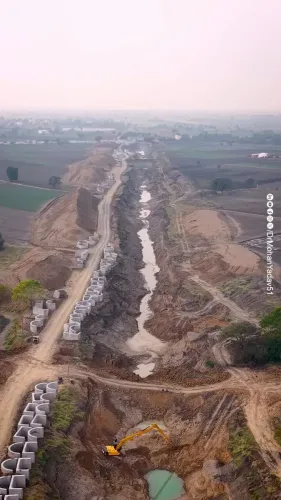
The project will divert polluted Kanh river water away from the Shipra river's major ghats and sacred pilgrimage sites once complete.
Khattar directed officials to accelerate construction while ensuring full compliance with quality, safety standards, and set timelines.
The project is positioned as a key initiative for preserving the purity and continuity of the Shipra , revered as Maa Shipra .
Timely completion is critical ahead of the Simhastha Kumbh Mela , expected in Ujjain in 2028 , which draws tens of millions of pilgrims.
The inspection reflects active central-government coordination with Madhya Pradesh state agencies on a project with both religious and public-health significance.
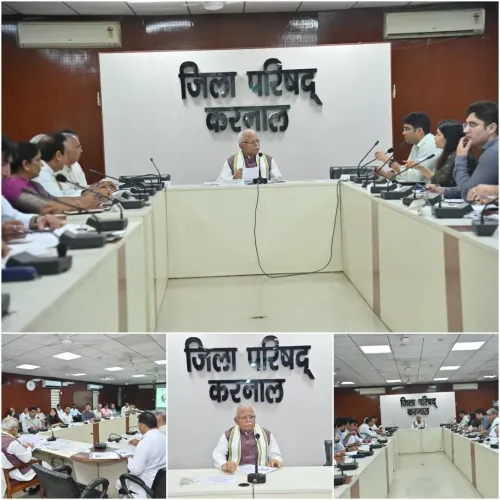
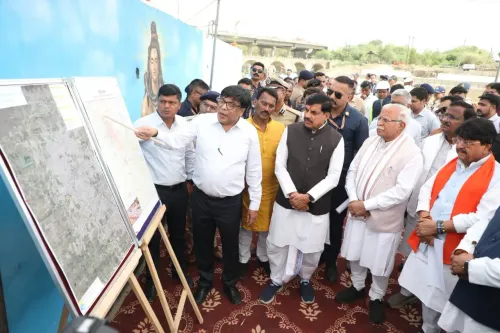
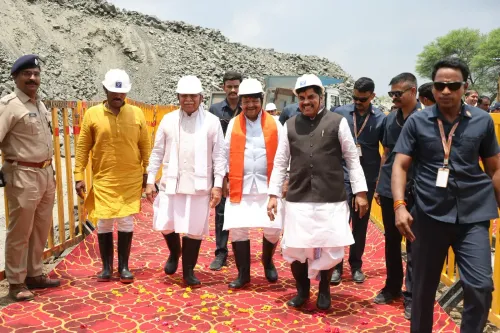
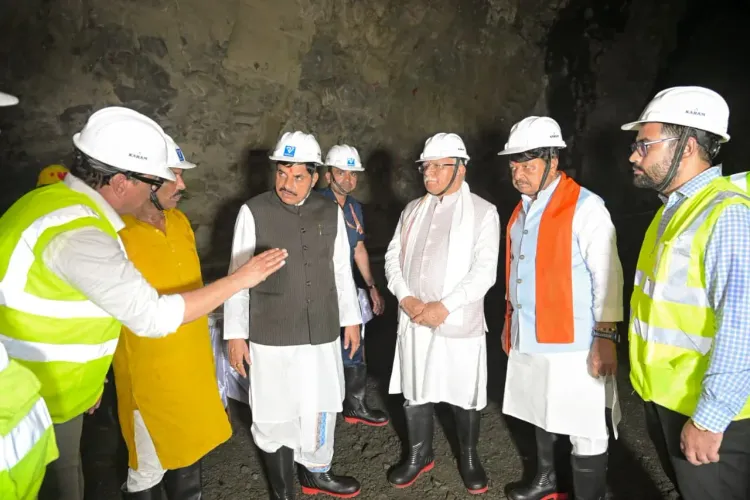
Union Minister Manohar Lal Khattar on Saturday, 20 June 2026, conducted a site inspection of the Kanh Diversion Closed Duct Project in Ujjain, Madhya Pradesh, descending into the project's tunnel section to personally review construction progress and directing officials to accelerate work without compromising quality or safety standards.
Context
Posting on X, Khattar wrote: 'आज कान्ह डायवर्शन क्लोज डक्ट परियोजना का स्थलीय निरीक्षण कर निर्माण कार्यों की प्रगति की विस्तृत समीक्षा की।' ('Today I conducted a site inspection of the Kanh Diversion Closed Duct Project and carried out a detailed review of construction progress.'). He noted that he descended into the tunnel section for direct observation and issued instructions to officials to maintain quality, safety standards, and stipulated timelines while speeding up the work.
The minister described the project as 'एक महत्वपूर्ण और दूरदर्शी पहल' — 'an important and far-sighted initiative' — aimed at the protection, enhancement, and rejuvenation of the Shipra river, locally revered as Maa Shipra.
Policy Backdrop
The Kanh Diversion Closed Duct Project is designed to prevent polluted water from the Kanh river — an urban tributary carrying sewage and industrial effluents — from reaching the major bathing ghats and sacred pilgrimage sites along the Shipra. Once complete, the closed-duct infrastructure will effectively intercept and reroute Kanh's contaminated flows before they merge with the Shipra.
The project fits within a broader national pattern of tributary diversion and closed-conduit schemes to protect rivers of high religious and cultural significance. India's Namami Gange programme, launched in 2015, pioneered the funding architecture for such pollution-abatement and river-conservation works, and similar engineering approaches have since been extended to rivers beyond the Ganga basin.
Union ministers conducting physical site inspections of state-executed infrastructure projects signals active central-state coordination, particularly when projects carry a hard deadline tied to a mass-attendance religious event.
Stakeholders and Impact
The Shipra flows through Ujjain, home to the Mahakaleshwar Jyotirlinga, one of the twelve sacred Jyotirlingas in Hindu tradition. The river is the centrepiece of the Simhastha Kumbh Mela, held every 12 years in Ujjain, which draws tens of millions of pilgrims who take ritual baths at the river's ghats.
Khattar explicitly linked the project to Simhastha, stating it would play a critical role in ensuring a clean and healthy river system for large-scale spiritual gatherings. Pilgrims, Ujjain municipal bodies, and the state government of Madhya Pradesh are the primary stakeholders with a direct interest in the project's timely completion.
Water quality at the Shipra's bathing ghats has been a recurring concern ahead of past Simhastha editions, making this infrastructure intervention particularly consequential for public health and religious sentiment alike.
What's Next
The next Simhastha Kumbh Mela in Ujjain is expected in 2028, making the project's completion timeline a matter of significant administrative urgency. Khattar's directive to officials to 'accelerate work' while adhering to quality and safety norms suggests the inspection was as much a deadline-enforcement exercise as a technical review.
Budgetary allocations in forthcoming central and state budgets, as well as project completion milestones, will be closely watched as the 2028 Simhastha deadline approaches. The minister's hands-on engagement indicates that the project is likely to remain under close central scrutiny in the months ahead.
Point of View
A gathering that routinely becomes a benchmark for administrative credibility. By invoking quality, safety, and timelines in a single directive, Khattar is pre-empting the kind of last-minute scramble that marred river-quality preparations before earlier Kumbh editions. The move also fits the BJP's broader governance narrative of senior leaders conducting ground-level reviews rather than relying solely on bureaucratic reports.
NationPress
19 Sept 2026
Frequently Asked Questions
What is the Kanh Diversion Closed Duct Project?
The Kanh Diversion Closed Duct Project is a tunnel and closed-duct infrastructure scheme in Ujjain, Madhya Pradesh, designed to prevent polluted water from the Kanh river — which carries urban sewage and industrial effluents — from reaching the Shipra river's sacred bathing ghats and pilgrimage sites.
Why is the Shipra river important in Ujjain?
The Shipra is a sacred river flowing through Ujjain, the city of the Mahakaleshwar Jyotirlinga. It is the site of the Simhastha Kumbh Mela, held every 12 years, where tens of millions of pilgrims take ritual baths at its ghats.
When is the next Simhastha Kumbh Mela in Ujjain?
The next Simhastha Kumbh Mela in Ujjain is expected in 2028, which is why timely completion of the Kanh Diversion project is considered administratively urgent.
What did Manohar Lal Khattar do during his Ujjain visit on 20 June 2026?
Khattar conducted a site inspection of the Kanh Diversion Closed Duct Project, descended into the tunnel section for direct observation of construction work, and directed officials to accelerate progress while strictly maintaining quality, safety standards, and stipulated timelines.
How does the Kanh Diversion project relate to Namami Gange?
While the Kanh Diversion project targets the Shipra river basin rather than the Ganga directly, it follows the closed-conduit and tributary diversion approach pioneered under the Namami Gange programme launched in 2015, which established the national funding and engineering framework for such river-pollution abatement works.