Khattar Inspects Bandhwari Dump Site Waste Processing
Synopsis
Union Minister Manohar Lal Khattar inspected waste processing operations at the Bandhwari dump site in Gurugram on 28 May 2026, saying bio-mining and scientific disposal are being accelerated under PM Modi's Swachh Bharat Mission to permanently eliminate the legacy landfill and restore clean, safe conditions for residents.
Key Takeaways
Union Minister Manohar Lal Khattar personally inspected the Bandhwari dump site in Gurugram on 28 May 2026 .
Remediation is described as proceeding at 'war footing' pace using bio-mining and modern scientific waste disposal techniques.
The effort is framed as part of Swachh Bharat Mission-Urban 2.0 , approved in 2021 with funding for more than 2,400 urban local bodies.
The Haryana government is co-partnering with the central ministry on the landfill remediation project.
Successful cleanup would address long-standing concerns over groundwater contamination, air pollution, and public health in surrounding Gurugram localities.
Environmental compliance and the next phase of SBM-Urban 2.0 funding releases for Haryana remain key milestones to watch.
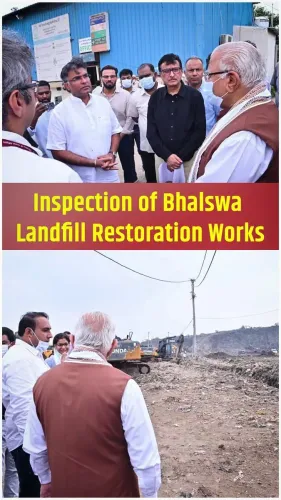
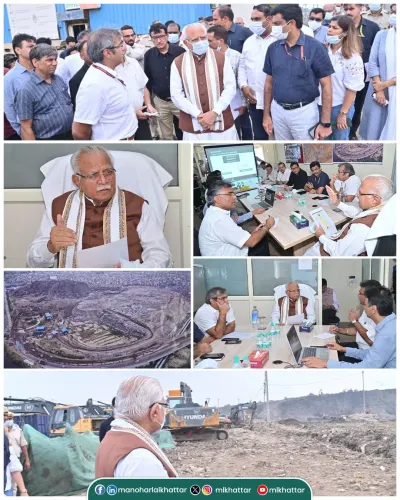
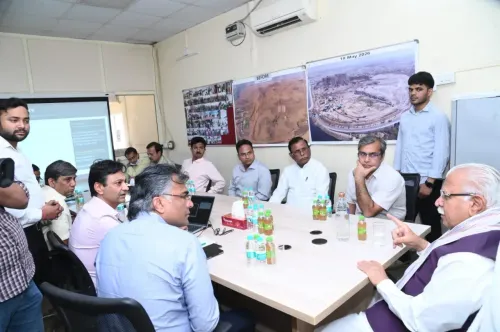
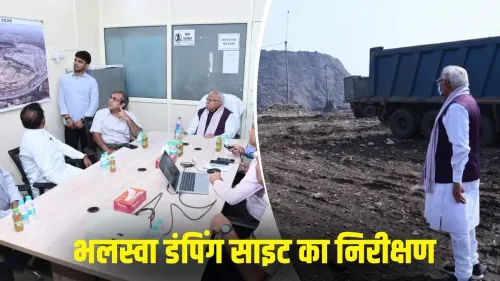
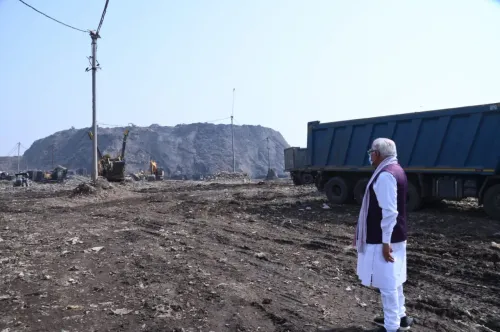
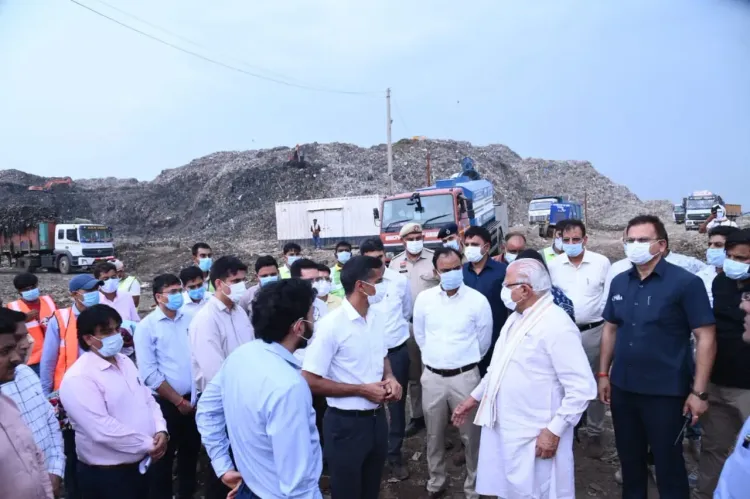
Union Minister of Housing and Urban Affairs Manohar Lal Khattar on Thursday, 28 May 2026, conducted a detailed inspection of ongoing waste processing operations at the Bandhwari dump site in Gurugram, Haryana, reaffirming the government's commitment to eliminating the legacy landfill through scientific methods. The minister described the remediation effort as proceeding at 'war footing' pace, with bio-mining and modern disposal techniques being accelerated to deliver a permanently clean and pollution-free zone.
Context
Posting in Hindi on X, Khattar wrote: 'आज बंधवाड़ी डंप साइट पर चल रहे वेस्ट प्रोसेसिंग कार्यों का विस्तृत अवलोकन एवं निरीक्षण किया' — 'Today I conducted a detailed observation and inspection of the waste processing work underway at the Bandhwari dump site.' He added that scientific and modern technologies are being used to speed up legacy waste processing, bio-mining, and scientific waste disposal so that the area can be made permanently clean and pollution-free.
Khattar also noted that work is continuously underway to strengthen sanitation, health safety, and civic amenities in surrounding areas while ensuring compliance with environmental standards. He credited Prime Minister Narendra Modi's 'inspirational guidance' and the Haryana government's cooperation as driving forces behind the initiative.
Policy Backdrop
The Bandhwari dump site is one of the most prominent legacy landfills in the National Capital Region, long flagged for its environmental and public health hazards due to decades of unprocessed municipal solid waste. Remediation of such sites is a core mandate under the Swachh Bharat Mission-Urban, launched in October 2014, which set targets for 100% scientific waste processing and the elimination of open dumping across urban India.
The Ministry of Housing and Urban Affairs issued legacy waste remediation guidelines in 2019, requiring bio-mining at all major dumpsites under the mission framework. Swachh Bharat Mission-Urban 2.0, approved in 2021, allocated dedicated funding for remediation across more than 2,400 urban local bodies, with Haryana among the participating states. Bio-mining — a process that mechanically separates and recycles old waste into usable fractions — is the primary technique deployed at sites like Bandhwari.
Stakeholders and Impact
Residents of Gurugram and surrounding localities have for years raised concerns about foul odour, leachate contamination of groundwater, and air pollution linked to the Bandhwari site. Successful remediation would directly benefit the dense residential and commercial zones that have grown around the landfill as the city expanded rapidly over the past two decades.
Urban local bodies in Haryana, tasked with day-to-day solid waste management, stand to receive both technical and financial support through the central scheme. Environmental regulators have previously flagged the site for non-compliance, making Khattar's public inspection a signal of heightened central oversight over the remediation timeline.
What's Next
Attention will now turn to the pace of bio-mining operations and whether the site meets the environmental standards set by national regulators. The next phase of Swachh Bharat Mission-Urban 2.0 funding releases for Haryana, along with any compliance reviews by environmental authorities of the Bandhwari site, will be key indicators of progress. Khattar's inspection visit, shared publicly with photographs, signals that the ministry intends to maintain visible accountability over one of the NCR's most high-profile waste remediation projects.
Point of View
Placing a senior Union minister directly at one of the NCR's most contentious environmental flashpoints. It ties the central government's urban sanitation narrative firmly to a site that has repeatedly drawn regulatory scrutiny, reinforcing the Swachh Bharat Mission's legacy waste mandate ahead of potential compliance reviews. The explicit invocation of PM Modi's guidance also serves to embed local remediation progress within the broader national cleanliness mission, a recurring communication pattern for the ministry. For Gurugram residents, the ministerial visit raises expectations that the long-delayed cleanup will now move with greater urgency and transparency.
NationPress
11 Oct 2026
Frequently Asked Questions
What is the Bandhwari dump site and why is it controversial?
The Bandhwari dump site is a major legacy landfill in Gurugram, Haryana, that has accumulated decades of unprocessed municipal solid waste, causing persistent concerns over groundwater contamination, foul odour, and air pollution for surrounding residential and commercial areas.
What is bio-mining and how is it used at Bandhwari?
Bio-mining is a mechanical process that excavates and segregates old landfill waste into recyclable, compostable, and inert fractions, allowing the land to be reclaimed. It is the primary technique being deployed at Bandhwari under the Swachh Bharat Mission-Urban guidelines issued in 2019.
What is Swachh Bharat Mission-Urban 2.0?
Swachh Bharat Mission-Urban 2.0 is a central government scheme approved in 2021 that provides dedicated funding to more than 2,400 urban local bodies across India for scientific solid waste management, including the remediation of legacy dumpsites like Bandhwari.
What did Manohar Lal Khattar say about the Bandhwari cleanup?
Khattar said waste processing is proceeding at 'war footing' pace using scientific and modern technologies, and expressed full commitment to eliminating the dump site and providing residents with a clean, safe, and better environment, crediting PM Modi's guidance and the Haryana government's cooperation.
What happens after the Bandhwari site is remediated?
Once remediated, the reclaimed land can be repurposed for civic or green uses, and surrounding areas are expected to see improved sanitation, cleaner groundwater, and reduced air pollution. Future steps include monitoring environmental compliance and the release of subsequent SBM-Urban 2.0 funding tranches for Haryana.