Khattar Chairs Power & Urban Review Meet in Ranchi
Synopsis
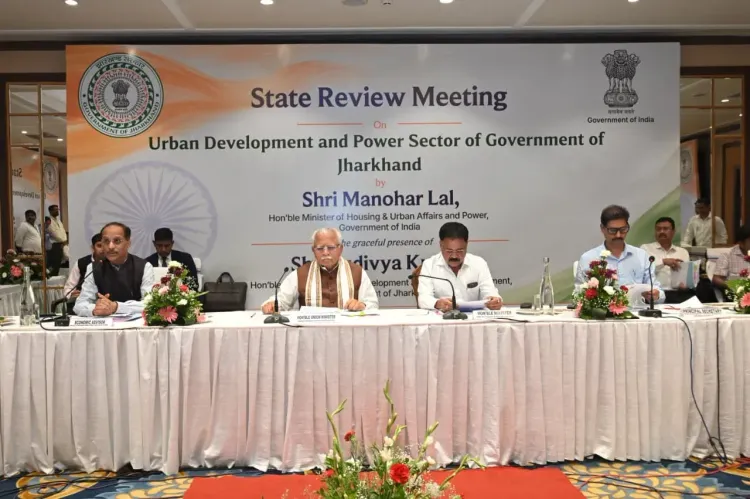
Union Power Minister Manohar Lal Khattar chaired a review meeting in Ranchi on June 19, 2026, assessing Jharkhand's progress under the Revamped Distribution Sector Scheme and Swachh Bharat Mission, with focus on time-bound project delivery and centre-state coordination.
Key Takeaways
Manohar Lal Khattar chaired a power and urban development review meeting in Ranchi on June 19, 2026 .
The meeting reviewed progress under the Revamped Distribution Sector Scheme (RDSS) and Swachh Bharat Mission in Jharkhand .
RDSS was approved in July 2021 with an outlay exceeding Rs 3 lakh crore to modernise power distribution and cut AT&C losses.
Special emphasis was placed on time-bound implementation of projects and expansion of urban amenities through centre-state coordination.
State power utilities and urban local bodies in Jharkhand are the primary implementing agencies under review.
The meeting follows a broader Union government pattern of direct ministerial oversight of central schemes across states.
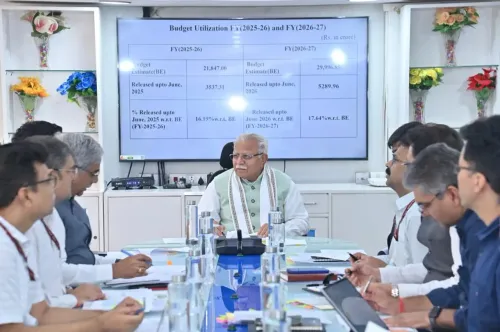
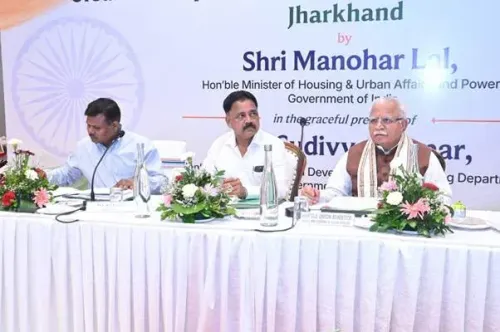
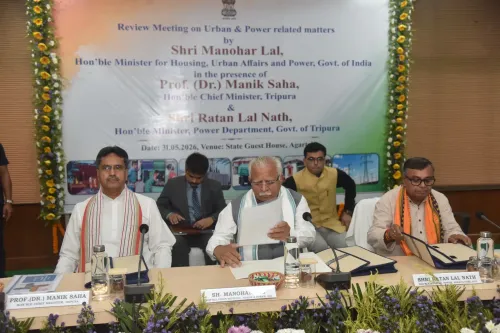
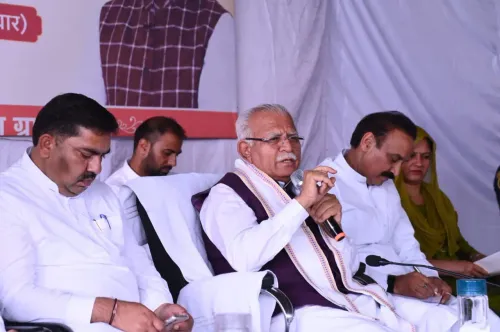
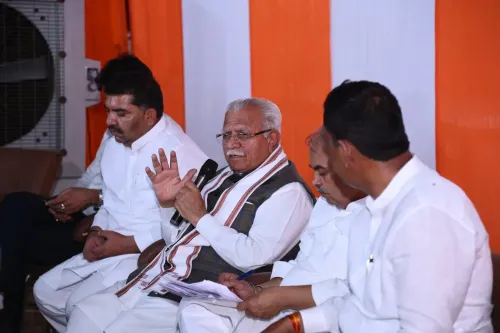
Union Power Minister Manohar Lal Khattar on Friday, June 19, 2026, chaired a comprehensive review meeting in Ranchi focused on Jharkhand's energy infrastructure and urban development projects, with a particular emphasis on the progress of centrally sponsored schemes.
Context
Posting on X, the minister stated that he presided over a review meeting in Ranchi on subjects related to the state's energy and urban development — 'ऊर्जा तथा शहरी विकास से संबंधित विषयों पर समीक्षा बैठक' (a review meeting on energy and urban development matters). The session covered a wide-ranging assessment of key projects under the Revamped Distribution Sector Scheme (RDSS) and the Swachh Bharat Mission. According to the post, detailed deliberations were held on strengthening energy infrastructure in the state, improving citizen services, and accelerating sustainable and inclusive development.
The minister further noted that special emphasis was placed on ensuring time-bound implementation of development projects and the expansion of urban amenities through coordinated efforts between the Central and state governments.
Policy Backdrop
The Revamped Distribution Sector Scheme was approved by the Union Cabinet in July 2021 with an outlay exceeding Rs 3 lakh crore, designed to modernise power distribution networks, reduce aggregate technical and commercial (AT&C) losses, and improve the quality and reliability of electricity supply across states. It replaced earlier distribution-sector programmes and introduced outcome-linked financing to push states toward measurable reforms.
Swachh Bharat Mission-Urban 2.0, launched in October 2021, builds on the original 2014 sanitation drive by targeting sustained open-defecation-free status and strengthening solid waste processing infrastructure in urban local bodies. Jharkhand's urban local bodies fall under the ambit of this programme, making progress reviews a regular feature of central oversight.
Since 2022, multiple rounds of central monitoring meetings on RDSS have been conducted to track state-wise fund utilisation and reform milestones, reflecting a broader Union government practice of direct ministerial engagement with state-level implementation agencies.
Stakeholders and Impact
The primary beneficiaries of the schemes reviewed are Jharkhand's residents, who stand to gain from more reliable electricity supply, reduced outages, and improved urban sanitation infrastructure. State power distribution utilities and urban local bodies are the key implementing agencies whose performance was placed under the ministerial lens during the Ranchi meeting.
Improved distribution infrastructure under RDSS can directly reduce the financial losses borne by state power utilities — losses that often translate into higher tariffs or unreliable supply for end consumers. Similarly, accelerated Swachh Bharat Mission targets affect public health outcomes in Jharkhand's rapidly urbanising districts, including the capital Ranchi itself.
What's Next
The next quarterly RDSS progress report for Jharkhand will be a key indicator of whether the commitments discussed in the Ranchi meeting translate into measurable on-ground improvements. Any state cabinet decisions on distribution company restructuring or tariff revisions in the coming months will also signal how the state government intends to align with the reform conditions attached to central funding. The meeting underscores the Union government's intent to maintain active oversight of flagship infrastructure schemes regardless of the political alignment of state governments, reinforcing a pattern of centre-state engagement on capital-intensive projects.
Point of View
Irrespective of ruling party. For Jharkhand — governed by the opposition JMM-Congress alliance — the meeting signals that central funding under RDSS and Swachh Bharat Mission comes with active federal oversight, not passive disbursement. The dual focus on power distribution and urban sanitation reflects the ministry's integrated mandate under Housing and Urban Affairs alongside Power. Sustained centre-state engagement of this kind is increasingly the primary lever the Union government uses to drive reform milestones in states where it does not control the government.
NationPress
19 Sept 2026
Frequently Asked Questions
Why did Manohar Lal Khattar visit Ranchi in June 2026?
Khattar visited Ranchi on June 19, 2026, to chair a review meeting on Jharkhand's energy infrastructure and urban development projects, specifically assessing progress under the Revamped Distribution Sector Scheme and Swachh Bharat Mission.
What is the Revamped Distribution Sector Scheme (RDSS)?
The RDSS is a central government scheme approved in July 2021 with an outlay exceeding Rs 3 lakh crore to modernise electricity distribution networks, reduce AT&C losses, and improve power supply quality across India.
What is Swachh Bharat Mission Urban 2.0?
Swachh Bharat Mission-Urban 2.0, launched in October 2021, is a flagship sanitation programme focused on sustaining open-defecation-free status and improving solid waste management in Indian cities, building on the original 2014 mission.
What was the outcome of the Ranchi power review meeting?
The meeting emphasised time-bound execution of development projects and coordinated centre-state efforts to strengthen energy infrastructure and expand urban amenities in Jharkhand; specific decisions from the meeting have not been officially disclosed.
How does RDSS benefit Jharkhand residents?
RDSS aims to reduce power outages and financial losses in distribution utilities, which can translate into more reliable electricity supply and potentially lower tariff pressures for consumers in Jharkhand.