Khattar Chairs Power & Urban Review Meet in Agartala
Synopsis
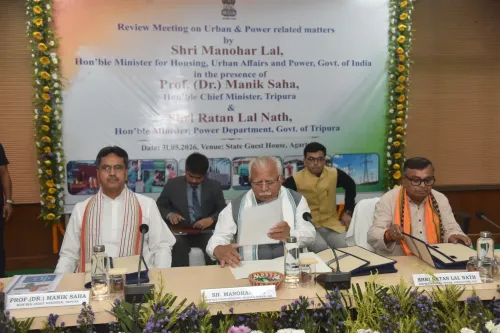
Union Power Minister Manohar Lal Khattar and Tripura CM Dr. Manik Saha met in Agartala on 31 May 2026 to review RDSS implementation, smart metering, transmission planning, rooftop solar adoption, and Swachh Bharat Mission progress in the state.
Key Takeaways
Union Power Minister Manohar Lal Khattar chaired a State Review Meeting in Agartala on 31 May 2026 alongside Tripura CM Dr.
Discussions covered the Revamped Distribution Sector Scheme (RDSS) , smart metering, and transmission planning for Tripura.
Special emphasis was placed on reducing AT&C losses and improving DISCOM efficiency in the state.
Accelerating rooftop solar adoption was highlighted as a priority for sustainable energy access across Tripura.
The Swachh Bharat Mission and its urban implementation in Tripura were also reviewed during the meeting.
The meeting reflects the Centre's ongoing focus on northeastern states, which historically face higher power-sector infrastructure deficits.
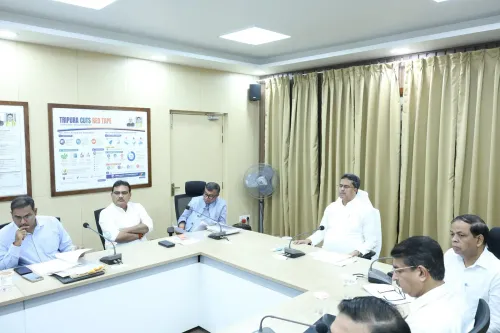
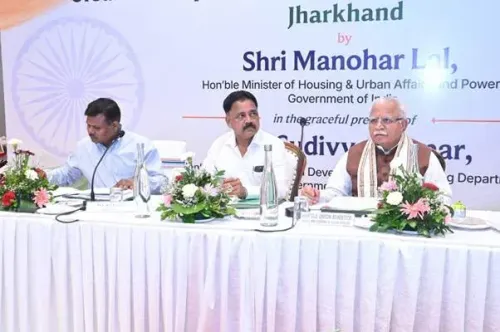
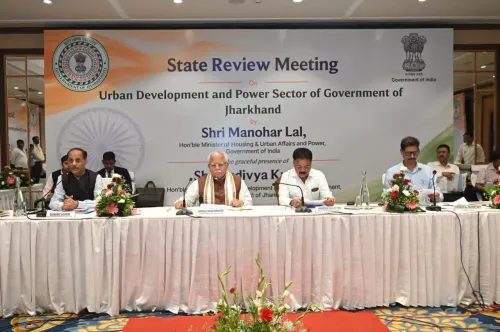
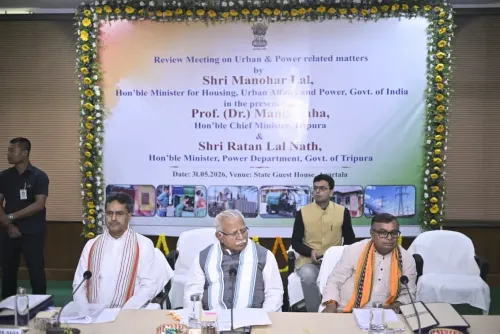
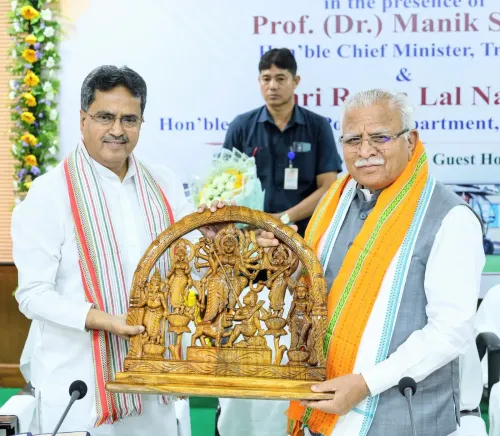
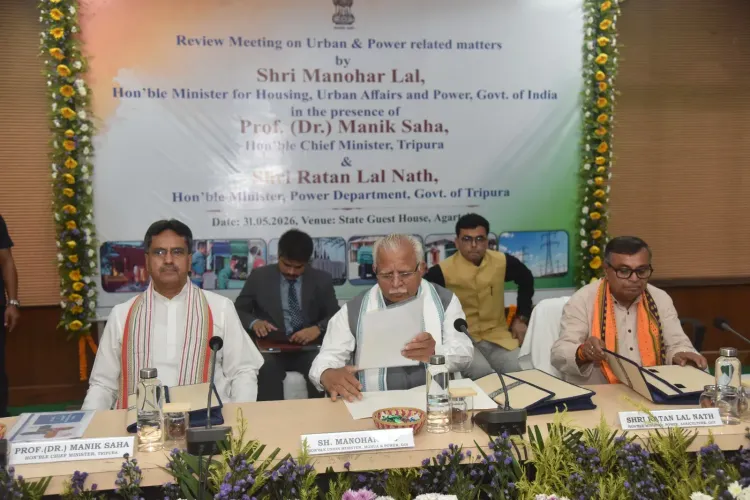
Union Power Minister Manohar Lal Khattar chaired a State Review Meeting on Power and Housing & Urban Affairs in Agartala on Sunday, 31 May 2026, alongside Tripura Chief Minister Dr. Manik Saha, covering key issues under the Swachh Bharat Mission and the state's power sector.
Context
The meeting brought together central and state leadership to assess the on-ground progress of flagship infrastructure and sanitation programmes in Tripura. Khattar noted that discussions were extensive, with a particular focus on the Revamped Distribution Sector Scheme (RDSS), smart metering, and transmission planning. Such periodic review meetings are the standard mechanism through which the Union government monitors implementation of centrally sponsored schemes in the states.
Tripura, like several northeastern states, has historically faced higher aggregate technical and commercial (AT&C) losses and infrastructure gaps in its power distribution network, making central oversight particularly significant for the state's energy future.
Policy Backdrop
The RDSS, approved in July 2021, is the central government's primary vehicle for reforming the power distribution sector. It builds on earlier programmes such as UDAY, with a mandate to reduce AT&C losses, fund smart metering at scale, and improve the financial sustainability of state distribution companies (DISCOMs). The scheme channels central assistance to states contingent on meeting reform benchmarks.
The Swachh Bharat Mission, launched in 2014, remains a flagship urban and rural sanitation programme. Its inclusion in the Agartala agenda signals that the Housing & Urban Affairs dimension of Khattar's portfolio — covering urban local bodies and waste management — was reviewed alongside power-sector concerns. National smart metering and rooftop solar programmes have received successive budget allocations since 2015, and state-level targets under these initiatives formed part of the deliberations.
Stakeholders and Impact
Tripura's DISCOMs and urban local bodies are the primary implementing agencies whose performance was under review. Improving DISCOM efficiency directly affects household electricity reliability and state finances, while rooftop solar adoption carries implications for both consumers and the state's renewable-energy profile. The minister's stated emphasis on 'reliable and sustainable energy access across the state' reflects the broader national goal of universal, quality power supply.
For residents of Agartala and smaller towns across Tripura, accelerated smart metering and transmission upgrades could translate into fewer outages and more accurate billing — two longstanding consumer grievances in the region.
What's Next
State-level progress on RDSS smart-meter installation targets and any additional central assistance for Tripura's power projects will be the metrics to watch in subsequent review cycles or budget sessions. The Agartala meeting sets a documented baseline against which future implementation can be measured. CM Dr. Manik Saha's participation signals state-level political commitment to advancing these reforms in coordination with the Union government.
Frequently Asked Questions
What was discussed at the Agartala power review meeting on 31 May 2026?
The meeting chaired by Union Power Minister Manohar Lal Khattar and Tripura CM Dr. Manik Saha covered RDSS implementation, smart metering, transmission planning, AT&C loss reduction, rooftop solar adoption, and Swachh Bharat Mission progress in Tripura.
What is the RDSS scheme and how does it affect Tripura?
The Revamped Distribution Sector Scheme, approved in July 2021, funds power distribution reforms including smart metering and infrastructure upgrades for state DISCOMs. For Tripura, it is a key vehicle for reducing AT&C losses and improving electricity reliability.
What are AT&C losses and why do they matter for Tripura?
Aggregate technical and commercial losses refer to energy lost in transmission and billing gaps. Northeastern states like Tripura have historically recorded higher AT&C losses, making their reduction critical for DISCOM financial health and reliable power supply.
Who is Dr. Manik Saha and what is his role in Tripura's power sector?
Dr. Manik Saha is the Chief Minister of Tripura representing the BJP. His participation in the review meeting signals state-level political commitment to implementing central power and urban infrastructure schemes.
What is the Swachh Bharat Mission and why was it part of a power review meeting?
The Swachh Bharat Mission, launched in 2014, is the Centre's flagship sanitation and urban cleanliness programme. It was on the agenda because Khattar holds the Housing and Urban Affairs portfolio alongside Power, making urban scheme reviews a standard part of such state visits.