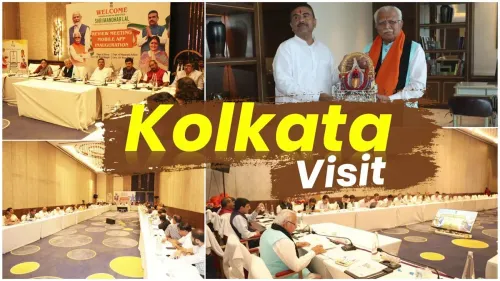
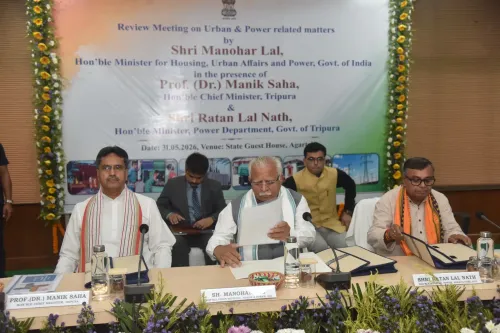
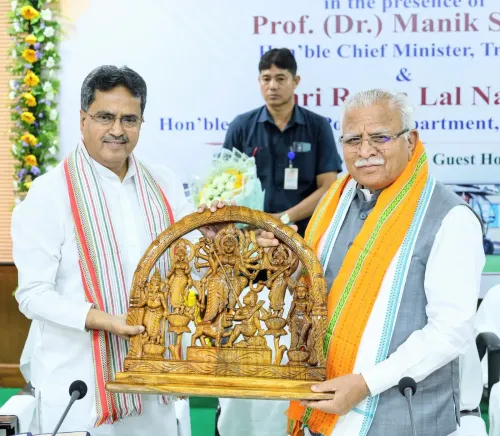
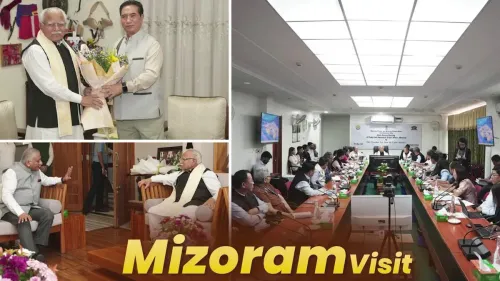
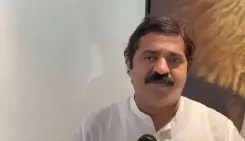
Khattar begins 3-day review tour of Mizoram, Bengal, Tripura

Synopsis
Union Power Minister Manohar Lal Khattar began a three-day tour of Mizoram, West Bengal, and Tripura on 29 May 2026 to chair review meetings on energy and urban development schemes, including RDSS and AMRUT 2.0, as part of standard centre-state coordination on flagship infrastructure programmes.
Key Takeaways
Union Power Minister Manohar Lal Khattar started a three-day tour on 29 May 2026 covering Mizoram , West Bengal , and Tripura .
The tour focuses on review meetings related to energy and urban development in these three states.
Key schemes under review include the Revamped Distribution Sector Scheme (RDSS) and AMRUT 2.0 , both approved in 2021 .
State discoms and urban local bodies are the primary stakeholders in these review processes.
The northeastern and eastern states have historically received targeted central support to address transmission gaps and urban service deficits .
Follow-up action plans and potential new project sanctions are expected after the review meetings conclude.
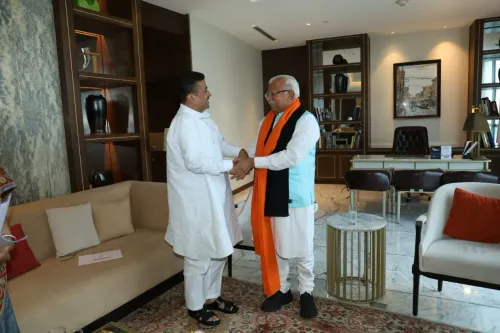
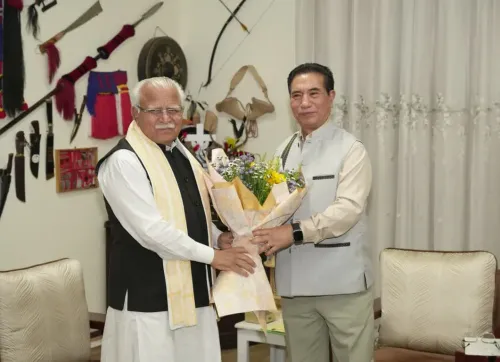
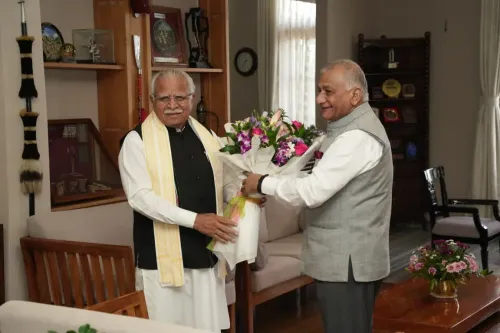
Union Power Minister Manohar Lal Khattar on Friday, 29 May 2026, announced the start of a three-day official tour covering Mizoram, West Bengal, and Tripura, where he will chair review meetings on energy and urban development programmes linked to those states.
Posting on X, the minister wrote: 'Aaj se Mizoram, Paschim Bengal aur Tripura ke teen diwasiya daure par rahunga jahan in pradeshon se jude urja evam shahari vikas ki mahatvapurn samiksha baithkon mein sammilit rahunga.' ('Starting today, I will be on a three-day tour of Mizoram, West Bengal and Tripura, where I will participate in important review meetings related to energy and urban development of these states.')
Context
Khattar has held the dual portfolio of Union Minister of Power and Housing and Urban Affairs since 2024, following his tenure as Chief Minister of Haryana. Multi-state review tours are a standard mechanism through which central ministers assess the on-ground progress of centrally sponsored schemes and coordinate with state governments and their agencies.
The three states — Mizoram, West Bengal, and Tripura — span the country's northeastern and eastern regions, areas that have historically required targeted central support to bridge transmission gaps and urban service deficits.
Policy Backdrop
The review meetings are expected to cover progress under flagship central programmes. The Revamped Distribution Sector Scheme (RDSS), approved in 2021, provides financial assistance to state electricity distribution companies for loss reduction, infrastructure upgrades, and smart metering rollout — all areas of active implementation in eastern and northeastern states.
On the urban side, AMRUT 2.0, also approved in 2021, extends funding to mission cities for water supply, sewerage, and green-space development. The earlier Saubhagya scheme, launched in 2017, targeted last-mile household electrification across the country, including the Northeast, and its legacy infrastructure continues to inform current distribution reform efforts.
Tripura is connected to the national grid and has active implementation of both power and housing schemes. Mizoram has ongoing requirements around grid connectivity and urban infrastructure, while West Bengal has been a focus for coordination on distribution reforms and urban missions through periodic central reviews.
Stakeholders and Impact
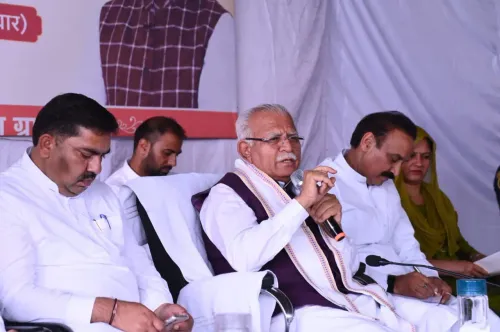
The primary stakeholders in these review processes are state electricity distribution companies (discoms) and urban local bodies (ULBs) across the three states. Performance assessments during such visits typically examine financial health of discoms, metering progress, and utilisation of central funds under urban missions.
Consumers in eastern and northeastern India stand to benefit from improved distribution infrastructure and urban services that result from tighter centre-state coordination. Local governments and state power departments are expected to present progress reports and flag implementation bottlenecks during the meetings.
What's Next
Following the three-day tour, attention will turn to any state-level action plans or new project sanctions that emerge from the review discussions on RDSS and AMRUT 2.0 implementation. Such tours often precede formal communications from the ministry to state governments on compliance timelines or additional central support.
The outcome of these meetings could shape near-term fund releases and project approvals for Mizoram, West Bengal, and Tripura under both the power and urban development portfolios.
Point of View
West Bengal, and Tripura signals that the Centre is maintaining review pressure on states with historically uneven implementation records under RDSS and AMRUT 2.0. The tour is notable for pairing a BJP-governed northeastern state with West Bengal, governed by a rival party, underscoring that infrastructure review tours are framed as administrative rather than political exercises — at least formally. Coming midway through the current government's term, the timing also suggests a push to consolidate visible scheme outcomes ahead of the next electoral cycle. Analysts will watch whether the West Bengal leg produces any friction or cooperation signals on power distribution reform, which has been a contested space between the Centre and the state government.
NationPress
19 Sept 2026
Frequently Asked Questions
Why is Manohar Lal Khattar visiting Mizoram, West Bengal, and Tripura?
He is conducting review meetings on energy and urban development schemes, including RDSS and AMRUT 2.0, as part of routine centre-state coordination on flagship infrastructure programmes.
What is the Revamped Distribution Sector Scheme (RDSS)?
RDSS is a central scheme approved in 2021 that provides financial assistance to state electricity discoms for infrastructure upgrades, loss reduction, and smart metering rollout.
Which states is Khattar visiting on his May 2026 tour?
Khattar is visiting Mizoram, West Bengal, and Tripura over three days starting 29 May 2026.
What outcomes are expected from Khattar's review tour?
The tour may result in state-level action plans, compliance directives, or new project sanctions under RDSS and AMRUT 2.0 for the three states visited.