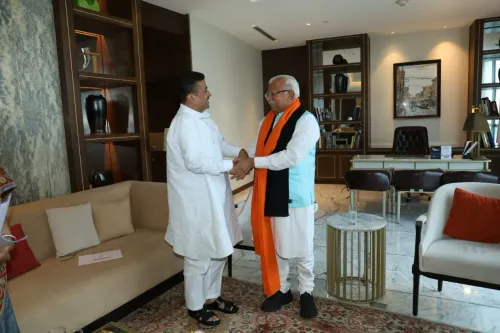
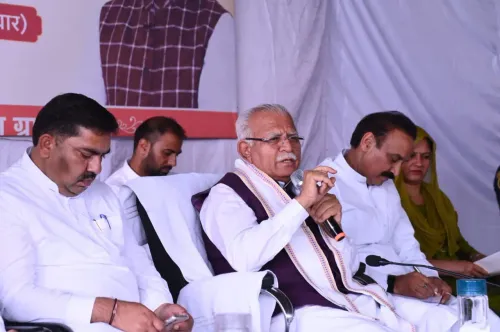
Khattar Visits Kolkata to Push Power, Urban Infra Plans
Synopsis
Union Power Minister Manohar Lal Khattar visited Kolkata on 31 May 2026, pledging to accelerate urban infrastructure and power sector development in West Bengal under PM Modi's guidance, signalling continued central engagement with the opposition-governed state.
Key Takeaways
Manohar Lal Khattar , Union Minister of Power and Housing & Urban Affairs, visited Kolkata on 31 May 2026 .
The minister committed to accelerating urban infrastructure and power sector development in the state.
The visit reflects the Centre's cooperative-federalism approach of engaging opposition-ruled states on development schemes.
Key central schemes in play include AMRUT (urban infrastructure) and UDAY (power distribution reform), both launched in 2015 .
West Bengal's urban local bodies and power distribution companies are the primary institutional stakeholders.
Follow-up project announcements and central review meetings are expected in the coming weeks.
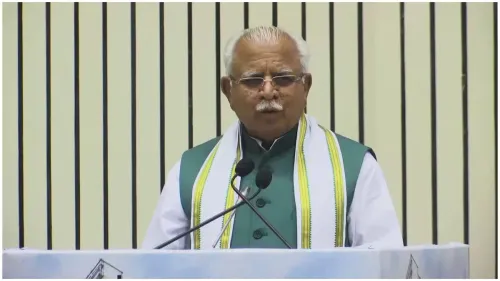
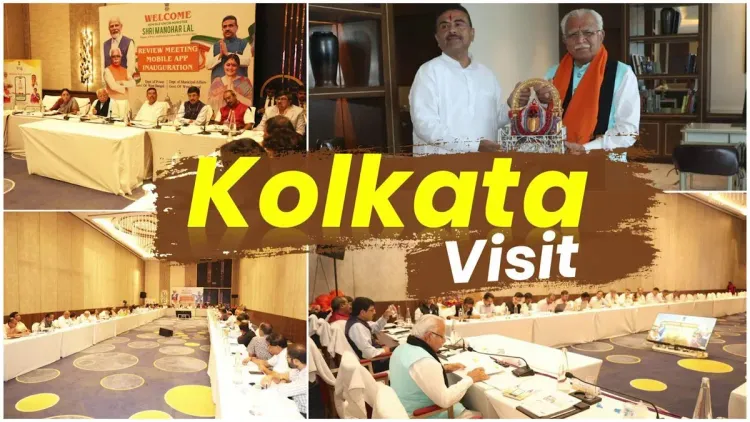
Union Power Minister Manohar Lal Khattar visited Kolkata on Sunday, 31 May 2026, highlighting the central government's commitment to accelerating urban infrastructure and power sector development, invoking the guidance of Prime Minister Narendra Modi in a post shared on X.
Context
Khattar described the trip as a 'fruitful Kolkata visit,' stating that the government is 'committed to accelerating efforts to improve urban infrastructure and power sector development across the state.' The post, shared from his official handle, signals a high-level push by the Union Ministry of Power and Housing & Urban Affairs into West Bengal, a state governed by the opposition Trinamool Congress.
Such ministerial visits to opposition-ruled states are a recurring feature of the Centre's cooperative-federalism model, through which central schemes are implemented in partnership with state governments regardless of political alignment.
Policy Backdrop
Two major central schemes form the backbone of this outreach. The Atal Mission for Rejuvenation and Urban Transformation (AMRUT), launched in 2015, channels funds to cities for water supply, sewerage, green spaces, and urban mobility upgrades. Separately, the Ujwal DISCOM Assurance Yojana (UDAY), also launched in 2015, was designed to strengthen state power distribution companies by restructuring their debt and improving operational efficiency.
Both schemes require active state participation, making ministerial-level engagement with state governments critical to project execution and fund utilisation. West Bengal's urban local bodies and power distribution companies are among the key institutional partners for these programmes.
Stakeholders and Impact
The primary beneficiaries of improved urban infrastructure and power sector reforms in West Bengal are its urban local bodies, which oversee civic amenities in cities including Kolkata, and the state's power distribution companies responsible for last-mile electricity delivery. Residents of urban centres stand to gain from upgraded water supply, sanitation, and more reliable power supply if central and state plans converge.
Central ministries have consistently increased capital expenditure for connectivity and energy sectors since 2014, and visits like this one are intended to translate budgetary allocations into on-ground project momentum. The political dimension — a BJP Union Minister engaging with an opposition-governed state — also reflects the Centre's stated position that development work transcends party lines.
What's Next
Follow-up announcements on specific projects, timelines, or fund releases for West Bengal are likely to emerge through central review meetings or state budget allocations in the coming weeks. Progress on AMRUT targets and power sector metrics for the state will serve as concrete indicators of whether this visit translates into accelerated implementation on the ground.
Point of View
The minister frames the effort as part of a top-down national mandate rather than a bilateral negotiation, which reduces the political friction of engaging with a Trinamool Congress-led administration. The visit also underlines the Centre's dependence on state cooperation to meet power and urban targets — cooperation that becomes harder to secure in politically adversarial environments. Whether this engagement produces measurable project acceleration in West Bengal will be the true test of the cooperative-federalism model the BJP has championed since 2014.
NationPress
16 Oct 2026
Frequently Asked Questions
Why did Manohar Lal Khattar visit Kolkata in May 2026?
Khattar visited Kolkata on 31 May 2026 to advance central government efforts on urban infrastructure and power sector development in West Bengal, sharing highlights of the trip on X.
What central schemes are relevant to Khattar's Kolkata visit?
The two key schemes are AMRUT, which funds urban infrastructure upgrades in cities, and UDAY, which supports state power distribution companies — both launched in 2015 and requiring active state participation.
How does the Centre work with opposition-ruled states on development?
The Centre engages opposition-ruled states through cooperative-federalism mechanisms, where central scheme funds are available to all states irrespective of the ruling party, with ministerial visits used to push implementation.
What is Manohar Lal Khattar's current role in the Union Cabinet?
Manohar Lal Khattar is the Union Minister of Power and Housing & Urban Affairs. He is a senior BJP leader and former Chief Minister of Haryana.
What impact could this visit have on West Bengal's power and urban sectors?
The visit could accelerate fund utilisation and project timelines under AMRUT and power sector reform schemes, benefiting urban local bodies and power distribution companies in West Bengal, though concrete outcomes depend on follow-up central and state action.