Khattar Inspects Bhalaswa Landfill War-Footing Cleanup
Synopsis
Union Minister Manohar Lal Khattar visited the Bhalaswa dumping site in northwest Delhi on 28 May 2026 to inspect war-footing cleanup operations, spotlighting central government pressure on MCD to accelerate bio-mining under Swachh Bharat Mission-Urban.
Key Takeaways
Manohar Lal Khattar , Union Minister of Housing and Urban Affairs, personally inspected the Bhalaswa landfill on 28 May 2026 .
The cleanup is described as being conducted on a 'war footing', indicating an accelerated operational pace.
Bhalaswa is one of three major legacy landfills in Delhi , alongside Ghazipur and Okhla .
Remediation is mandated under Swachh Bharat Mission-Urban (2014) and the Solid Waste Management Rules, 2016 .
The Municipal Corporation of Delhi (MCD) is the civic body operationally responsible for the site's cleanup.
The inspection raises expectations of fresh funding and revised timelines for bio-mining completion at the site.
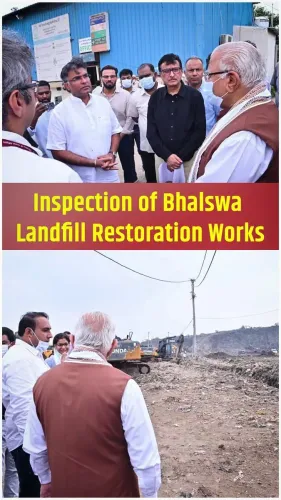
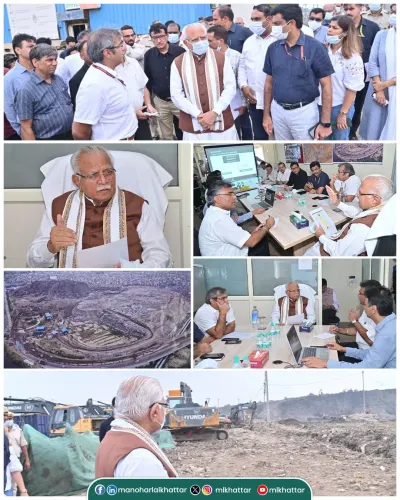
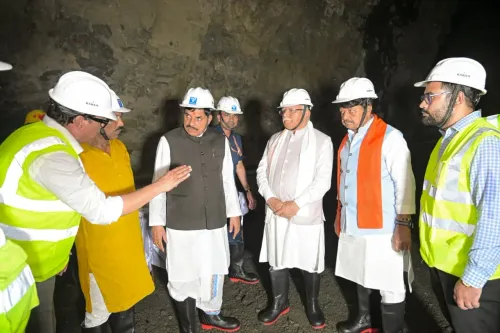
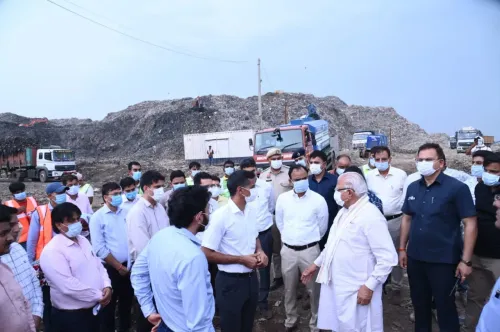
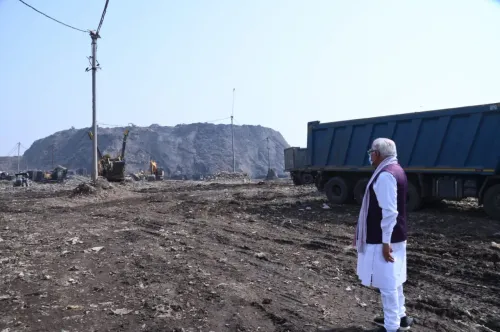
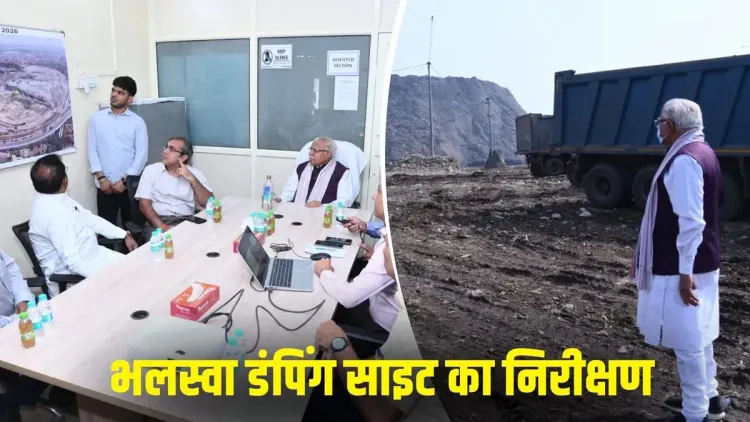
Union Minister of Housing and Urban Affairs Manohar Lal Khattar on Thursday, 28 May 2026 inspected the ongoing war-footing cleanup operations at the Bhalaswa dumping site in northwest Delhi, signalling heightened central government attention to one of the capital's most persistent solid-waste crises.
Context
Khattar posted on X with the caption 'भलस्वा डंपिंग साइट पर युद्धस्तर पर जारी सफाई कार्यों का निरीक्षण' — translated as 'Inspection of cleanup work being carried out on a war footing at the Bhalaswa dumping site' — accompanied by a video of the ongoing operations. The post marks a visible ministerial-level intervention at a site that has long drawn public and judicial attention.
The Bhalaswa landfill is one of three major legacy dumpsites in Delhi, alongside Ghazipur and Okhla. It has been associated with open dumping, leachate contamination of groundwater, methane emissions, and persistent health complaints from surrounding communities for decades.
Policy Backdrop
The cleanup drive falls under the mandate of the Swachh Bharat Mission-Urban, launched in 2014, which requires cities to undertake bio-mining and scientific closure of legacy waste dumpsites. The Solid Waste Management Rules, 2016 set binding targets for cities to remediate such sites, and the Ministry of Housing and Urban Affairs has been pushing urban local bodies to accelerate compliance.
The Municipal Corporation of Delhi (MCD) is the primary civic body responsible for day-to-day operations and remediation at Bhalaswa. Successive central and MCD administrations have announced accelerated bio-remediation drives — frequently described as 'war-footing' operations — aimed at reducing the waste mountain's volume and reclaiming the land for productive use.
Stakeholders and Impact
Residents of colonies adjacent to the Bhalaswa site, including areas in northwest Delhi, bear the most direct burden of the landfill's air and groundwater pollution. Environmental groups have long flagged the site as a source of toxic leachate that seeps into the local water table and of uncontrolled fires that worsen Delhi's already strained air quality.
A ministerial inspection signals that the cleanup pace and resource allocation are now under direct scrutiny from New Delhi's central government, adding pressure on the MCD to demonstrate measurable progress. The video documentation shared publicly also serves as an accountability marker for future review.
What's Next
Attention will now focus on whether the inspection translates into fresh funding releases under Swachh Bharat Mission-Urban and revised timelines for completing bio-mining at Bhalaswa. The MCD and the Ministry are expected to align on milestones, with the remediation of all three Delhi landfills remaining a key urban governance benchmark for the current administration. Progress — or the lack of it — at Bhalaswa will likely influence how the centre approaches the similarly troubled Ghazipur and Okhla sites in the months ahead.
Point of View
At a time when landfill remediation has become a live governance metric. The 'war-footing' framing, now a recurring motif in official communications about Delhi's dumpsites, raises public expectations but also creates a measurable accountability window. For the BJP-led centre, demonstrating tangible progress at Bhalaswa ahead of any electoral cycle in Delhi carries strategic weight beyond environmental optics. The real test will be whether this inspection catalyses fresh Swachh Bharat Mission-Urban disbursements or remains a visibility exercise.
NationPress
11 Oct 2026
Frequently Asked Questions
What is the Bhalaswa dumping site in Delhi?
The Bhalaswa dumping site is a major legacy landfill in northwest Delhi, long associated with open waste dumping, groundwater contamination from leachate, methane emissions, and health hazards for nearby residents.
Why did Manohar Lal Khattar visit Bhalaswa?
Union Minister Manohar Lal Khattar visited Bhalaswa on 28 May 2026 to inspect cleanup operations that are being carried out on a war footing, signalling direct central government oversight of the remediation drive.
What is bio-mining and why is it used at Delhi landfills?
Bio-mining is a process that uses mechanical screening and biological treatment to segregate and reclaim legacy waste from old landfills, reducing their volume and recovering land. It is mandated under Swachh Bharat Mission-Urban for sites like Bhalaswa, Ghazipur, and Okhla.
Which body is responsible for cleaning up the Bhalaswa landfill?
The Municipal Corporation of Delhi (MCD) is the primary civic body responsible for day-to-day operations and remediation work at the Bhalaswa dumping site.
What is Swachh Bharat Mission-Urban's role in Delhi landfill cleanup?
Swachh Bharat Mission-Urban, launched in 2014, mandates scientific closure and bio-mining of legacy waste dumpsites in Indian cities. It provides policy direction and funding support for remediation projects at sites like Bhalaswa under the Solid Waste Management Rules, 2016.