Bhalswa landfill: Manohar Lal sets September 2025 deadline to clear Delhi's garbage mountain
Synopsis
Union Minister Manohar Lal has pushed forward the Bhalswa dumpsite closure deadline to September 2025, tightening his own October 2026 target. With 23.17 lakh metric tonnes still to go and monsoon approaching, the revised deadline puts daily biomining operations under sharper scrutiny — and the reclamation of 43 acres already shows what is at stake for North Delhi's urban future.
Key Takeaways
Union Minister Manohar Lal visited the Bhalswa landfill on 29 May 2025 and set a September 2025 deadline for full remediation.
Of the original 73 lakh metric tonnes of legacy waste recorded in June 2022 , approximately 23.17 lakh metric tonnes remains as of 26 May 2025 .
Biomining operations process around 15,000 metric tonnes daily and have been running in mission mode since July 2022 .
Nearly 43 acres of land has been reclaimed out of the dumpsite's total 70 acres .
The site is adopted under the Dumpsite Remediation and Action Plan (DRAP) as part of Swachh Bharat Mission-Urban 2.0 , targeting 'Lakshya Zero Dumpsites' nationally.
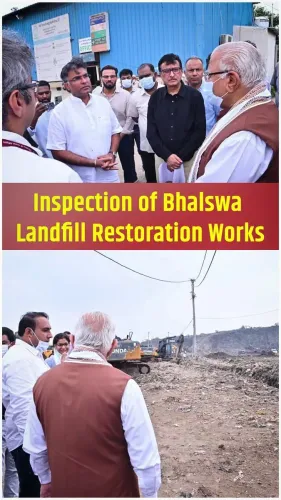
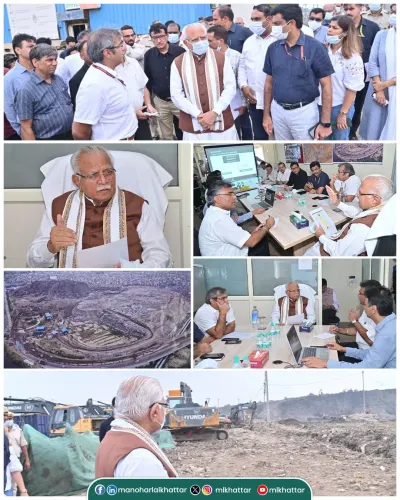
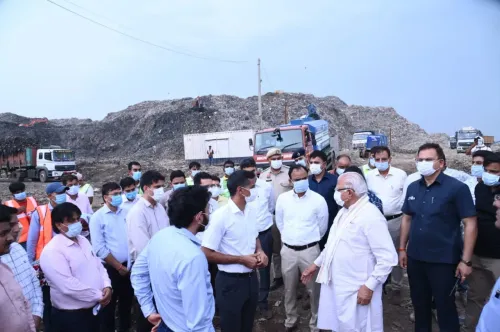
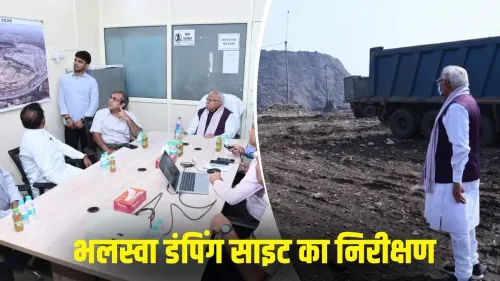
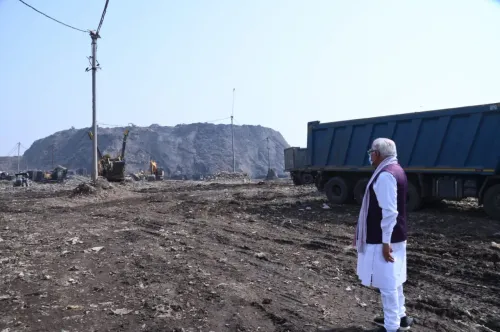
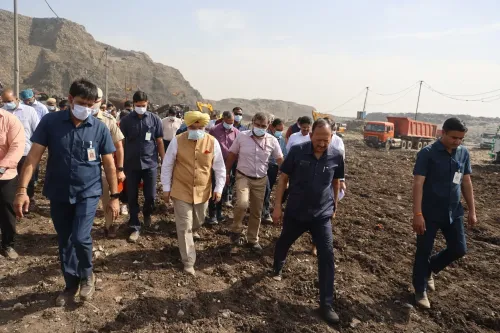
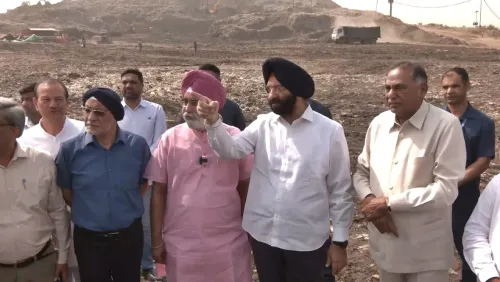
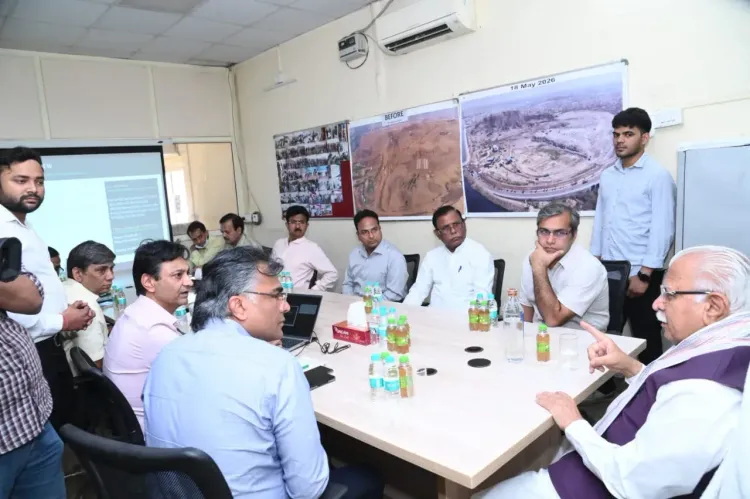
Union Housing and Urban Affairs Minister Manohar Lal on Thursday, 29 May 2025, visited the Bhalswa landfill site in North Delhi and directed civic officials to complete the legacy waste remediation by September 2025 — tightening an earlier October 2026 target he had set for the dumpsite's full closure. The visit was part of a hands-on review under the Dumpsite Remediation and Action Plan (DRAP) initiative, a nationwide programme under Swachh Bharat Mission-Urban 2.0.
What the Minister Reviewed
During the inspection, Manohar Lal assessed biomining operations, environmental safeguards, fire prevention measures, and leachate management systems at the site. He also examined the future road map for complete remediation of the dumpsite, according to an official statement.
In a post on X, the Minister said: 'Today, I conducted a detailed inspection of the ongoing cleaning and waste processing operations at the Bhalswa Dumpsite. Last year, I had resolved that by October 2026, this dumpsite would be completely eliminated, and work is continuing at a war-footing to achieve that very goal.'
Scale of the Challenge
Officials briefed the Minister that the site held approximately 73 lakh metric tonnes of legacy waste as of June 2022. Since July 2022, biomining has been running in mission mode, processing around 15,000 metric tonnes daily. As of 26 May 2025, approximately 23.17 lakh metric tonnes of waste remains at the site awaiting remediation — meaning roughly 50 lakh metric tonnes has already been processed in under three years.
Manohar Lal noted that sustained biomining efforts have reclaimed nearly 43 acres of land out of the dumpsite's total area of approximately 70 acres — a significant recovery of prime urban real estate in one of Delhi's most densely populated corridors.
The DRAP Framework and Swachh Bharat Mission
The Bhalswa site has been personally adopted by Manohar Lal under DRAP, which targets the scientific remediation of major legacy dumpsites across India. The overarching goal is 'Lakshya Zero Dumpsites' — eliminating all such sites through scientific remediation, environmental restoration, and reclamation of valuable urban land.
'To eliminate this massive mountain of garbage, the processing of legacy waste and the scientific waste disposal process have been accelerated through scientific and modern technologies,' the Minister said. He added that continuous efforts are being made to improve cleanliness, health safety, and civic amenities in surrounding areas while maintaining compliance with environmental standards.
Why It Matters for Delhi
The Bhalswa dumpsite, located near a densely populated residential zone in North Delhi, has long been a source of air pollution, groundwater contamination, and recurring fire incidents. Alongside Ghazipur and Okhla, it forms part of Delhi's trio of notorious garbage mountains — a legacy of decades of unscientific waste disposal. The reclamation of 43 acres already represents a tangible shift, and full remediation would free up land for green spaces or civic infrastructure in an area that critically lacks both.
This is the third major on-site ministerial review of Bhalswa since the DRAP initiative was launched, signalling sustained political attention. Whether the September deadline holds will depend on maintaining the current daily processing rate through the monsoon months — historically a challenging period for biomining operations.
Point of View
The daily processing rate of 15,000 metric tonnes would need to hold through July and August — historically the hardest months for such operations. The political optics are clear: a minister personally adopting a dumpsite and making public commitments on X creates accountability, but also risk. More critically, the Bhalswa story is really about what happens after remediation — the 70 acres of reclaimed urban land in North Delhi is a prize, and who gets to decide its end use will be a test of whether this mission delivers public good or becomes a real-estate opportunity dressed in Swachh Bharat branding.
NationPress
11 Oct 2026
Frequently Asked Questions
What is the new deadline for clearing the Bhalswa landfill in Delhi?
Union Minister Manohar Lal has directed civic officials to complete legacy waste remediation at the Bhalswa landfill by September 2025, advancing his earlier October 2026 target. The directive was issued during his on-site inspection on 29 May 2025.
How much waste remains at the Bhalswa dumpsite?
As of 26 May 2025, approximately 23.17 lakh metric tonnes of legacy waste remains at the Bhalswa site. The site originally held around 73 lakh metric tonnes when biomining operations began in July 2022.
What is the Dumpsite Remediation and Action Plan (DRAP)?
DRAP is a nationwide mission-mode programme launched by the Ministry of Housing and Urban Affairs under Swachh Bharat Mission-Urban 2.0. It targets the scientific remediation of major legacy dumpsites across India with the goal of achieving 'Lakshya Zero Dumpsites' through biomining, environmental restoration, and urban land reclamation.
How much land has been reclaimed at Bhalswa so far?
Nearly 43 acres of land has been reclaimed out of the Bhalswa dumpsite's total area of approximately 70 acres, according to officials. The reclamation is a direct result of sustained biomining operations processing around 15,000 metric tonnes of waste daily.
Why is the Bhalswa landfill considered a major environmental concern?
The Bhalswa landfill in North Delhi has long been a source of air pollution, groundwater contamination, and recurring fire incidents, affecting surrounding residential areas. It is one of three major legacy dumpsites in Delhi — alongside Ghazipur and Okhla — that have accumulated decades of unscientific waste disposal.