Khattar inspects Bhalswa landfill, reaffirms Oct 2026 closure
Synopsis
Union Minister Manohar Lal Khattar inspected the Bhalswa dumping site on 28 May 2026 and reaffirmed his pledge to close it by October 2026. Scientific waste processing is underway at war footing under the Swachh Bharat Mission framework.
Key Takeaways
Manohar Lal Khattar personally inspected Bhalswa dumping site on 28 May 2026 .
The minister has set an October 2026 deadline for the complete closure of the Bhalswa landfill.
Scientific and modern technologies are being used to accelerate legacy waste processing at the site.
The initiative is part of Swachh Bharat Mission (Urban) 2.0 , approved in 2021 with a focus on legacy dumpsite remediation.
Bhalswa is one of three major legacy landfills in Delhi; Ghazipur and Okhla are the other two.
Environmental standards compliance and improvement of civic amenities in surrounding areas are stated priorities.
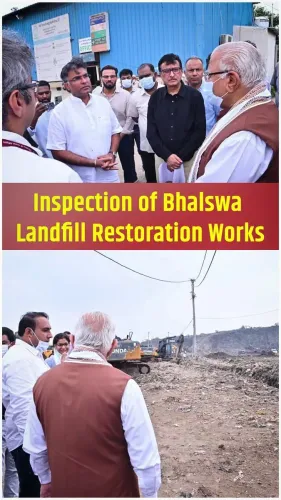
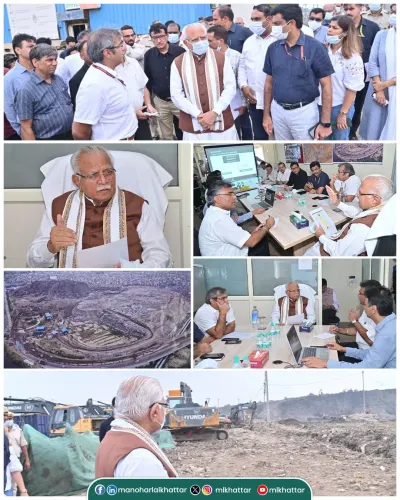
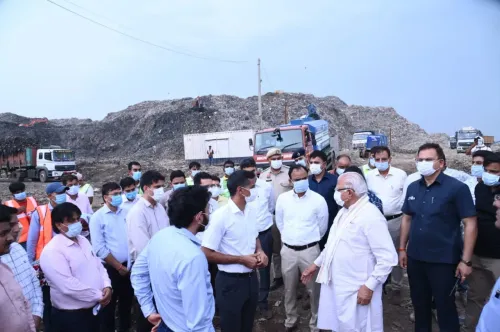
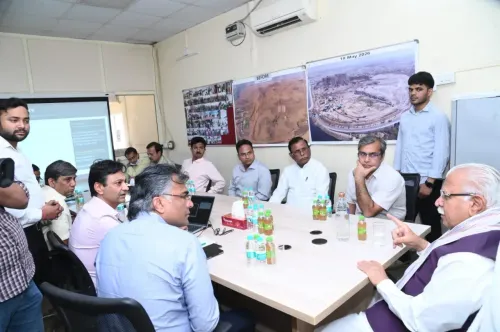
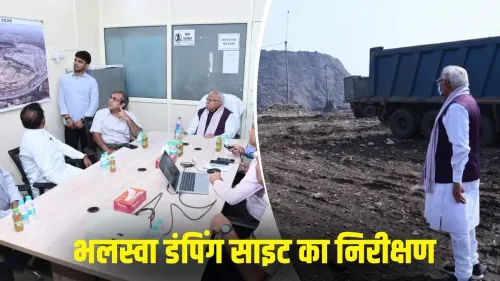
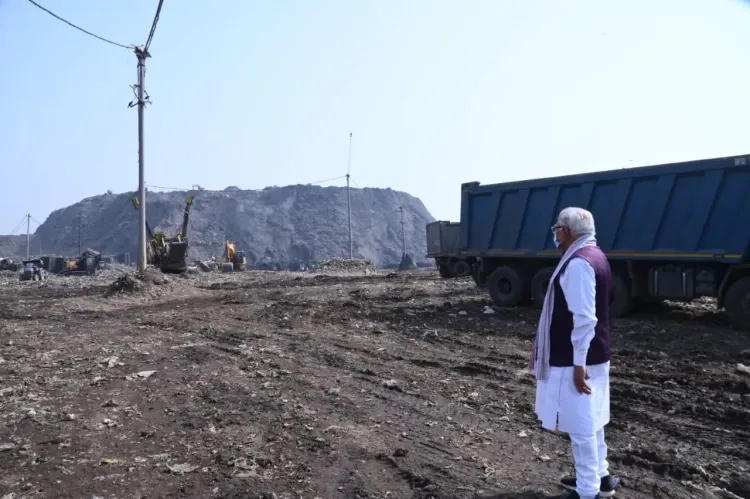
Union Minister of Housing and Urban Affairs Manohar Lal Khattar on Thursday, 28 May 2026 conducted a detailed on-site inspection of ongoing cleaning and waste-processing operations at the Bhalswa dumping site in North Delhi, reaffirming his pledge to fully close the landfill by October 2026.
Context
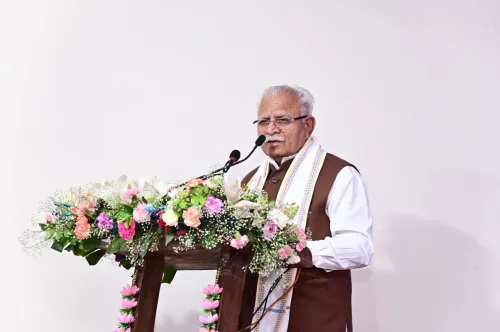
Posting on X with four photographs from the site, Khattar wrote: 'आज भलस्वा डंपिंग साइट पर चल रहे सफाई एवं वेस्ट प्रोसेसिंग कार्यों का विस्तृत निरीक्षण किया' ('Today I conducted a detailed inspection of the ongoing cleaning and waste-processing work at the Bhalswa dumping site'). He stated that work is progressing at 'war footing' to meet the October 2026 deadline he had set the previous year.
Bhalswa is one of three major legacy landfills in the national capital, alongside Ghazipur and Okhla. The site, located in North Delhi, has long been a source of air and groundwater pollution for surrounding neighbourhoods.
Policy Backdrop
The remediation drive is anchored in the Swachh Bharat Mission (Urban), launched by Prime Minister Narendra Modi in 2014 to promote scientific solid waste management and garbage-free cities. A second phase — Swachh Bharat Mission (Urban) 2.0, approved in 2021 — placed explicit emphasis on the bio-mining and scientific closure of legacy dumpsites across Indian cities.
Khattar invoked the mission directly in his post, stating that the central government is 'fully committed to providing a clean and pollution-free environment to Delhi residents' in line with Prime Minister Modi's Swachh Bharat vision. He added that all necessary steps are being taken to ensure closure of the Bhalswa site within the stipulated timeline.
The minister noted that scientific and modern technologies are being deployed to accelerate legacy waste processing and scientific waste disposal, while environmental standards are being maintained and civic amenities for surrounding areas are being improved.
Stakeholders and Impact
The Municipal Corporation of Delhi (MCD) is the primary implementing agency for the ground-level operations at Bhalswa. Residents of nearby localities — who have for years endured toxic leachate, methane fires, and persistent foul odour — stand to be the most direct beneficiaries of a successful closure.
Environmentalists and public health advocates have long flagged the three Delhi landfills as critical pollution hotspots. Successful remediation at Bhalswa could serve as a model for accelerating timelines at Ghazipur and Okhla, the capital's two other legacy waste mountains.
What's Next
The October 2026 deadline is now less than five months away, making the pace of bio-mining and waste processing at Bhalswa a closely watched indicator. Any slippage in the timeline is likely to draw scrutiny given the minister's public commitment. Parallel questions remain about whether firm closure deadlines will be announced for the Ghazipur and Okhla sites, which face similar remediation challenges under the same national framework.
Point of View
The minister is framing a municipal-level sanitation challenge as a central-government achievement — a pattern consistent with how the BJP has sought to project urban governance credentials in the capital. With less than five months to the stated deadline, the pace of bio-mining operations will face increasing scrutiny from opposition parties and civil society groups. The broader test will be whether momentum at Bhalswa translates into firm timelines for Ghazipur and Okhla, whose closure would complete Delhi's legacy landfill remediation story.
NationPress
19 Sept 2026
Frequently Asked Questions
When will Bhalswa dumping site be closed?
Union Minister Manohar Lal Khattar has set October 2026 as the deadline for the complete closure of the Bhalswa dumping site in North Delhi, and confirmed on 28 May 2026 that work is proceeding at 'war footing' to meet that target.
What is the Bhalswa dumping site?
Bhalswa is one of three major legacy landfills in Delhi, located in North Delhi. It has been a longstanding source of air and groundwater pollution for nearby residential areas and is now undergoing scientific remediation under the Swachh Bharat Mission framework.
What is legacy waste bio-mining in India?
Legacy waste bio-mining refers to the scientific processing of old, accumulated waste at municipal dumpsites using mechanical and biological technologies to separate recyclables, compost organic matter, and reduce the overall volume of waste — a key focus of Swachh Bharat Mission (Urban) 2.0 launched in 2021.
What is Swachh Bharat Mission Urban 2.0?
Swachh Bharat Mission (Urban) 2.0 is a central government scheme approved in 2021 that builds on the original 2014 mission. It specifically targets the remediation of legacy waste dumpsites, promotion of scientific solid waste management, and making cities garbage-free across India.
Which are the three landfill sites in Delhi?
Delhi's three major legacy landfill sites are Bhalswa (North Delhi), Ghazipur (East Delhi), and Okhla (South Delhi). All three have been identified for time-bound remediation to reduce pollution and improve public health in surrounding areas.