Khattar at Bhubaneswar Conclave: India's Urban Future Needs Action Now
Synopsis
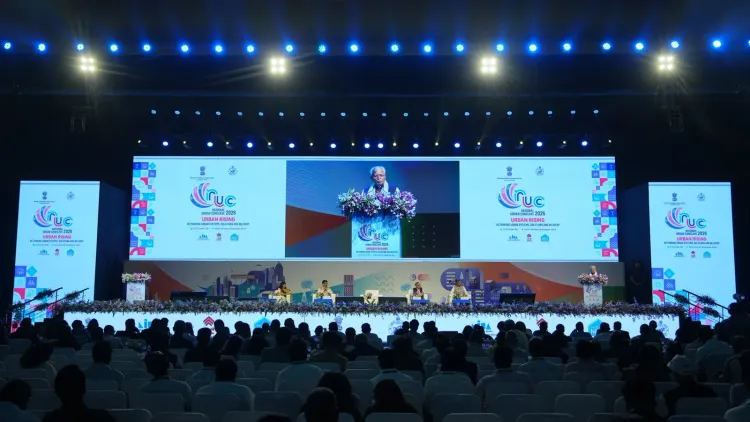
Union Minister Manohar Lal Khattar addressed the National Urban Conclave valedictory in Bhubaneswar on October 25, 2026, highlighting that over half of India's legacy waste has been remediated and urging cities to sustain momentum across AMRUT, Swachh Bharat Mission-Urban, PM SVANidhi, affordable housing, and sustainable mobility.
Key Takeaways
Over half of India's legacy urban waste has been remediated, according to Union Minister Khattar's address at the National Urban Conclave in Bhubaneswar .
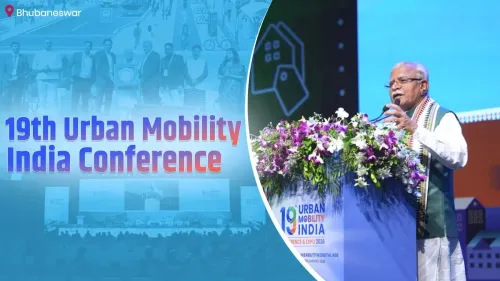
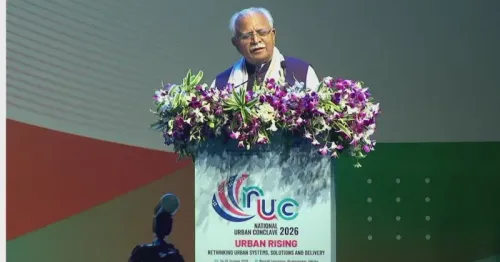
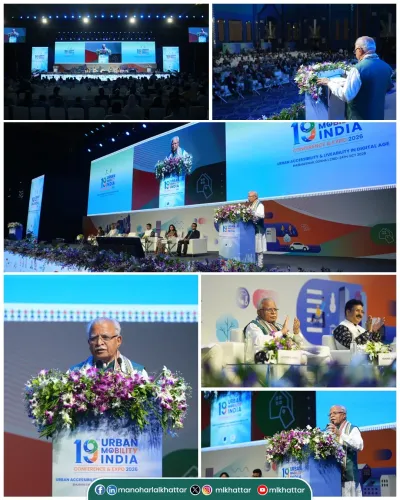
The conclave was held under the theme 'Urban Rising: Rethinking Urban Systems, Solutions and Delivery' alongside the Urban Mobility India Conference.
Khattar spotlighted three flagship missions — AMRUT (2015) , Swachh Bharat Mission–Urban (2014) , and PM SVANidhi (2020) — as the integrated pillars of urban transformation.
Odisha Chief Minister Mohan Charan Majhi was personally congratulated for successfully organising both events in Bhubaneswar.
Khattar emphasised affordable housing, public transport, and sustainable construction as the next frontier for future-ready Indian cities.
The minister cautioned that preventing new waste accumulation is now as important as clearing existing legacy dump sites.
Half of India's legacy waste mountains have been cleared — and Union Minister for Housing and Urban Affairs Manohar Lal Khattar wants the nation to treat that milestone not as a finish line, but as a floor. Speaking at the Valedictory Session of the National Urban Conclave in Bhubaneswar on Sunday, October 25, 2026, Khattar laid out a clear-eyed agenda for the country's next urban leap, warning that sustaining progress and preventing fresh waste accumulation is now as critical as the clearance drive itself.
What brought India's urban planners to Bhubaneswar
The National Urban Conclave, organised alongside the Urban Mobility India Conference, brought together urban local bodies, state governments and policymakers under the theme 'Urban Rising: Rethinking Urban Systems, Solutions and Delivery' — a framing that signals a deliberate shift from scheme-launch mode to delivery accountability. Odisha Chief Minister Mohan Charan Majhi, who has led the state since 2024, drew personal praise from Khattar for anchoring both events in Bhubaneswar, the state capital.
The choice of Odisha as host is itself a statement. A state that has historically lagged in urbanisation is now being positioned as a convening ground for national urban policy conversations — a quiet signal of the BJP-led government's centre-state outreach in a state it captured in the 2024 elections.
Three missions, one integrated urban push
Khattar highlighted three national flagship programmes as the backbone of India's urban transformation. AMRUT (Atal Mission for Rejuvenation and Urban Transformation), launched in 2015, targets water supply and basic urban services. Swachh Bharat Mission–Urban, running since 2014, drives sanitation and scientific waste processing. And PM SVANidhi, introduced in 2020, extends micro-credit to street vendors — arguably the most economically marginalised layer of the urban workforce.
Together, these three schemes represent a deliberate bundling of hard infrastructure with social infrastructure. Water pipes, clean streets, and a street vendor's working capital loan are being treated as parts of the same urban system — not siloed departmental line items.
Legacy waste: the milestone and the warning
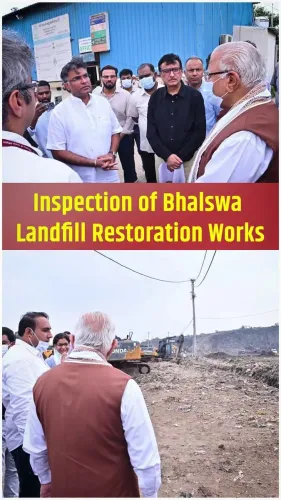
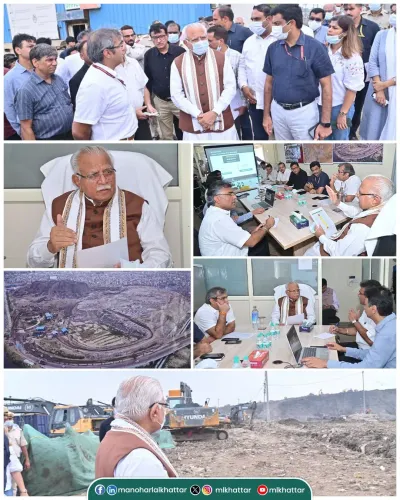
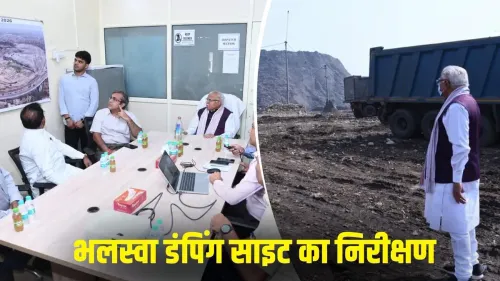
The most striking data point Khattar cited was the legacy waste remediation figure: over half of the country's legacy waste has now been cleared. In Indian cities, legacy waste refers to the massive, decades-old garbage dumps — called legacy dump sites — that occupy urban land, leach toxins into groundwater, and release methane into the air. Clearing them is slow, expensive, and technically demanding.
Crossing the halfway mark is a genuine operational achievement. But Khattar's framing carried a deliberate caution: the risk now is backsliding. Cities that have cleared old dumps without fixing upstream waste-segregation and processing infrastructure risk recreating the same problem within a decade. His call to 'prevent new accumulation' is as much a governance directive as it is a technical one.
Affordable housing and sustainable mobility: the next frontier
Beyond waste, Khattar flagged affordable housing, public transport, and sustainable construction as the pillars of India's future-ready city agenda. These are not new themes — but their explicit pairing at a valedictory session of a national conclave signals that the Ministry of Housing and Urban Affairs intends to keep them at the top of the policy stack heading into the next budget and planning cycle.
India's urbanisation rate is accelerating. Cities that cannot absorb incoming populations with dignified housing and reliable mobility will simply export their problems — to peri-urban fringes, to informal settlements, and to future governments. The conclave's framing as a platform for 'shaping the future of India's urban development' suggests the Centre is trying to get ahead of that curve.
The question is whether the energy of a two-day conclave in Bhubaneswar translates into funded, time-bound state-level action plans — or whether it remains a well-organised conversation. That answer will come in the months ahead.
Point of View
The Ministry of Housing and Urban Affairs is attempting to shift the political conversation toward outcomes. The choice of newly BJP-governed Odisha as the conclave host also serves a dual purpose: it rewards a recent electoral ally with national visibility while embedding the state in the Centre's urban governance framework. The real test will be whether the conclave's stated focus on 'rethinking delivery' produces actionable state-level commitments, or whether it remains a high-profile policy summit without binding follow-through.
NationPress
25 Oct 2026
Frequently Asked Questions
What is the National Urban Conclave 2026 and where was it held?
The National Urban Conclave 2026 was a national policy forum held in Bhubaneswar, Odisha , focused on the theme 'Urban Rising: Rethinking Urban Systems, Solutions and Delivery'. It was organised alongside the Urban Mobility India Conference and concluded with a valedictory session addressed by Union Minister Manohar Lal Khattar on October 25, 2026 .
What did Manohar Lal Khattar say about legacy waste in India?
Khattar stated that over half of India's legacy waste has been remediated, describing it as significant progress. He also cautioned that sustaining this progress and preventing new waste accumulation is now a critical governance priority for cities.
What are AMRUT, Swachh Bharat Mission–Urban and PM SVANidhi?
AMRUT (Atal Mission for Rejuvenation and Urban Transformation), launched in 2015 , targets urban water supply and basic infrastructure. Swachh Bharat Mission–Urban , launched in 2014 , focuses on sanitation and waste management in cities. PM SVANidhi , launched in 2020 , provides micro-credit loans to urban street vendors to support their livelihoods.
Who is Odisha's Chief Minister and what was his role in the Urban Conclave?
Mohan Charan Majhi has been Odisha's Chief Minister since 2024 . He was personally congratulated by Union Minister Khattar for successfully organising both the National Urban Conclave and the Urban Mobility India Conference in Bhubaneswar.
What urban priorities did Khattar outline for India's cities?
Khattar highlighted affordable housing, public transport, sustainable construction and scientific legacy waste remediation as the key priorities for building inclusive and future-ready Indian cities, alongside continued progress under the central urban flagship missions.