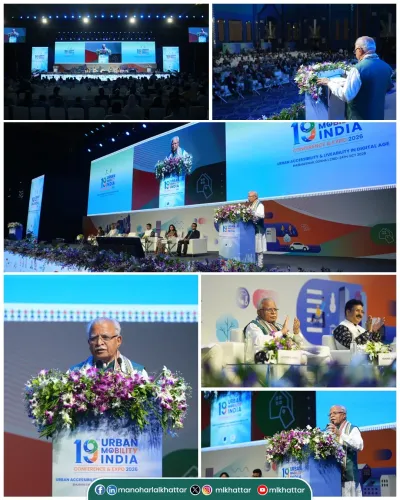
Khattar Addresses Valedictory Session of National Urban Conclave 2026
Synopsis
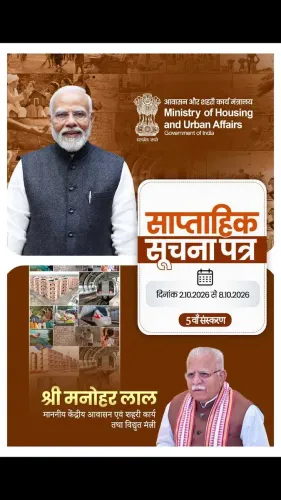
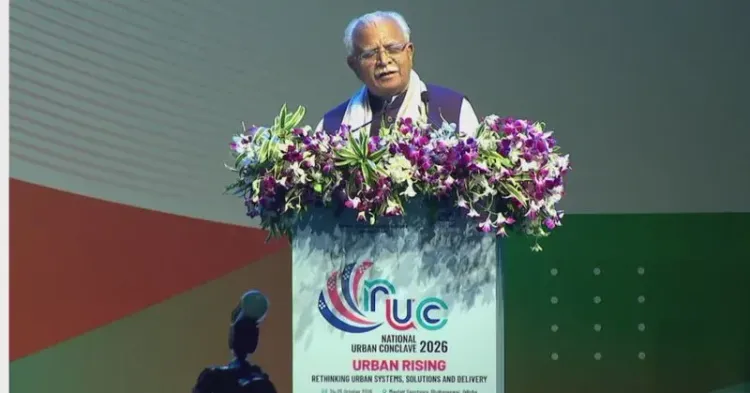
Union Minister Manohar Lal Khattar addressed the valedictory session of the National Urban Conclave 2026 on October 25, a key annual platform where India's Housing Ministry reviews progress on flagship urban schemes like PMAY-Urban and AMRUT with states and municipalities.
Key Takeaways
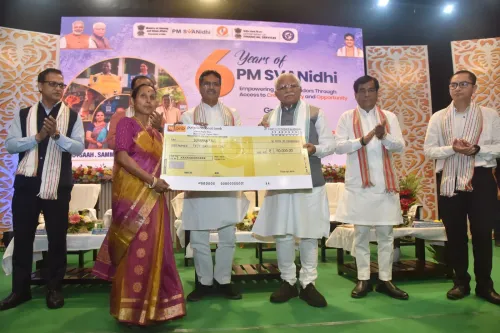
Manohar Lal Khattar , Union Minister for Housing and Urban Affairs, addressed the valedictory session of the National Urban Conclave 2026 on October 25, 2026 .
The conclave is a flagship Ministry of Housing and Urban Affairs event that convenes urban local bodies and state governments to review implementation of urban schemes.
Pradhan Mantri Awas Yojana (Urban) and AMRUT , both launched in 2015 , are the two central schemes under review at such conclaves.
The valedictory session is the ministry's key moment to set forward policy direction and accountability targets for municipalities.
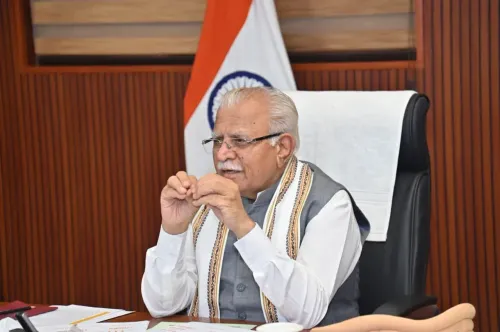
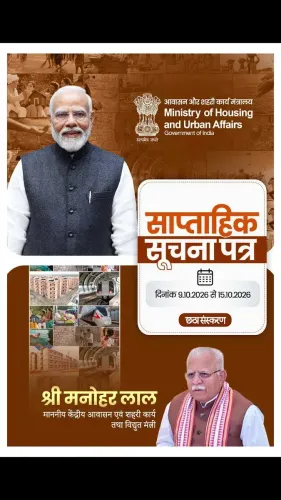
Khattar, a former Chief Minister of Haryana and senior BJP leader, holds a combined portfolio covering Power and Urban Affairs.
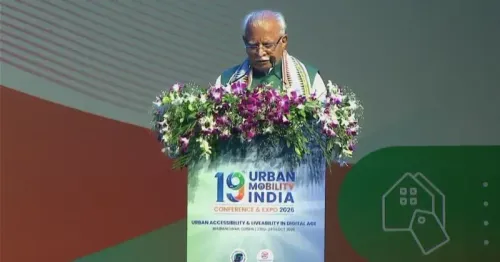
Union Minister of Housing and Urban Affairs Manohar Lal Khattar took the stage on Sunday, October 25, 2026, to address the valedictory session of the National Urban Conclave 2026 — the flagship annual gathering where India's urban development agenda is stress-tested, reviewed, and reset for the year ahead.
What the National Urban Conclave Brings to the Table
The Ministry of Housing and Urban Affairs convenes the National Urban Conclave as a high-level platform that draws together state governments, urban local bodies, and municipal administrations to take stock of where India's cities stand. The valedictory session — the closing address — is the moment when key takeaways are distilled and forward directions are laid down by the minister himself.
For urban India, the stakes are real. Two of the ministry's flagship schemes — Pradhan Mantri Awas Yojana (Urban), launched in 2015 to deliver affordable housing to urban households, and the Atal Mission for Rejuvenation and Urban Transformation (AMRUT), also launched in 2015 to modernise urban water, sanitation, and green-space infrastructure — remain works in progress across hundreds of cities. Conclaves like this are where implementation bottlenecks surface and accountability is sharpened.
Khattar's Dual Charge Over India's Urban Future
Manohar Lal Khattar, a senior BJP leader who served as Chief Minister of Haryana before taking charge of the Union portfolio, holds a uniquely combined brief: Power, Housing, and Urban Affairs. That dual grip over energy access and urban infrastructure places him at the centre of two of the most capital-intensive reform arcs in the government's term.
His presence at the valedictory session signals that the ministry is treating this conclave not as a ceremonial close but as a policy checkpoint — the kind of event where state-level officials go home with marching orders, not just handshakes.
Why the Valedictory Moment Matters
In the architecture of national conclaves, the valedictory session carries outsized weight. It is the minister's opportunity to publicly acknowledge what is working, name what is not, and signal the direction of any course corrections. For urban local bodies watching from across the country, the tone and content of that closing address shape priorities for the months ahead.
With India's urban population projected to keep climbing and housing and infrastructure demand outpacing delivery in several states, every National Urban Conclave carries genuine consequence — not just for municipal administrators, but for millions of urban residents waiting on homes, water connections, and liveable streets.
Point of View
Not routine. With PMAY-Urban and AMRUT both entering critical completion phases, the conclave's closing session is less a ceremony than a performance review. Khattar's combined Power and Urban brief gives him unusual cross-sectoral leverage — a minister who can link energy access to urban infrastructure in a single conversation. Whether the conclave translates into measurable implementation gains will ultimately depend on state-level follow-through, the perennial pressure point in India's centrally-sponsored scheme architecture.
NationPress
25 Oct 2026
Frequently Asked Questions
What is the National Urban Conclave 2026?
The National Urban Conclave 2026 is a high-level gathering organised by India's Ministry of Housing and Urban Affairs, bringing together state governments, urban local bodies, and municipal administrations to review progress on urban housing and infrastructure schemes and set policy direction.
What did Manohar Lal Khattar say at the National Urban Conclave 2026?
Khattar addressed the valedictory — or closing — session of the National Urban Conclave 2026 on October 25, 2026. The specific content of his address has not been officially detailed yet, but such sessions typically cover scheme progress, implementation challenges, and forward priorities.
What is Pradhan Mantri Awas Yojana Urban?
Pradhan Mantri Awas Yojana (Urban), launched in 2015, is the central government's flagship scheme to provide affordable housing to urban households, including the economically weaker sections and low-income groups.
What is AMRUT and what does it do?
AMRUT — Atal Mission for Rejuvenation and Urban Transformation — was launched in 2015 to improve urban infrastructure, covering water supply, sewerage, stormwater drainage, urban transport, and green spaces in cities.
Who is Manohar Lal Khattar and what ministry does he head?
Manohar Lal Khattar is a senior BJP leader and former Chief Minister of Haryana who currently serves as Union Minister of Power and Housing and Urban Affairs in the Government of India.