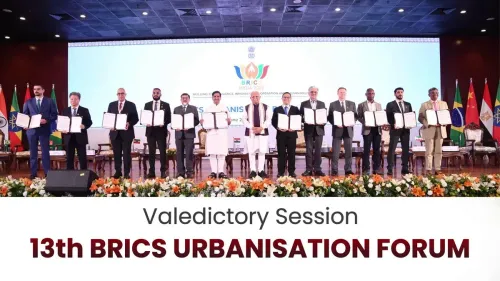
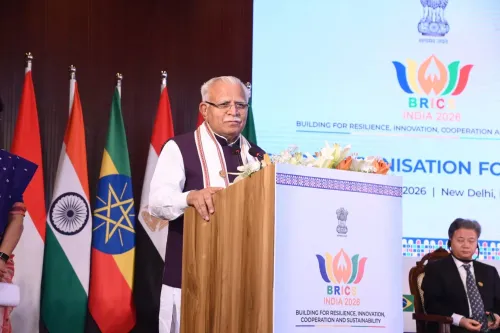
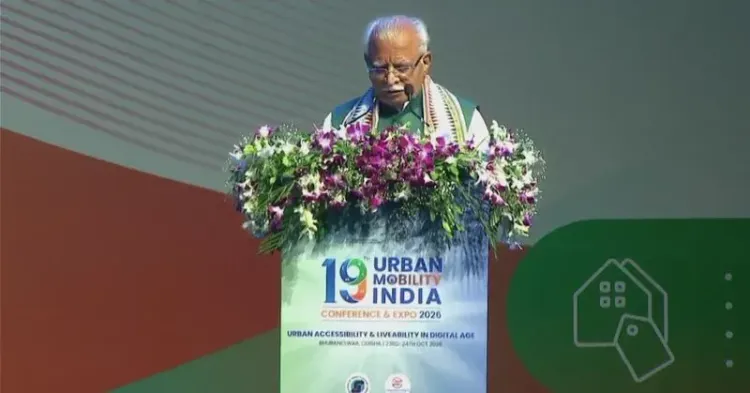
Khattar addresses valedictory session of Urban Mobility India 2026
Synopsis
Union Minister Manohar Lal Khattar addressed the valedictory session of the 19th Urban Mobility India Conference on 24 October 2026, closing a flagship Ministry of Housing and Urban Affairs forum that has guided India's urban transport policy for nearly two decades.
Key Takeaways
Manohar Lal Khattar , Union Minister of Housing & Urban Affairs and Power, addressed the valedictory session of the 19th Urban Mobility India Conference cum Exhibition on 24 October 2026 .
The UMI Conference is an annual Ministry of Housing and Urban Affairs event reviewing metro, bus rapid transit and electric mobility progress across Indian cities.
The National Urban Transport Policy (2006) and missions like AMRUT and Smart Cities (2015) form the policy backbone discussed at successive UMI editions.
Khattar's dual portfolio — Power and Housing & Urban Affairs — places him at the crossroads of electric mobility and urban infrastructure planning.
Post-conference policy circulars or updated scheme guidelines from the ministry are a likely near-term follow-up for state transport authorities.
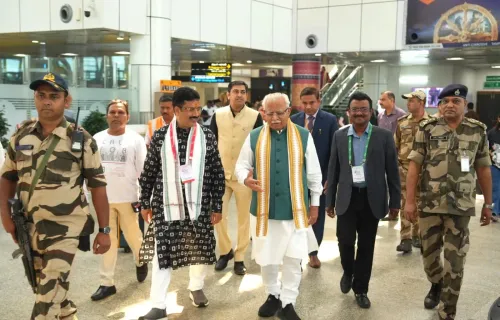
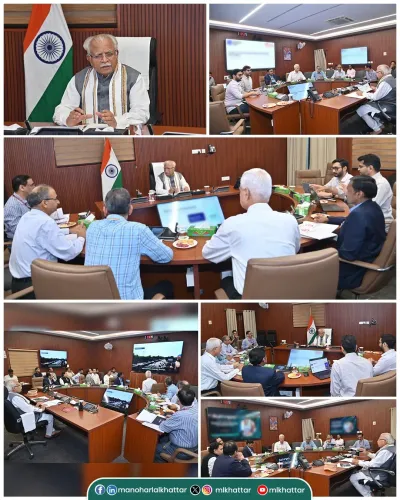
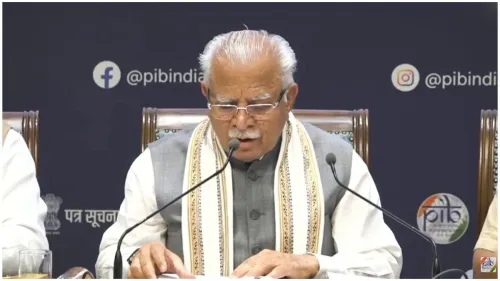
At the close of one of India's most consequential urban transport gatherings, Union Minister of Power and Housing & Urban Affairs Manohar Lal Khattar took the stage on Saturday, 24 October 2026 to address the valedictory session of the 19th Urban Mobility India Conference cum Exhibition — a forum that has, over nearly two decades, shaped the blueprint for how Indian cities move.
Nineteen editions and a city-transport revolution in progress
The Urban Mobility India (UMI) Conference is the flagship annual event of the Ministry of Housing and Urban Affairs, bringing together city planners, state transport authorities, metro rail corporations, technology companies and urban commuters' advocates under one roof. Since its inception, the conference has served as the government's primary platform to review where Indian cities stand on metro expansion, bus rapid transit corridors and, more recently, electric mobility rollout.
The 19th edition marks nearly two decades of this dialogue. That continuity matters: the policy architecture underpinning India's urban transport — from the National Urban Transport Policy of 2006 to the twin missions of AMRUT and Smart Cities, both launched in 2015 — has been stress-tested, refined and debated at successive UMI editions. The valedictory session is traditionally the moment when broad consensus from the conference days is distilled into forward-looking direction from the ministry.
Khattar's dual portfolio and what it means for urban India
Khattar's presence at the valedictory is significant beyond ceremony. As the minister holding both the Power and Housing & Urban Affairs portfolios, he sits at the intersection of two forces reshaping urban mobility: the push for electric buses and metro systems that draw from an increasingly renewable grid, and the urban planning mandates that determine where transit infrastructure gets built and funded.
The conference series has consistently linked urban transport progress to broader mission frameworks. Discussions typically span metro project timelines, last-mile connectivity gaps, and the financing models that allow smaller cities — not just Delhi or Mumbai — to build credible public transport networks. A valedictory address from the minister often signals which of these threads the ministry intends to pull hardest in the months ahead.
What planners and city authorities will watch for next
The immediate follow-through from a UMI valedictory session usually takes the form of policy circulars or updated scheme guidelines from the ministry. Urban transport authorities across states will be watching for any signals on funding allocations, revised AMRUT guidelines, or new electric-bus procurement frameworks that may have been previewed in the conference deliberations.
India's urban commuters — hundreds of millions of them navigating congested, under-served city corridors every day — are the ultimate constituency this conference exists to serve. The 19th edition's closing address is not the end of a conversation. It is, if history is any guide, the starting gun for the next round of implementation.
Point of View
Making any ministry signals on urban transport funding politically as well as administratively consequential. The conference's longevity also underscores a structural shift: urban mobility has graduated from a niche planning concern to a mainstream governance metric that state governments are judged on. How the ministry translates valedictory rhetoric into scheme guidelines will determine whether UMI 2026 is remembered as a turning point or another well-attended forum.
NationPress
24 Oct 2026
Frequently Asked Questions
What is the Urban Mobility India Conference?
The Urban Mobility India Conference is an annual event organised by India's Ministry of Housing and Urban Affairs to discuss urban transport planning, policy and technology, including metro rail, bus rapid transit and electric mobility.
What did Manohar Lal Khattar do at UMI 2026?
Khattar addressed the valedictory session of the 19th Urban Mobility India Conference cum Exhibition on 24 October 2026, closing the flagship urban transport forum as the Union Minister of Housing & Urban Affairs.
What is AMRUT and how does it relate to urban mobility?
AMRUT — Atal Mission for Rejuvenation and Urban Transformation — was launched in 2015 to upgrade infrastructure in Indian cities, including public transport and last-mile connectivity, and is a key framework discussed at UMI conferences.
What policy outcomes typically follow the UMI Conference?
Following the valedictory session, the Ministry of Housing and Urban Affairs often issues policy circulars or updated scheme guidelines on urban transport funding, metro project approvals and electric bus procurement frameworks.
Why does Khattar hold both Power and Housing & Urban Affairs portfolios?
Khattar was assigned both portfolios as a senior BJP leader and former Chief Minister of Haryana; the combination is significant because electric public transport links energy policy directly to urban infrastructure planning.