Shivraj highlights Raisen woman's RSETI skill training success
Synopsis
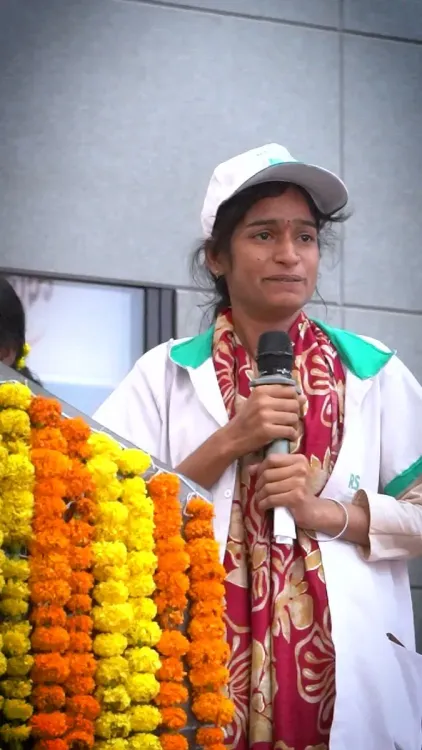
Union Minister Shivraj Singh Chouhan spotlighted Upasana Kushwah of Raisen, Madhya Pradesh, who completed beautician training under the RSETI scheme and achieved self-reliance — illustrating the bank-led rural skill programme's on-ground impact for women.
Key Takeaways
Upasana Kushwah of Raisen district, Madhya Pradesh completed a beautician training course under the RSETI scheme and is now self-employed.
RSETIs are bank-led vocational training centres under the Ministry of Rural Development , operational nationally since 2009 .
Union Minister Shivraj Singh Chouhan shared the story on 24 October 2026 , continuing his pattern of personalising welfare scheme outcomes.
Raisen is a predominantly agrarian district in central Madhya Pradesh, a core target geography for central livelihood programmes.
The RSETI model aims to shift rural populations from sole agricultural dependence toward micro-enterprise and self-employment.
District-level performance data from Madhya Pradesh RSETIs and next Union Budget allocations for skill centres are key indicators to watch.
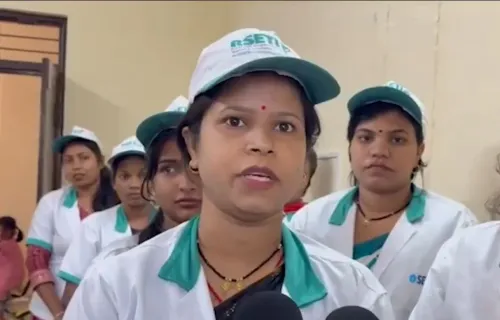
A young woman from a rural district of Madhya Pradesh has traded economic uncertainty for self-reliance — and Union Agriculture Minister Shivraj Singh Chouhan wants the country to know her name. On Saturday, 24 October 2026, Chouhan shared the story of Upasana Kushwah, a daughter of Raisen district, who completed beautician training through a Rural Self Employment Training Institute (RSETI) and is now standing on her own feet.
In his post, Chouhan wrote: 'Raisen ki beti Upasana Kushwah ab RSETI ki madad se beautician ki training poori kar aatmanirbhar ho gayi hain' — 'Raisen's daughter Upasana Kushwah has now become self-reliant after completing beautician training with the help of RSETI.' The message is brief, but the policy machinery behind it runs deep.What RSETI actually does — and why Raisen matters
RSETIs are bank-led vocational training centres established under the Ministry of Rural Development, scaled nationally from 2009 onward to pull rural youth toward micro-enterprise and away from sole dependence on agriculture. Each institute is anchored to a specific district and run in partnership with a sponsor bank, offering short-duration residential programmes in trades ranging from garment stitching to food processing to beauty services.
Raisen, a largely agrarian district in central Madhya Pradesh, sits squarely in the target geography for these interventions — high rural density, limited formal employment, and a population that central skill-and-livelihood schemes have consistently prioritised. Upasana's story, as Chouhan frames it, is precisely the outcome the RSETI model was designed to produce: a rural woman with a marketable skill and an independent income.
Chouhan's pattern: putting beneficiary faces on policy numbers
This is not the first time the minister has used a single beneficiary's journey to illustrate a scheme's reach. As a four-term Chief Minister of Madhya Pradesh, Chouhan built a political communication style around personalising government welfare — naming individuals, visiting villages, and anchoring large programme outcomes in human stories. That instinct has carried into his current dual portfolio of Agriculture and Farmers Welfare and Rural Development.
The approach serves a dual purpose: it humanises what can otherwise be a dry catalogue of training numbers, and it signals to rural constituencies — especially women — that the ministry is watching outcomes, not just disbursements. Whether Upasana's story is representative of district-wide RSETI performance in Raisen is a question the data would need to answer.
The bigger picture: women, micro-enterprise, and rural India's livelihood shift
India's rural development policy has for over a decade pushed a deliberate pivot — from farming as the only livelihood to a mixed economy of agriculture, services, and micro-enterprise. Women's participation in that shift is both a welfare goal and an economic multiplier. Beautician services, tailoring, and food processing consistently rank among the top RSETI trade categories precisely because they translate directly into local demand and require low capital to start.
What to watch next: district-level RSETI performance data from Madhya Pradesh and whether the next Union Budget expands allocations for new skill centres in underserved districts like Raisen.
Upasana Kushwah's training certificate is one data point. The real test is whether the system that produced it can replicate that outcome at scale — and whether the ministry's budget priorities will make that replication possible.
Point of View
He anchors an abstract programme in a relatable human outcome, which is far more persuasive to rural audiences than aggregate training numbers. The post also reflects the Ministry of Rural Development's broader push to position women's micro-enterprise as a centrepiece of rural economic policy. The real test of this communication strategy is whether it is backed by consistent budget allocations and district-level accountability for RSETI outcomes — or whether individual success stories substitute for systemic performance data.
NationPress
24 Oct 2026
Frequently Asked Questions
What is RSETI and how does it help rural women in India?
RSETI stands for Rural Self Employment Training Institute — a network of bank-led vocational training centres under the Ministry of Rural Development, established from 2009 onward. They offer short-duration, often residential, skill training in trades like beautician services, tailoring, and food processing to help rural youth, especially women, start their own micro-enterprises.
Who is Upasana Kushwah and what did she achieve?
Upasana Kushwah is a young woman from Raisen district in Madhya Pradesh who completed a beautician training course through her local RSETI centre. Union Minister Shivraj Singh Chouhan highlighted her story as an example of rural women achieving self-reliance through government skill programmes.
Which ministry runs the RSETI scheme in India?
The RSETI scheme operates under the Ministry of Rural Development, Government of India, in partnership with sponsor banks that anchor and run individual institutes at the district level.
Why did Shivraj Singh Chouhan share this story?
As Union Minister for Rural Development, Chouhan regularly highlights individual beneficiary success stories to illustrate the on-ground impact of central welfare and skill schemes — a communication style he developed over four terms as Chief Minister of Madhya Pradesh.
Is Raisen district in Madhya Pradesh covered under central skill training schemes?
Yes. Raisen is a predominantly rural, agrarian district in central Madhya Pradesh and falls within the target geography for central livelihood and skill programmes, including RSETI-based vocational training for rural youth and women.