Khattar Backs Urban Livelihood Scheme Under PM Modi
Synopsis
Union Minister Manohar Lal Khattar on 31 May 2026 credited PM Modi's leadership for sustaining a flagship scheme that strengthens India's informal urban economy, creating sustainable and dignified livelihoods for street vendors and urban workers.
Key Takeaways
Union Minister Manohar Lal Khattar publicly backed the Central government's flagship urban livelihood scheme on 31 May 2026 .
The minister credited PM Narendra Modi's leadership for the scheme's continued impact on the informal urban economy.
The post aligns with the mandate of the Ministry of Housing and Urban Affairs , which oversees urban vendor and informal-sector programmes.
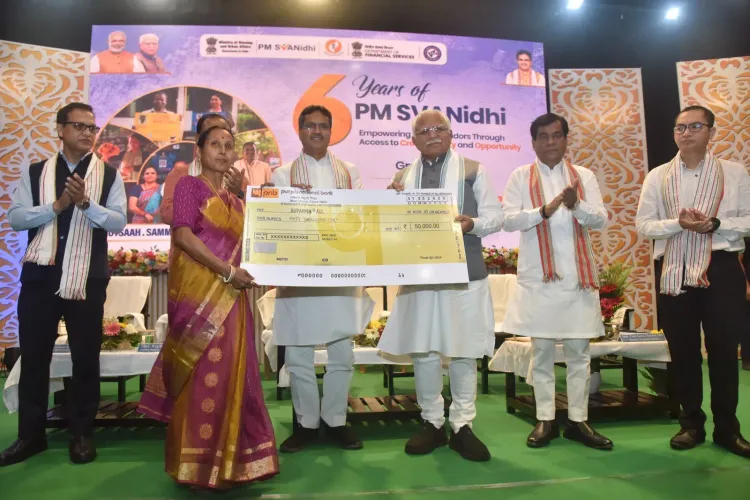
PM SVANidhi , launched in June 2020 , is the flagship micro-credit scheme for street vendors under this ministry's umbrella.
Primary beneficiaries are street vendors and urban informal workers who gain access to collateral-free working capital loans.
Policy watchers will track possible announcements on expanded credit outlays or scheme integration in the next budget cycle.
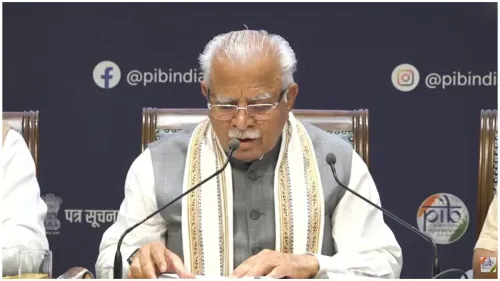
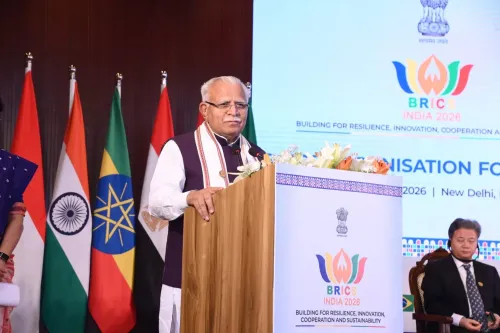
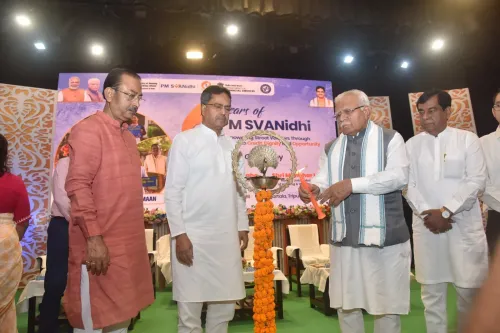
Union Minister of Housing and Urban Affairs Manohar Lal Khattar on Sunday, 31 May 2026 reaffirmed the Central government's commitment to strengthening India's informal urban economy, crediting Prime Minister Narendra Modi's leadership for sustaining a flagship scheme that creates dignified livelihoods for urban street vendors and informal workers.
In his post on X, Khattar stated that under the 'visionary leadership' of PM Modi, the flagship scheme 'continues to strengthen India's informal urban economy and create pathways for sustainable and dignified livelihoods.' The minister did not name the scheme explicitly, but the reference aligns with the broad mandate of the Ministry of Housing and Urban Affairs, which oversees urban livelihood and informal sector programmes.
Context
India's urban informal economy encompasses tens of millions of street vendors, daily-wage workers and small traders who operate outside formal employment structures. These workers have historically lacked access to institutional credit, social security and stable income pathways. The Central government has, since 2014, progressively targeted this segment through a series of credit-access, digital-payment and skill-linkage initiatives.
The Ministry of Housing and Urban Affairs sits at the centre of this effort, coordinating with state urban local bodies to register vendors, disburse working capital and link beneficiaries to wider welfare infrastructure. Khattar, as the Union Minister holding this portfolio, is the political face of these programmes at the national level.
Policy Backdrop
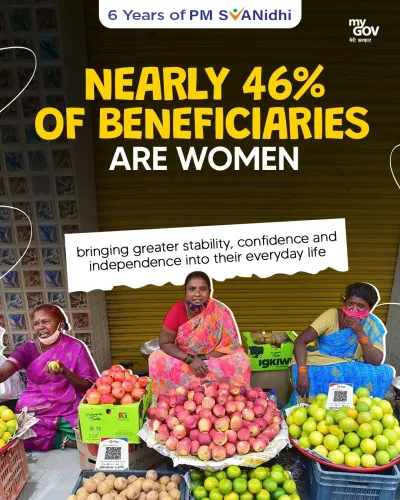
One of the most prominent interventions in this space is PM SVANidhi — the Pradhan Mantri Street Vendor's AtmaNirbhar Nidhi — a micro-credit scheme launched in June 2020 to provide collateral-free working capital loans to street vendors whose livelihoods were disrupted by pandemic-related restrictions. The scheme was designed to bring vendors into the formal financial ecosystem through small loans, digital transaction incentives and credit-score building.
Over successive phases, the programme expanded its loan limits and deepened convergence with state-level urban bodies, vendor-registration mobile applications and social protection schemes. The broader pattern of Central urban welfare policy has consistently sought to formalise the informal, pairing livelihood support with housing and infrastructure investment in rapidly urbanising cities and towns.
Stakeholders and Impact
The primary beneficiaries of such urban livelihood programmes are street vendors and informal urban workers — a constituency spread across every Indian city and town, from metropolitan centres to Tier-3 municipalities. Access to collateral-free credit allows vendors to replenish working capital, avoid predatory moneylenders and gradually build a credit history that opens doors to larger formal loans.
State governments and urban local bodies are co-implementers, responsible for vendor surveys, identity verification and grievance redressal. Their administrative capacity directly shapes how effectively Central funding reaches the last beneficiary. Civil society organisations and self-help groups often serve as on-ground facilitators in dense urban settlements.
What's Next
Khattar's reaffirmation signals continued political priority for urban informal-sector welfare heading into the next budget and ministry review cycle. Observers will watch for announcements on expanded credit outlays, enhanced loan ceilings, or integration of urban livelihood missions with new employment frameworks. As India's urban population grows, the policy challenge of absorbing informal workers into a more secure economic structure will only intensify, making ministerial statements like this a marker of the government's stated direction of travel.
Point of View
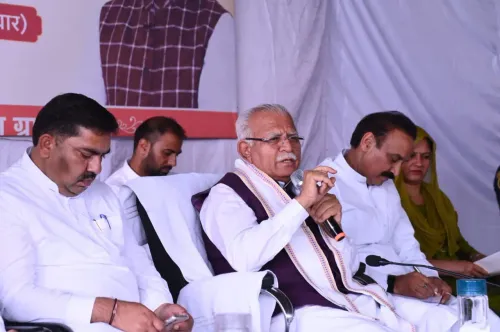
Reinforcing a centralised political narrative around urban poverty alleviation. The timing, on a Sunday with accompanying images, suggests a curated outreach effort aimed at the vendor and informal-worker constituency. As urban informal employment remains a sensitive electoral issue in India's expanding cities, such ministerial signals carry both policy and political weight.
NationPress
14 Oct 2026
Frequently Asked Questions
What is the flagship urban livelihood scheme Khattar mentioned?
Khattar did not name the scheme explicitly, but the reference is consistent with the Central government's urban informal-sector programmes overseen by the Ministry of Housing and Urban Affairs, most prominently PM SVANidhi, the micro-credit scheme for street vendors launched in June 2020.
What is PM SVANidhi and who benefits from it?
PM SVANidhi — Pradhan Mantri Street Vendor's AtmaNirbhar Nidhi — is a Central government scheme launched in June 2020 that provides collateral-free working capital loans to urban street vendors, helping them rebuild livelihoods and enter the formal financial system.
What is Manohar Lal Khattar's role in urban welfare schemes?
Manohar Lal Khattar is the Union Minister of Housing and Urban Affairs, making him the senior political authority overseeing Central schemes for urban development, vendor welfare and informal-sector livelihood programmes.
How does the Central government support India's informal urban economy?
Since 2014, the Central government has pursued formalisation of the urban informal economy through credit-access schemes, digital payment incentives, vendor registration platforms and convergence with state urban local bodies, with the Ministry of Housing and Urban Affairs as the nodal ministry.
What can we expect next for urban livelihood policy in India?
Policy observers are watching for announcements on expanded loan limits, higher credit outlays or integration of urban livelihood missions with new employment frameworks, likely during the next Union Budget or ministry review cycle.