Khattar Highlights 12 Years of Modi Govt's Middle-Class Push
Synopsis
Union Minister Manohar Lal Khattar invoked the BJP government's 12-year record on June 15, 2026, citing housing, tax and manufacturing reforms as proof of sustained middle-class empowerment, under the hashtag #12YearsOfSakshamMiddleClass.
Key Takeaways
Union Power Minister Manohar Lal Khattar posted on June 15, 2026 marking 12 years of the Modi government's middle-class empowerment agenda.
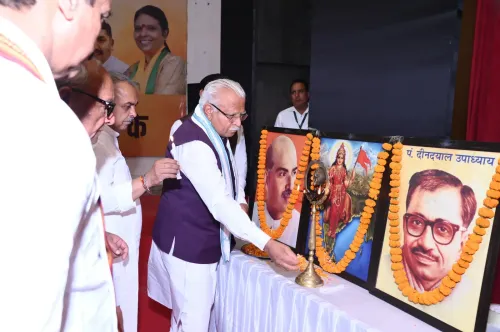
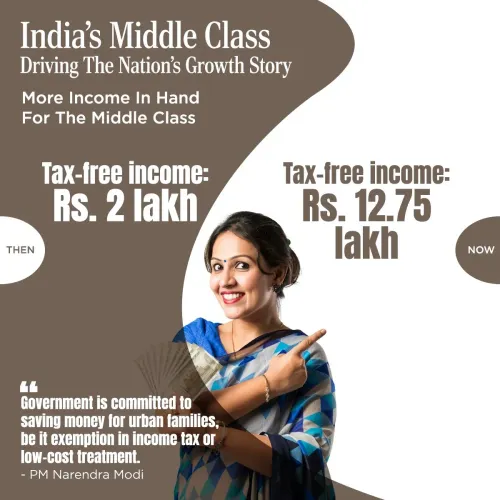
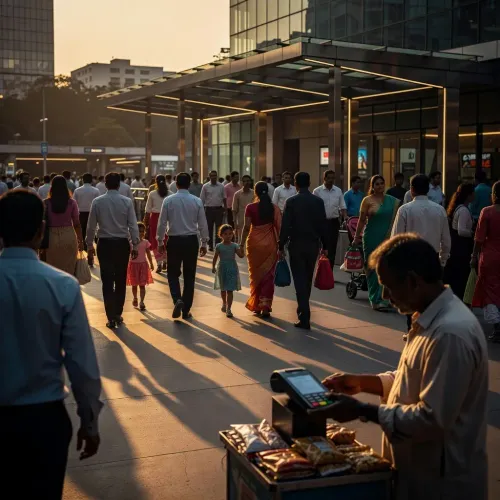
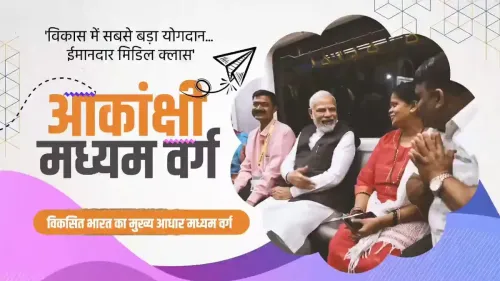
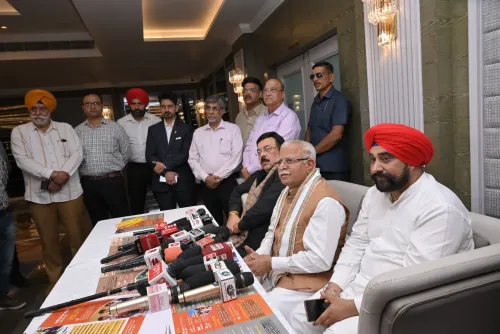
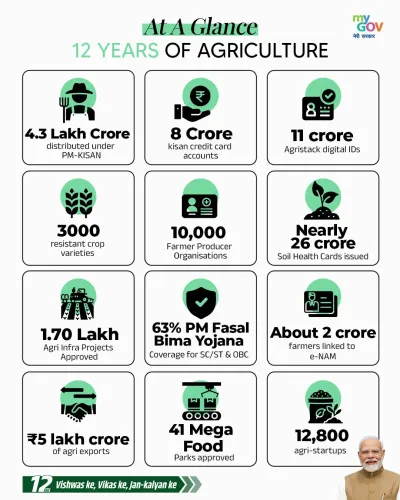
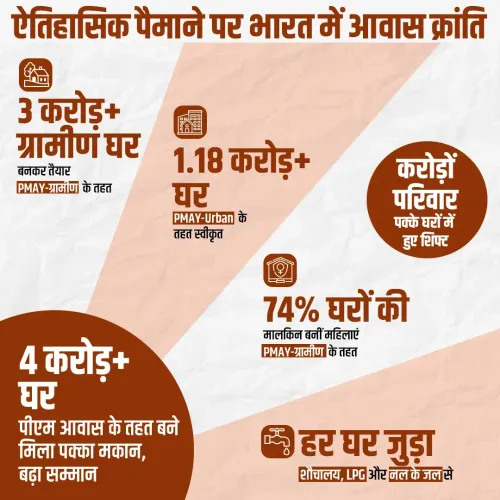
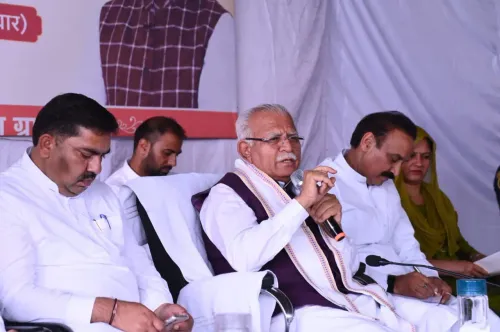
The post was in Hindi and accompanied by four images , using the hashtag #12YearsOfSakshamMiddleClass .
Key policies cited in the broader campaign include Make in India (2014) , PMAY-Urban (2015) , and GST (July 2017) .
Khattar's ministerial portfolio — Power and Housing and Urban Affairs — directly covers schemes targeting middle-income urban households.
The hashtag campaign is part of a coordinated BJP communications effort that typically intensifies before budget sessions or state elections.
Policy watchers are tracking the next Union Budget for income-tax slab changes and updates on PMAY-Urban 2.0 rollout.
Union Power Minister Manohar Lal Khattar on Monday, June 15, 2026, invoked twelve years of central government policy to argue that the Modi government has continuously worked to elevate the aspirations of a 'strong and self-reliant middle class.' The post, shared on X under the hashtag #12YearsOfSakshamMiddleClass, was accompanied by four images and framed the last decade-plus of governance as evidence of sustained middle-class empowerment.
Context
Khattar's post, written in Hindi, states: 'Ek sashakt aur aatmanirbhar madhyamvarg ke sapnon ki udaan ko adhik ooncha karne ke liye Modi sarkar nirantar prayasrat hai' — ('The Modi government is continuously striving to give greater flight to the dreams of a strong and self-reliant middle class.'). He added that work done over the past 12 years in this direction stands as proof of that commitment. The hashtag #12YearsOfSakshamMiddleClass — roughly translating to '12 Years of an Empowered Middle Class' — signals a coordinated BJP communications push marking the ruling alliance's twelfth year at the Centre.
Khattar, a senior Bharatiya Janata Party leader who served as Chief Minister of Haryana from 2014 to 2024 before being elevated to the Union Cabinet, has been a consistent voice amplifying the government's welfare and urban development agenda. As Union Minister of Power and Housing and Urban Affairs, his portfolio directly intersects with schemes targeting middle-income households.
Policy Backdrop
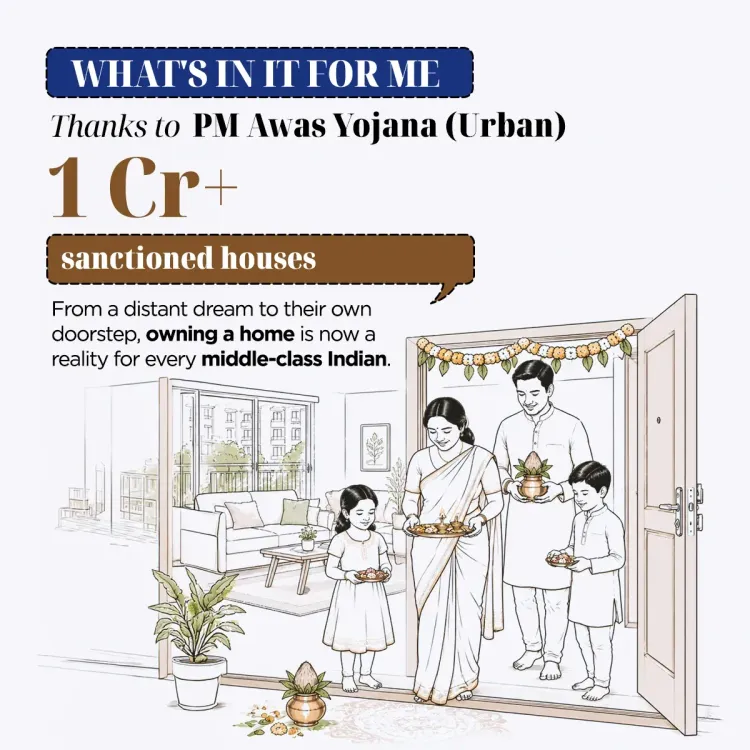
The BJP-led government's middle-class narrative rests on a sequence of landmark reforms since 2014. The Make in India initiative, launched in September 2014, aimed to expand manufacturing employment and broaden middle-class consumption. The Pradhan Mantri Awas Yojana (Urban), rolled out in 2015, extended housing credit subsidies to middle-income urban households — a scheme that falls directly under Khattar's current ministerial remit.
The rollout of the Goods and Services Tax (GST) in July 2017 was presented as a rationalisation of indirect taxes, lowering the compliance burden on middle-class consumers and small businesses. Programmes such as Mudra loans and the government's digital public infrastructure push have also been cited as pillars of this broader empowerment narrative, enabling first-generation entrepreneurs and salaried workers alike.
Stakeholders and Impact
The primary beneficiaries of the policies cited in this messaging are urban salaried taxpayers and middle-income households — a demographic that has grown in political salience as India's urbanisation accelerates. Housing subsidies under PMAY-Urban and interest subvention schemes have directly targeted this segment, while tax rationalisation measures have sought to increase disposable incomes.
Posts carrying the #12YearsOfSakshamMiddleClass hashtag form part of a wider, coordinated communications effort linking individual household aspirations to the government's flagship programmes. Such messaging typically intensifies ahead of Union Budget sessions or state assembly elections, when the middle class becomes a focal point of both policy announcements and political outreach.
What's Next
Analysts and policy watchers will be tracking the next Union Budget for proposals on personal income-tax slab revisions or enhanced interest subvention for middle-income housing — measures that would give concrete legislative weight to the government's rhetorical commitment. The state-level rollout of PMAY-Urban 2.0 phases will also serve as a key metric for whether the empowerment narrative translates into measurable household outcomes.
As the BJP marks twelve years in government, the middle-class empowerment frame is likely to remain central to both its policy agenda and its electoral positioning, with ministers like Khattar serving as amplifiers of that message across their respective portfolios.
Point of View
The party attempts to convert incremental policy gains into a coherent political brand. The timing and coordinated nature of the #12YearsOfSakshamMiddleClass campaign suggest this is less a spontaneous reflection and more a structured messaging exercise, likely calibrated ahead of a budget cycle or electoral contest. Whether the narrative lands will depend on whether middle-class voters perceive tangible relief — particularly on housing affordability and income-tax burden — in the months ahead.
NationPress
14 Sept 2026
Frequently Asked Questions
What is the #12YearsOfSakshamMiddleClass hashtag about?
The hashtag #12YearsOfSakshamMiddleClass marks twelve years of the BJP-led Modi government at the Centre and is part of a coordinated campaign highlighting policies said to have empowered India's middle class, including PMAY, GST and Make in India.
What did Manohar Lal Khattar post on June 15 2026?
Khattar posted in Hindi stating that the Modi government is continuously striving to elevate the dreams of a strong and self-reliant middle class, citing twelve years of work as evidence, accompanied by four images.
What schemes has the Modi government launched for the middle class?
Key schemes include the Pradhan Mantri Awas Yojana (Urban) for housing subsidies, the Mudra loan programme for small entrepreneurs, the Make in India initiative for manufacturing jobs, and GST rationalisation to reduce the tax burden on consumers.
What is Manohar Lal Khattar's current role in the government?
Manohar Lal Khattar is the Union Minister of Power and Housing and Urban Affairs. He previously served as Chief Minister of Haryana from 2014 to 2024 and is a senior leader of the Bharatiya Janata Party.
What should we watch for next regarding middle-class policy in India?
Key things to watch include Union Budget proposals on personal income-tax slab changes, interest subvention schemes for middle-income housing, and the state-level rollout progress of PMAY-Urban 2.0 phases.