Nadda Highlights 61 Crore Coverage Under Ayushman Bharat
Synopsis
Union Health Minister J. P. Nadda highlights that nearly 61 crore Indians receive up to ₹5 lakh health coverage under Ayushman Bharat and the PM Dialysis Yojana, with all senior citizens above 70 also covered universally under the same benefit.
Key Takeaways
Nearly 61 crore people are being covered with up to ₹5 lakh in health insurance under Ayushman Bharat and the Pradhan Mantri Dialysis Yojana .
All senior citizens above 70 years of age receive ₹5 lakh health coverage irrespective of their income or economic status.
Ayushman Bharat PM-JAY , launched in 2018 , originally targeted 10.74 crore poor families — the beneficiary base has since expanded substantially.
The Pradhan Mantri National Dialysis Programme , launched in 2016 , provides free haemodialysis at district hospitals under the National Health Mission .
The elderly extension marks a shift from a means-tested to a universal coverage model for citizens above 70.
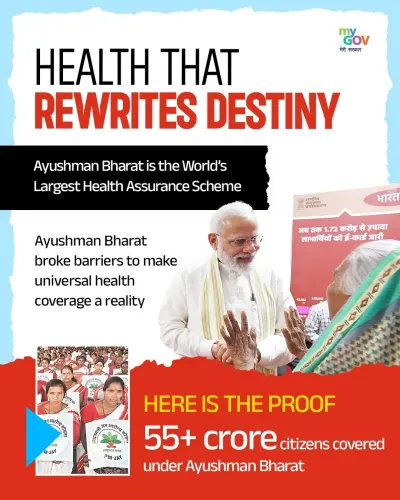
Nearly 61 crore Indians are now being covered with health insurance of up to ₹5 lakh under the Pradhan Mantri Dialysis Yojana and Ayushman Bharat — and every senior citizen above 70 years gets the same protection, regardless of economic status. Union Health Minister J. P. Nadda highlighted these figures in a post on X on Thursday, October 29, 2026, reaffirming the government's push to shield Indian families from catastrophic medical expenses.
What Ayushman Bharat Actually Covers — and for Whom
Launched in 2018, Ayushman Bharat Pradhan Mantri Jan Arogya Yojana (PM-JAY) was designed to provide up to ₹5 lakh per family per year for secondary and tertiary hospitalisation. The original target was 10.74 crore poor and vulnerable families — a number that has since grown substantially through successive eligibility expansions. Nadda's post places the current coverage figure at approximately 61 crore beneficiaries, signalling how far the scheme's reach has extended since its inception.
The scheme covers hospitalisation costs across a network of empanelled public and private hospitals, aiming to ensure that a medical emergency does not push a family into financial ruin. For the target population — economically weaker sections and vulnerable households — this translates to cashless treatment for most serious conditions.
The 70-Plus Guarantee: A Targeted Elderly Push
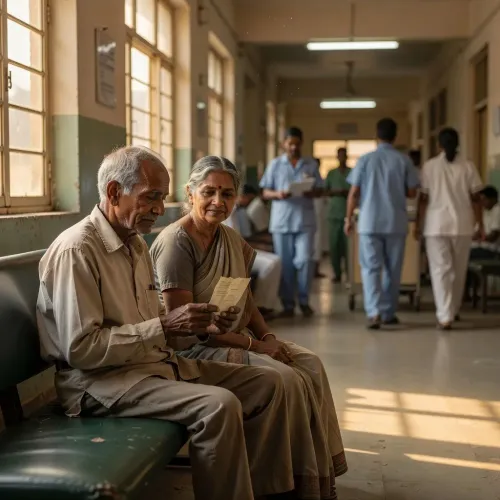
A significant policy addition has been the extension of ₹5 lakh coverage to all senior citizens above the age of 70, irrespective of their income level. This marks a departure from the means-tested model of the original scheme — for the elderly, universality replaces eligibility criteria. Kidney disease, cardiac conditions, and oncology treatments, which disproportionately burden older Indians, are squarely within the ambit of this cover.
This elderly-specific expansion reflects a broader recognition that out-of-pocket health expenditure falls hardest on senior citizens, who often live on fixed incomes or are dependent on family support. Bringing them under a universal umbrella, rather than asking them to prove poverty, is a structural shift worth noting.
Dialysis Access: The 2016 Programme Quietly Scaling Up
Running alongside Ayushman Bharat is the Pradhan Mantri National Dialysis Programme, launched in 2016 under the National Health Mission. Its mandate: free haemodialysis at district hospitals across India, targeting patients with chronic kidney disease who would otherwise bear a crushing recurring cost. Dialysis is not a one-time procedure — patients typically require multiple sessions per week, indefinitely, making free access at district level a genuine lifeline rather than a symbolic gesture.
By bundling both programmes in a single communication, Nadda is drawing attention to the layered architecture of India's publicly funded health protection — one scheme covering broad hospitalisation, another tackling a specific, high-cost chronic condition.
The Bigger Picture: India's Financial Protection Bet
India's historically high share of out-of-pocket health expenditure has long been a structural vulnerability — medical bills have been among the leading drivers of household debt and poverty. The government's strategy of expanding publicly funded insurance, rather than building universal delivery infrastructure alone, is the central wager here. Whether that bet is paying off depends on enrolment quality, hospital empanelment depth, and claim settlement rates — metrics that will be closely watched in upcoming parliamentary sessions and budget cycles.
For now, the numbers Nadda cites point to the single largest health-coverage programme India has ever attempted — and a political commitment to keep widening the net.
Point of View
Part political messaging ahead of budget and legislative cycles. The bundling of Ayushman Bharat with the PM Dialysis Programme signals a conscious effort to present India's health protection architecture as layered and expanding, not static. The universal extension to all citizens above 70, regardless of income, is the most structurally significant element — it breaks the means-testing paradigm and could set a precedent for further universalisation. Whether these headline numbers translate into effective access on the ground will be the real test, and enrolment quality data will be the next political flashpoint.
NationPress
29 Oct 2026
Frequently Asked Questions
What is Ayushman Bharat and who is eligible?
Ayushman Bharat Pradhan Mantri Jan Arogya Yojana is a government health insurance scheme launched in 2018 that provides up to ₹5 lakh per family per year for hospitalisation. It originally targeted economically weaker sections and vulnerable households, with eligibility since expanded to cover approximately 61 crore people.
Do all senior citizens above 70 get free health cover under Ayushman Bharat?
Yes. The government has extended ₹5 lakh annual health coverage to all citizens above the age of 70, regardless of their income level, making it a universal benefit for the elderly rather than a means-tested one.
What is the Pradhan Mantri National Dialysis Programme?
The Pradhan Mantri National Dialysis Programme was launched in 2016 under the National Health Mission to provide free haemodialysis services at district hospitals across India for patients with chronic kidney disease.
How many people are covered under Ayushman Bharat in 2026?
Union Health Minister J. P. Nadda stated on October 29, 2026 that approximately 61 crore people are being provided health coverage of up to ₹5 lakh under Ayushman Bharat and the PM Dialysis Yojana combined.
What does ₹5 lakh health coverage mean under Ayushman Bharat?
It means eligible beneficiaries can receive cashless hospitalisation — including secondary and tertiary care — worth up to ₹5 lakh per year at empanelled public and private hospitals without paying out of pocket at the point of treatment.