Nadda Highlights Ayushman Bharat PM-JAY's Role in Easing Health Costs
Synopsis
Union Health Minister J. P. Nadda invoked beneficiary experiences to champion Ayushman Bharat PM-JAY, calling the scheme central to PM Modi's vision of accessible, affordable healthcare and a shield against the financial shock of medical emergencies for India's most vulnerable families.
Key Takeaways
Nadda posted on 26 September 2026 spotlighting Ayushman Bharat PM-JAY as a tool to ease financial stress from health emergencies.
PM-JAY provides up to ₹5 lakh per family per year for secondary and tertiary hospital care at empanelled facilities.
The scheme was launched in 2018 under Prime Minister Narendra Modi to reduce catastrophic out-of-pocket health spending among economically vulnerable households.
The post is linked to the #SevaSankalpAbhiyan campaign, which centres on amplifying beneficiary testimonials.
Key metrics to watch include scheme enrollment figures, hospital empanelment numbers, and any proposed revision to coverage limits.
When a health emergency strikes a low-income household, the first crisis is medical — the second is financial. Union Health Minister J. P. Nadda underscored that stark reality on Saturday, 26 September 2026, invoking the lived journeys of Ayushman card-holders to make the case that Ayushman Bharat PM-JAY is doing exactly what it was designed to do: stand between a family and financial ruin at their most vulnerable moment.
What the Card Represents Beyond Cardboard
Nadda framed the Ayushman card not as a bureaucratic document but as a turning point in a family's story. 'Behind every Ayushman Card is a family's journey towards timely and affordable treatment,' he wrote, anchoring the government's messaging squarely in human experience rather than administrative metrics. The post also referenced #SevaSankalpAbhiyan, signalling an active outreach campaign built around beneficiary testimonials.
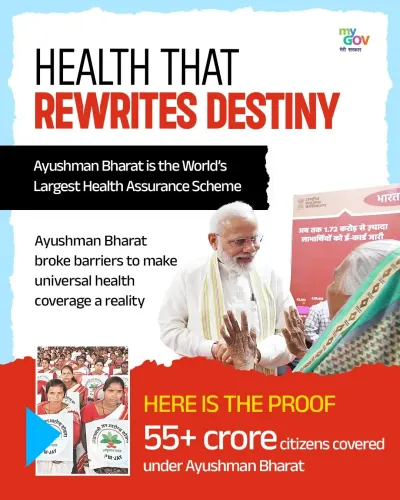
The scheme at the centre of this push — Pradhan Mantri Jan Arogya Yojana (PM-JAY) — provides up to ₹5 lakh per family per year for secondary and tertiary hospital care. Launched in 2018 under Prime Minister Narendra Modi, it targets economically vulnerable households and covers treatment at empanelled public and private hospitals across India.
PM-JAY's Eight-Year Journey Against Out-of-Pocket Spending
The scheme was conceived to tackle one of India's most persistent public-health problems: catastrophic out-of-pocket expenditure that pushes families into debt or forces them to delay or forgo care entirely. Since its 2018 rollout, PM-JAY has been the flagship vehicle for that ambition — one of the largest government-funded health assurance programmes in the world by intended coverage.
Nadda's post places beneficiary experience at the centre of the narrative, a deliberate shift from enrollment numbers to impact stories. That framing matters: it signals the government's intent to consolidate political and public support for the scheme by making its value tangible, not statistical.
Seva Sankalp Abhiyan and the Outreach Momentum
The hashtag #SevaSankalpAbhiyan — roughly translating to 'Mission of the Pledge to Serve' — suggests a structured campaign phase. While the precise contours of the campaign could not be independently verified at the time of publication, the messaging pattern points to a government-driven effort to surface and amplify beneficiary voices, reinforcing the scheme's credentials ahead of potential announcements on coverage expansion or enrollment milestones.
Watch this space: forthcoming health ministry statements on updated enrollment figures, hospital empanelment counts, or any revision to the ₹5 lakh annual coverage ceiling would be the natural next chapter in this story.
Point of View
Not its enrollment spreadsheets. Framing health assurance through beneficiary journeys is a tested welfare-politics strategy that insulates the scheme from cost-efficiency critiques. With the #SevaSankalpAbhiyan hashtag indicating an organised campaign, this looks less like a standalone post and more like the opening of a sustained public-engagement push — possibly timed ahead of policy announcements or budgetary decisions on coverage expansion.
NationPress
26 Sept 2026
Frequently Asked Questions
What is Ayushman Bharat PM-JAY and who does it cover?
Ayushman Bharat PM-JAY (Pradhan Mantri Jan Arogya Yojana) is a government-funded health insurance scheme launched in 2018 that provides up to ₹5 lakh per family per year for secondary and tertiary hospital treatment, targeting economically vulnerable households across India.
How much does PM-JAY cover per family?
PM-JAY covers up to ₹5 lakh per family per year for hospitalisation costs at empanelled public and private hospitals.
What is the Seva Sankalp Abhiyan campaign?
Seva Sankalp Abhiyan appears to be a government outreach campaign linked to Ayushman Bharat, focused on sharing beneficiary experiences to highlight the scheme's on-ground impact; precise campaign details are yet to be officially detailed.
When was Ayushman Bharat launched in India?
Ayushman Bharat, including the PM-JAY component, was launched in 2018 under Prime Minister Narendra Modi as one of the world's largest government-funded health assurance programmes.
What did J. P. Nadda say about Ayushman Bharat on 26 September 2026?
Nadda said that behind every Ayushman Card is a family's journey towards timely and affordable treatment, and described PM-JAY as central to PM Modi's vision of ensuring accessible, affordable, and quality healthcare for every citizen.