CM Himanta: Industrialisation Seeds Self-Reliance via MSMEs
Synopsis
Assam Chief Minister Dr Himanta Biswa Sarma on 29 October 2026 stated that industrialisation creates self-reliance by seeding ancillary small enterprises, echoing the Assam Industrial Development Policy 2020 and the state's ongoing push to diversify beyond tea and petroleum.
Key Takeaways
Dr Himanta Biswa Sarma positioned industrialisation as a driver of small-enterprise growth, not merely a source of direct employment.
Assam has been diversifying its economy away from tea and petroleum since 2016 , accelerating under Dr Sarma since May 2021 .
The Assam Industrial Development Policy 2020 offers incentives tied to local employment generation for both large industries and MSMEs.
The 'anchor-and-ancillary' model aligns with the national Atmanirbhar Bharat Abhiyan framework launched in 2020 .
Key sectors targeted include food processing, pharmaceuticals and bamboo-based manufacturing.
Growth in registered MSMEs and ancillary units across Assam districts will be the practical measure of the policy's success.
Industrialisation, Assam Chief Minister Dr Himanta Biswa Sarma argued on Thursday, 29 October 2026, is far more than a jobs machine — it is the engine that builds a web of small enterprises capable of sustaining an economy from within.
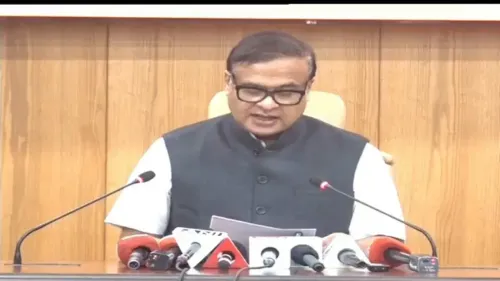
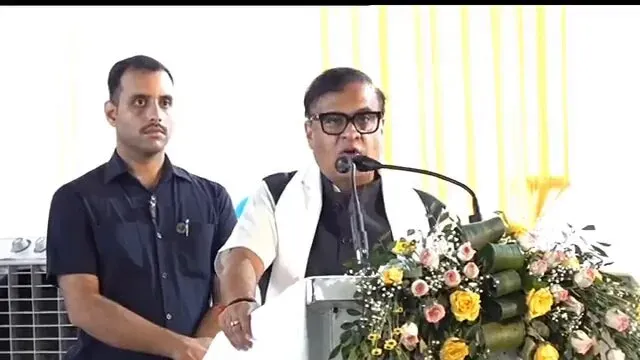
The Chief Minister's Office of Assam quoted Dr Sarma as saying: 'Industrialisation not only creates employment but also opens new pathways to self-reliance by fostering the growth of other small enterprises.' The statement reframes large-scale industrial investment not as an end in itself but as a catalyst — each new factory or processing plant generating demand that dozens of ancillary micro and small units can fill.
Assam's pivot away from tea and oil
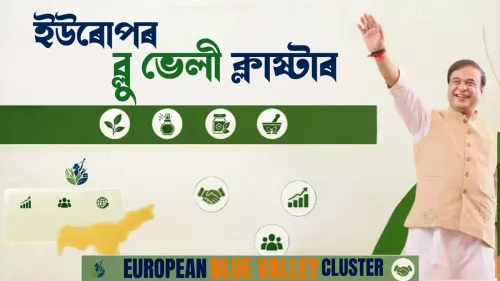
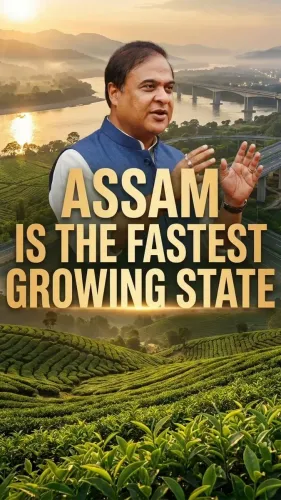
The context matters. Assam has historically leaned on two pillars — tea and petroleum — for the bulk of its economic identity. Both are volatile: tea prices swing with global demand, and oil output from the state's ageing fields has declined steadily. Since 2016, successive state governments have tried to broaden that base, and Dr Sarma, in office since May 2021, has accelerated that push into food processing, pharmaceuticals and bamboo-based manufacturing.
The Assam Industrial Development Policy 2020 codified that ambition, offering incentives for both MSMEs and large industries to set up in the state — with local employment generation as an explicit benchmark for those incentives. The policy's underlying logic is precisely what Dr Sarma articulated today: anchor investments attract suppliers, and suppliers spawn entrepreneurs.
The MSME multiplier and Atmanirbhar logic
This 'anchor-and-ancillary' model has a national parallel. The Atmanirbhar Bharat Abhiyan, launched in 2020, placed domestic manufacturing and local supply chains at the centre of India's post-pandemic economic strategy. Assam's approach mirrors that template at the state level — using large project announcements to seed supply chains that micro-entrepreneurs can plug into without the capital required to compete with headline investors.
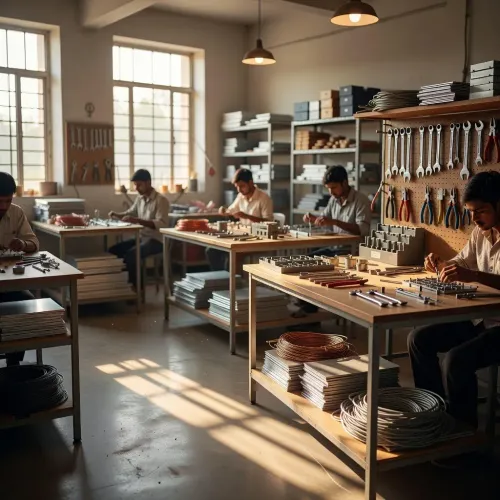
For a state where formal employment has historically been scarce, the MSME multiplier argument carries particular weight. A single food-processing plant, for instance, can generate demand for packaging units, transport contractors, cold-chain logistics providers and equipment-repair shops — all potential small-business opportunities for local residents.
Whether fresh industrial incentives translate into measurable growth in registered MSMEs across Assam's districts will be the real test of the Chief Minister's thesis — and the number to watch in the months ahead.
Point of View
Keeping the relationship between Dispur and New Delhi harmonious while asserting a distinct Northeastern identity in the industrialisation story. The statement's vagueness on specifics, however, means the political value depends entirely on delivery of measurable MSME growth in the months ahead.
NationPress
29 Oct 2026
Frequently Asked Questions
What did Assam CM Himanta Biswa Sarma say about industrialisation?
CM Dr Himanta Biswa Sarma said that industrialisation not only creates employment but also fosters the growth of other small enterprises, opening new pathways to self-reliance.
What is the Assam Industrial Development Policy 2020?
The Assam Industrial Development Policy 2020 provides financial and regulatory incentives to both MSMEs and large industries to set up in Assam, with local employment generation as a key benchmark.
How is Assam trying to diversify its economy?
Assam is expanding beyond its traditional tea and petroleum base by attracting investment in food processing, pharmaceuticals and bamboo-based industries, using large anchor projects to generate demand for local small enterprises.
How does Assam's industrial push relate to Atmanirbhar Bharat?
Assam's anchor-and-ancillary industrial model mirrors the Atmanirbhar Bharat Abhiyan's national strategy of building domestic supply chains through large investments that seed smaller local enterprises.
What sectors is Assam focusing on for industrial growth?
Assam is prioritising food processing, pharmaceuticals and bamboo-based manufacturing as growth sectors to diversify away from its historical reliance on tea and oil.