Bihar MBA grad turns entrepreneur under PMEGP, employs 40 families in Purnia
Synopsis
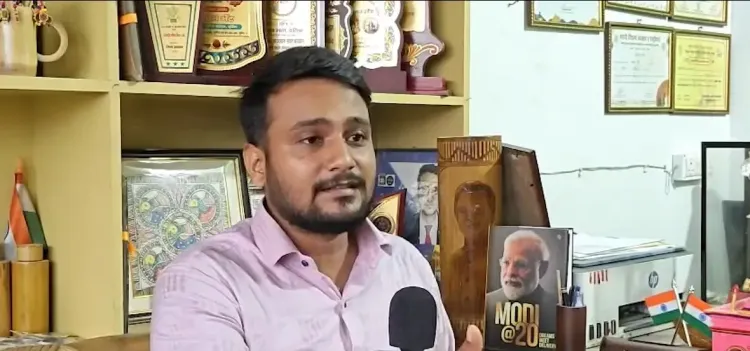
An MBA graduate who lost his job during COVID-19, watched his savings vanish on medical bills, and faced social ridicule for selling bamboo products has built a company that now sustains 40 families in rural Bihar — all from a ₹10 lakh government loan and a ₹3,000 test purchase in a local market.
Key Takeaways
Satyam Sundaram , an MBA graduate from Purnia, Bihar , launched Manipuri Bamboo Architecture using a ₹10 lakh PMEGP loan .
He lost his job at ITC during the 2020 COVID-19 pandemic and returned home after his parents fell critically ill.
His initial test run — a ₹3,000 stock of bamboo products — sold out in four days , validating the business idea.
The company now employs 10 skilled artisans directly and supports livelihoods for nearly 40 families .
Products are sold at railway stations in Purnia, Katihar, Danapur, and Hajipur .
His mother, Asha Anuragini , stood by him through social ridicule and is now publicly proud of his achievement.
Satyam Sundaram, an MBA graduate from Purnia district in Bihar, has built a thriving bamboo-products enterprise using a ₹10 lakh loan under the Prime Minister's Employment Generation Programme (PMEGP), generating livelihoods for nearly 40 families in his village. His journey from corporate job loss during the COVID-19 pandemic to running a company with stalls across multiple railway stations is drawing attention as a grassroots success story of Central government entrepreneurship support.
From Job Loss to Entrepreneurship
After completing his MBA, Satyam Sundaram secured employment with ITC. The 2020 COVID-19 pandemic, however, upended his plans — both his parents fell critically ill due to the virus, and he lost his job as the company began downsizing. He returned to Purnia to manage his parents' treatment, exhausting the family's entire savings in the process.
Satyam's father is a Class IV government employee, and the family had stretched its resources to fund his education. With savings gone and debt mounting, Satyam's situation was, by his own account, dire.
How PMEGP Became the Turning Point
While reading a newspaper, Satyam came across the Prime Minister's Employment Generation Programme (PMEGP) — a Central government scheme that provides collateral-free loans to first-generation entrepreneurs. He travelled to Assam and Manipur to study bamboo-based products, purchasing an initial stock worth ₹3,000 and test-selling it in the Purnia market. The entire inventory sold out within four days, confirming demand.
Encouraged by this, Satyam applied for and secured a ₹10 lakh PMEGP loan and formally launched 'Manipuri Bamboo Architecture'. Notably, the venture combined traditional northeast Indian bamboo craftsmanship with a supply chain rooted in Bihar, linking artisans from both regions.
Scale, Reach, and Employment Generated
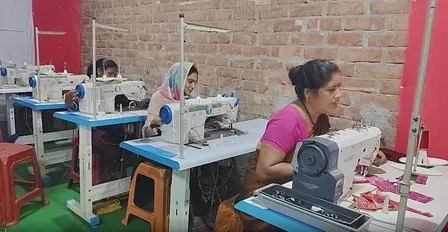
Today, Manipuri Bamboo Architecture supports the livelihoods of approximately 40 families and directly employs 10 skilled artisans at its facility. Satyam's bamboo products are now sold beyond Purnia, with retail stalls at railway stations in Purnia, Katihar, Danapur, and Hajipur — giving the enterprise a pan-Bihar distribution footprint.
Artisans associated with the company have publicly acknowledged the employment opportunity created. The business has also changed the social standing of the family — when Satyam first began selling bamboo products, some in the community questioned why an MBA holder would pursue such work. His mother, Asha Anuragini, faced those taunts directly but continued to support him. She became emotional while recounting his success, saying: 'This business has also become a source of livelihood for the artisans working in Satyam's factory. Ten skilled artisans are employed here.'
Significance for PMEGP and Rural Employment
Satyam's case reflects a broader intent behind the PMEGP, which was designed to route educated youth toward self-employment and thereby generate downstream jobs in semi-urban and rural areas. This comes amid ongoing debates about white-collar job creation in Bihar, one of India's most populous and economically challenged states. Stories like Satyam's are increasingly cited by government agencies as proof-of-concept for the scheme's reach beyond metropolitan centres.
What began as a ₹3,000 test purchase in a local market has grown into a multi-location business — a trajectory that, if replicated at scale, could offer a replicable model for post-pandemic rural entrepreneurship across the state.
Point of View
And that rural Bihar offers no entrepreneurial runway for educated youth. What is harder to assess is whether the PMEGP pipeline that worked for him is consistently accessible, or whether his success required an unusual combination of individual persistence and proximity to information. Bihar's unemployment challenge is structural and large; a single inspirational case, however genuine, does not answer the systemic question. The more useful takeaway is that demand for bamboo craft exists well beyond the Northeast — and that aggregating that demand through a distribution-first model, not just production, is what actually scaled this business.
NationPress
29 Oct 2026
Frequently Asked Questions
What is the PMEGP scheme that helped Satyam Sundaram?
The Prime Minister's Employment Generation Programme (PMEGP) is a Central government credit-linked subsidy scheme that provides loans to first-generation entrepreneurs to set up micro-enterprises. Satyam secured a ₹10 lakh loan under the scheme to launch his bamboo-products company, Manipuri Bamboo Architecture, in Purnia, Bihar.
Who is Satyam Sundaram and where is he from?
Satyam Sundaram is an MBA graduate from Purnia district in Bihar who lost his corporate job at ITC during the 2020 COVID-19 pandemic. After exhausting family savings on his parents' medical care, he used a PMEGP loan to start a bamboo-products business that now employs nearly 40 families.
What products does Manipuri Bamboo Architecture sell and where?
The company sells bamboo-based products sourced from Assam and Manipur and markets them across Bihar. Retail stalls are currently operational at railway stations in Purnia, Katihar, Danapur, and Hajipur.
How many people does Satyam's business employ?
Manipuri Bamboo Architecture directly employs 10 skilled artisans and provides livelihoods to approximately 40 families associated with the enterprise. The business has grown from a ₹3,000 test purchase in a local market to a multi-location operation.
How did Satyam first test his business idea before taking the PMEGP loan?
Satyam travelled to Assam and Manipur, bought bamboo-based products worth ₹3,000, and sold them in the Purnia market. The entire stock sold out within four days, convincing him of the market demand before he applied for the formal ₹10 lakh PMEGP loan.