PMEGP transforms Sheikhpura lives: Couple employs 20, eyes 200-machine expansion
Synopsis
A couple in Bihar's Sheikhpura district turned a government micro-enterprise loan into a 20-person employer — and they're not done. Gauri Kumari and Lalan Pandey, who returned home during the 2020 pandemic, now plan to scale to 200 sewing machines, potentially making their PMEGP-backed unit one of the district's largest informal-sector employers.
Key Takeaways
PMEGP is generating measurable employment outcomes in Sheikhpura district , Bihar .
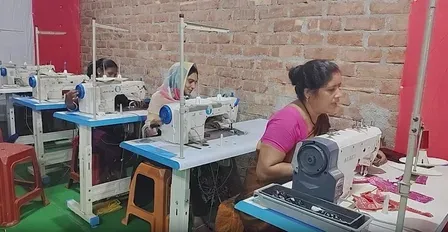
Gauri Kumari used scheme funds to buy sewing and handicraft machines, now employing around 20 people .
Husband Lalan Pandey returned from Delhi and Ghaziabad during the 2020 COVID-19 pandemic and joined the enterprise.
The couple plans to expand to 200 sewing machines , targeting employment for approximately 200 people with further government support.
PMEGP is a Central government scheme providing facilitated loans to help individuals set up new micro-enterprises.
The Prime Minister's Employment Generation Programme (PMEGP) is reshaping livelihoods in Sheikhpura district, Bihar, with targeted financial assistance helping residents launch micro-enterprises and create local jobs. The scheme, a flagship Central government initiative, has found a compelling success story in the household of Gauri Kumari and her husband Lalan Pandey.
From Meagre Wages to a 20-Person Enterprise
Gauri Kumari previously worked in the marketing sector on a modest income before learning about PMEGP. She enrolled in the scheme, used the financial assistance to purchase sewing and handicraft machines, and launched her own venture. Despite early challenges, her perseverance paid off — she now earns a stable income and provides employment to around 20 people in her community.
A Pandemic Homecoming That Changed Direction
Her husband, Lalan Pandey, had operated sewing machines in Delhi and Ghaziabad before the 2020 COVID-19 pandemic forced a return to his village. Rather than treating the homecoming as a setback, the couple channelled it into building a joint enterprise rooted in their home district. Today, they are both self-reliant and active job creators within their village.
Ambitions for a Larger Impact
Gauri Kumari stated that with further government support, the couple could scale their operation to include up to 200 sewing machines, potentially employing around 200 people. Expressing gratitude to Prime Minister Narendra Modi, the couple described such schemes as 'nothing short of a boon for the poor and unemployed.' They also urged youth and women in particular to explore available government schemes, avail their benefits, and pursue self-reliance.
What PMEGP Is and How It Works
The Prime Minister's Employment Generation Programme (PMEGP) is a Central government scheme designed to help prospective beneficiaries establish new micro-enterprises, primarily those with small project costs, through facilitated loans. The programme aims to generate sustainable self-employment at the grassroots level, particularly in rural and semi-urban areas. Sheikhpura is among the districts where the scheme's outreach has begun to yield measurable outcomes in household income and local employment.
A Model for Others to Follow
The story of Gauri Kumari and Lalan Pandey reflects the broader intent of PMEGP — not merely to lift individual households out of financial vulnerability, but to create a multiplier effect in local economies. This comes amid ongoing Central government efforts to expand the scheme's reach across Bihar's less-industrialised districts. If the couple's expansion plans materialise, their unit could become one of the larger informal-sector employers in the district.
Point of View
But few cases where a single household has moved from wage labour to multi-person employer within the scheme's framework. The pandemic-forced return of migrant workers like Lalan Pandey created an unplanned pool of rural entrepreneurship potential; the question is whether the scheme's loan ceilings and follow-on support are calibrated to help units like this one actually reach 200 machines, or whether they plateau at 20. Bihar's informal manufacturing sector remains severely undercapitalised, and without structured scale-up pathways, individual success stories risk staying exactly that — individual.
NationPress
24 Sept 2026
Frequently Asked Questions
What is the Prime Minister's Employment Generation Programme (PMEGP)?
PMEGP is a Central government scheme that provides financial assistance through facilitated loans to help individuals establish new micro-enterprises, particularly those with small project costs. It aims to generate self-employment and create jobs at the grassroots level in rural and semi-urban areas.
How did PMEGP help Gauri Kumari and Lalan Pandey in Sheikhpura?
Gauri Kumari used PMEGP financial assistance to purchase sewing and handicraft machines and launch her own venture. The couple, who had faced financial hardship, now earn a stable income and employ around 20 people in their village in Sheikhpura, Bihar.
What are the couple's expansion plans under PMEGP?
Gauri Kumari has stated that with further government support, they could scale their operation to up to 200 sewing machines, potentially employing around 200 people — a tenfold increase from their current workforce.
Why did Lalan Pandey return to his village from Delhi?
Lalan Pandey, who previously operated sewing machines in Delhi and Ghaziabad, returned to his village in Sheikhpura during the 2020 COVID-19 pandemic. He subsequently joined his wife's PMEGP-backed enterprise rather than returning to migrant labour.
Who should consider applying for PMEGP?
The scheme is open to prospective entrepreneurs looking to set up new micro-enterprises, particularly in rural and semi-urban areas. Gauri Kumari and Lalan Pandey have specifically urged youth and women to learn about the scheme and use it to pursue self-reliance.