CM Vishnu Deo Sai: Naxalism no longer blocks Bastar's growth
Synopsis
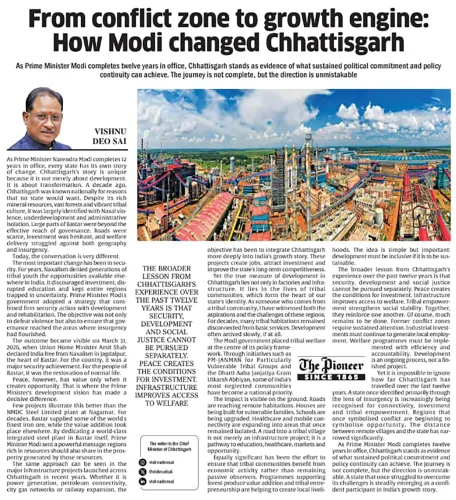
Chhattisgarh CM Vishnu Deo Sai declared on 29 October 2026 that the 'double engine government' has overcome Naxalism, with development now reaching the remote corners of Bastar for the first time in decades.
Key Takeaways
CM Vishnu Deo Sai declared on 29 October 2026 that Naxalism has been overcome as a barrier to Chhattisgarh's development.
Bastar division , the historic heart of India's Maoist insurgency, is the primary focus of the claimed development push.
The 'double engine government' framing ties the BJP state administration's security action to central government paramilitary and funding support.
The central SAMADHAN strategy , launched in 2017 , combines security operations with simultaneous delivery of roads, schools, and connectivity in cleared areas.
Violence metrics in Left Wing Extremism-affected districts have shown a long-term decline since the mid-2010s across successive administrations.
The complete elimination of Naxalism as claimed requires independent ground-level verification.
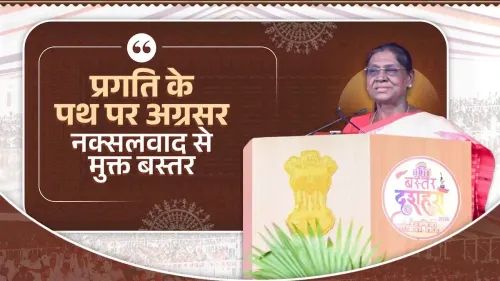
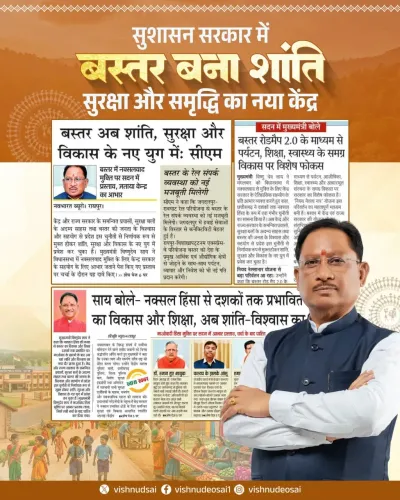
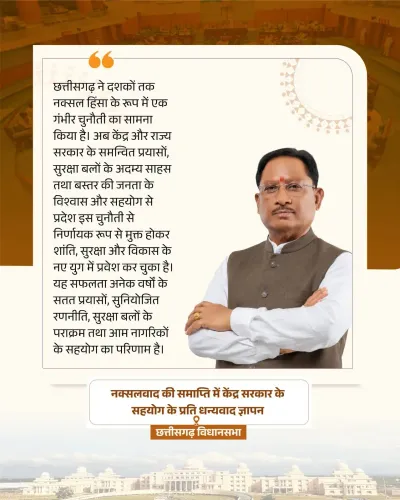
For decades, the forests of Bastar were synonymous with one word: fear. Roads stopped. Schools stayed shut. Welfare schemes collected dust at district headquarters, unable to reach the villages that needed them most. On Thursday, 29 October 2026, Chhattisgarh Chief Minister Vishnu Deo Sai declared that chapter closed — posting a pointed message crediting the 'double engine government' with finally clearing the path.
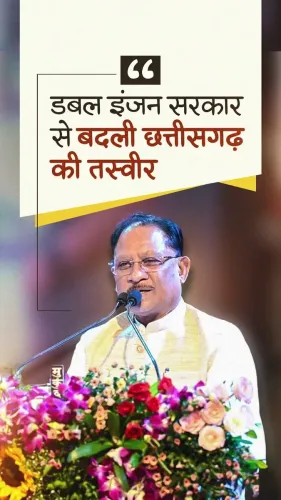
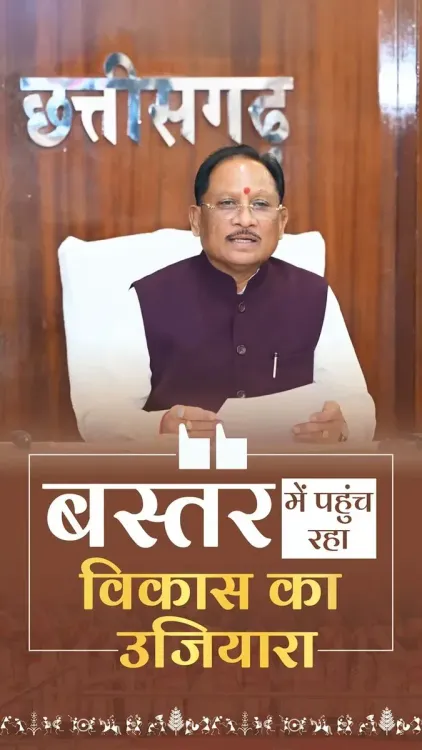
In his post, CM Sai wrote: 'Chhattisgarh ke vikas ki raah mein Naxalwad ek badi baadha tha' — 'Naxalism was a major obstacle on Chhattisgarh's path to development. Today, through the dedicated efforts of the double engine government, liberation from Naxalism has been achieved and the light of development is reaching the remote corners of Bastar.' The framing is deliberate and political: the 'double engine' slogan ties the BJP state government's security operations directly to the central government's paramilitary and funding support.
Bastar's long shadow: what Left Wing Extremism actually cost
Bastar division, comprising multiple districts in southern Chhattisgarh, has been the geographic heart of India's Maoist insurgency for more than three decades. At its peak, the violence forced the closure of schools, paralysed road construction, and left tribal communities caught between armed groups and security forces. Infrastructure that the rest of India took for granted — a metalled road, a functioning health sub-centre, a mobile tower — became a political statement in these forests.
The human cost fell hardest on tribal communities, who make up the majority of Bastar's population. Their isolation was both a strategic asset for Maoist cadres and the single biggest barrier to mainstream welfare delivery. Every unbuilt road was a scheme undelivered.
The SAMADHAN strategy and the 'double engine' claim
The central government launched the SAMADHAN strategy for Left Wing Extremism in 2017, combining intensified security operations with accelerated development as a twin-track approach. The framework explicitly linked paramilitary deployment with simultaneous rollout of roads, schools, banking access, and mobile connectivity in cleared areas — the logic being that security without development creates a vacuum, and development without security is impossible to deliver.
CM Sai, who took office in December 2023 after the BJP's return to power in Chhattisgarh, has consistently framed anti-Naxal operations as a precondition for welfare, not a separate activity. Violence metrics in Left Wing Extremism-affected districts have shown a long-term decline since the mid-2010s, a trend documented across successive administrations. His predecessor Raman Singh ran surrender and rehabilitation policies through the 2010s that contributed to that trajectory.
What 'development reaching Bastar' looks like on the ground
The practical test of CM Sai's claim lies in specifics: road kilometres laid into formerly inaccessible pockets, schools reopened, health posts staffed, mobile towers erected in villages that had never had connectivity. The SAMADHAN architecture was designed precisely to track these metrics in formerly red-zone districts. What to watch now: official notifications on revised security deployment postures across Bastar, and the pace of road, school, and health project rollout in villages that were Maoist-affected as recently as two or three years ago.
The assertion of complete liberation from Naxalism is a strong political claim — verification of the full operational picture on the ground requires independent confirmation. But the direction of travel, the structural decline in violence, and the expansion of state presence into previously ungoverned territory are consistent with the broader trend line that predates this government.
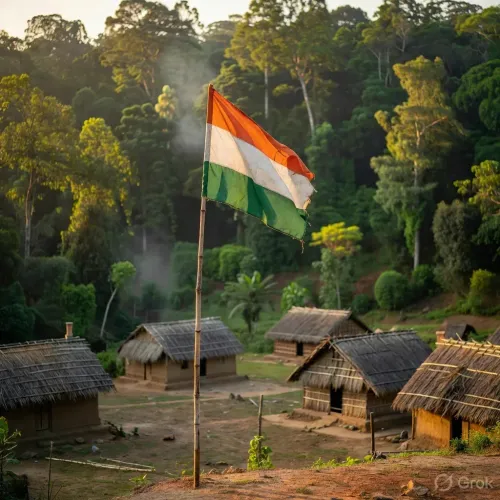
Bastar's forests are, for the first time in a generation, being talked about not for what cannot happen there — but for what now can.
Point of View
The party seeks to convert an operational claim into an electoral asset among Bastar's tribal voters. The move fits a broader BJP pattern of using security gains as a gateway argument for welfare delivery — the sequence matters: peace first, then roads. The key test will be whether measurable development indicators in formerly red-zone districts — connectivity, school enrolment, health access — catch up with the political rhetoric over the next 12-18 months.
NationPress
29 Oct 2026
Frequently Asked Questions
Has Naxalism really ended in Chhattisgarh?
CM Vishnu Deo Sai has declared that Naxalism no longer blocks development in Chhattisgarh, particularly in Bastar. Violence metrics in Left Wing Extremism-affected districts have declined significantly since the mid-2010s, but independent verification of complete elimination of Naxal presence is required to confirm the full picture.
What is the 'double engine government' in Chhattisgarh?
The 'double engine government' refers to the BJP being in power both at the Centre and in Chhattisgarh state simultaneously. The phrase is used to argue that aligned governments can combine central paramilitary and financial resources with state-level security and governance more effectively.
What is the SAMADHAN strategy for Naxalism?
SAMADHAN is the central government's framework for tackling Left Wing Extremism, launched in 2017. It combines intensified security operations with accelerated development — roads, schools, banking access, mobile connectivity — in cleared districts, operating on the principle that both tracks must advance together.
Why is Bastar important in the context of Naxalism?
Bastar division in southern Chhattisgarh has been the geographic core of India's Maoist insurgency for over three decades. Its dense forests, tribal population, and historically weak state presence made it a stronghold for Naxal cadres, and it became the primary battlefield for both security operations and development outreach.
Who is Vishnu Deo Sai and when did he become Chief Minister?
Vishnu Deo Sai is a BJP leader who became Chief Minister of Chhattisgarh in December 2023 after the BJP's victory in the state assembly elections. He is the first tribal leader to hold the position in Chhattisgarh.