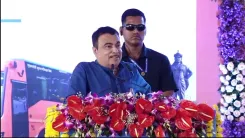
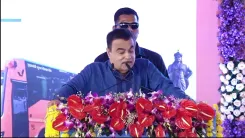
CM Sai: Tribal traditions are Chhattisgarh's development backbone
Synopsis
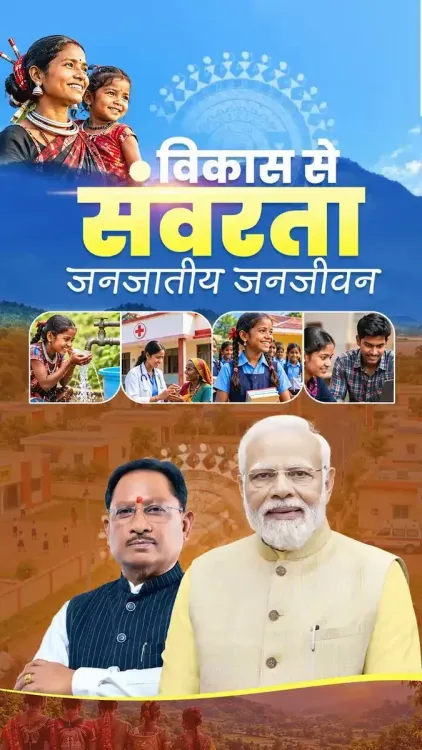
Chhattisgarh Chief Minister Vishnu Deo Sai declared on 25 September 2026 that tribal traditions are central to the state's identity and development journey, reaffirming the BJP's 'double engine' push to deliver education, health, and roads to every remote village.
Key Takeaways
CM Vishnu Deo Sai posted on 25 September 2026 placing tribal communities at the core of Chhattisgarh's development vision.
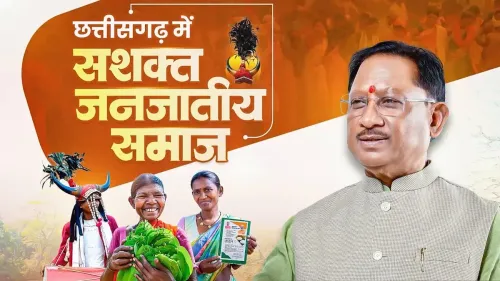
He described tribal society as not just an identity marker but an 'important partner' in the state's progress.
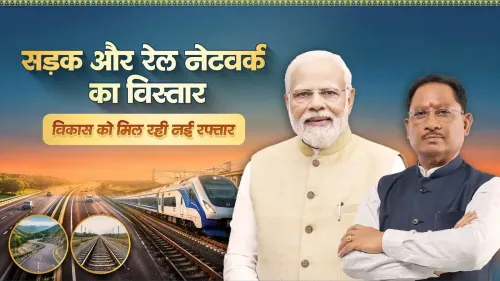
The 'double engine government' framing — aligned BJP administrations at Centre and state — was invoked to explain the delivery of education, health, and roads to remote areas.
Chhattisgarh has one of India's largest Scheduled Tribe populations, concentrated in Bastar, Surguja, and northern divisions.
Sai, himself from a tribal community, has consistently anchored his governance messaging in tribal welfare since taking office after the 2023 assembly elections .
No new scheme was announced; the post restates an existing governance approach and signals a continued political priority.
Chhattisgarh's vast tribal heartland sits at the centre of the state's identity — and, according to Chief Minister Vishnu Deo Sai, at the centre of its future. On Friday, 25 September 2026, Sai used social media to reaffirm his government's commitment to carrying roads, schools, hospitals, and essential services to the state's most remote corners.
Posting in Hindi, Sai wrote: 'Chhattisgarh ki janjatiya parampraon mein hamari sanskriti basati hai' — 'Our culture lives in the tribal traditions of Chhattisgarh.' He described the tribal community not merely as a part of the state's identity but as 'an important partner in Chhattisgarh's journey of development,' and said the 'double engine government' is extending education, health, roads, and other essential facilities to distant regions so that 'the pace of development reaches every village and every family.'
What the 'double engine' framing actually means on the ground
The phrase 'double engine government' is a deliberate BJP signal — it refers to aligned administrations at the Centre and in the state working in tandem to accelerate welfare delivery. Since 2014, this formulation has been deployed in tribal-heavy states to argue that a BJP state government can unlock and channel central-scheme funding more efficiently than a split mandate would allow.
Chhattisgarh, a central Indian state carved out of Madhya Pradesh in 2000, has one of India's largest Scheduled Tribe populations, concentrated heavily in its Bastar, Surguja, and northern divisions. Infrastructure deficits — last-mile connectivity, functional health sub-centres, enrolment in secondary schools — have historically been acute in these districts. Sai's post does not announce a new scheme, but it squarely frames tribal welfare as the metric by which his administration expects to be judged.
Sai's positioning since the 2023 mandate
Vishnu Deo Sai took office after the BJP's decisive victory in the November 2023 Chhattisgarh assembly elections, ending the Congress government of Bhupesh Baghel. Sai — himself from the tribal community — was seen as a choice that signalled both ideological continuity with the BJP's national tribal outreach and local authenticity in a state where tribal votes are electorally decisive.
His messaging on 25 September 2026 keeps that positioning sharp: culture and development are not in tension, they are co-authors of the same story. It is a rhetorical wager that the BJP's central-scheme pipeline and state-level implementation can together deliver visible change before the next electoral cycle tests the claim.
Point of View
He reinforces the party's argument that ideology and governance are inseparable in Chhattisgarh. The 'double engine' framing is also a forward-looking electoral tool — in a state where Scheduled Tribe constituencies can swing outcomes, demonstrating last-mile service delivery is as important as cultural affirmation. With Sai himself being from the tribal community, the message carries a credibility that a non-tribal leader would struggle to replicate. Whether the pace of actual infrastructure delivery in districts like Bastar matches the rhetoric will be the stress-test that shapes the BJP's tribal vote bank well before the next state election.
NationPress
25 Sept 2026
Frequently Asked Questions
What did Chhattisgarh CM Vishnu Deo Sai say about tribal communities?
On 25 September 2026, CM Sai said that tribal traditions are the cultural soul of Chhattisgarh and that tribal communities are key partners — not just symbols — in the state's development journey.
What is the 'double engine government' in Chhattisgarh?
'Double engine government' is the BJP's term for having aligned party governments at both the Centre and the state level, with the argument that this alignment speeds up welfare scheme funding and delivery to remote areas.
What services is the Chhattisgarh government focusing on for tribal areas?
According to CM Sai's statement, the government is expanding education, health, roads, and other essential facilities specifically to distant and remote regions with large tribal populations.
Which tribal regions of Chhattisgarh face infrastructure gaps?
Districts in the Bastar, Surguja, and northern divisions of Chhattisgarh have historically faced acute deficits in last-mile connectivity, health centres, and secondary school enrolment.
When did Vishnu Deo Sai become Chief Minister of Chhattisgarh?
Vishnu Deo Sai became Chief Minister after the BJP's victory in the November 2023 Chhattisgarh assembly elections, ending the previous Congress government.