CM Sai Pledges Tribal Development from Bastar to Sarguja
Synopsis
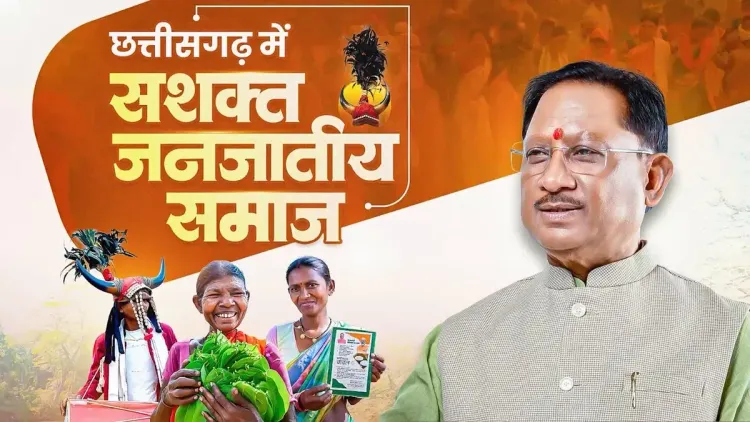
Chhattisgarh Chief Minister Vishnu Deo Sai on 17 June 2026 declared a 'new sunrise' of tribal development from Bastar to Sarguja, pledging housing, education, healthcare, connectivity, and jobs under the double-engine government's welfare agenda.
Key Takeaways
CM Vishnu Deo Sai posted on 17 June 2026 reaffirming the state's commitment to tribal development from Bastar to Sarguja .
The government's agenda covers housing, education, healthcare, roads, and employment for tribal communities.
Chhattisgarh's Scheduled Tribe population exceeds 30 percent , with both divisions under Fifth Schedule protections.
The Pradhan Mantri PVTG Development Mission (launched November 2023) is a central pillar of the tribal welfare framework in the state.
CM Sai pledged that tribal communities will have both participation and leadership in mainstream development while preserving their culture and heritage.
Progress on PVTG Mission targets and state budget allocations for tribal areas will be key indicators to watch.
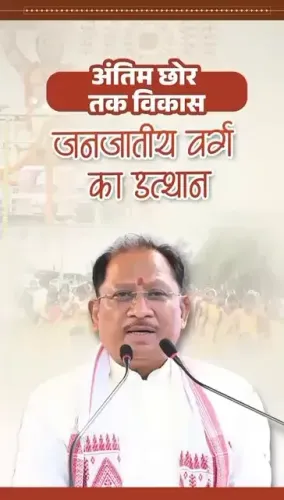
Chhattisgarh Chief Minister Vishnu Deo Sai on Wednesday, 17 June 2026 reaffirmed his government's commitment to the holistic development of tribal communities across the state, declaring that a 'new sunrise of development, trust, and self-pride' is emerging in tribal belts stretching from Bastar in the south to Sarguja in the north.
Posting in Hindi on X, the Chief Minister said: 'Bastar se Sarguja tak janjatiya anchalon mein vikas, vishwas aur aatmgaurav ka naya suryoday ho raha hai' ('From Bastar to Sarguja, a new sunrise of development, trust, and self-pride is dawning in tribal regions'). He underscored that the 'double-engine government' — referring to aligned BJP administrations at the state and Centre — is committed to the dignity, rights, and comprehensive progress of tribal society.
Context
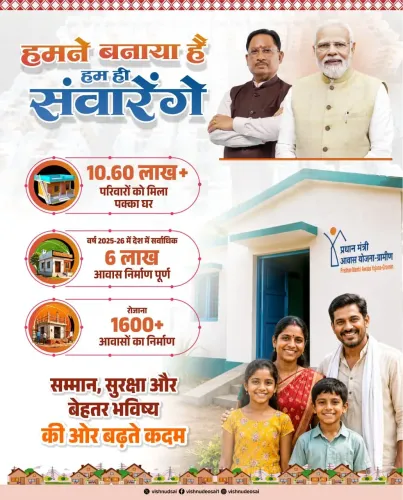
The post outlines a broad welfare agenda covering better housing, quality education, accessible healthcare, road and transport connectivity, and new employment opportunities as the pillars of tribal empowerment. Sai stated that a 'new chapter of prosperity and self-reliance is being written in tribal regions' through these interventions. He also pledged that tribal communities will have both participation and leadership in the mainstream of development — while preserving their rich culture and heritage.
Chhattisgarh has a Scheduled Tribe population exceeding 30 percent, with the Bastar and Sarguja divisions together accounting for a large share of the state's tribal geography. Both divisions fall under Fifth Schedule area provisions, mandating special protections and dedicated welfare allocations.
Policy Backdrop
The statement aligns with the Pradhan Mantri PVTG Development Mission, launched in November 2023, which targets saturation of basic services — housing, drinking water, roads, telecom, and health — in habitations of Particularly Vulnerable Tribal Groups across participating states, including Chhattisgarh. The mission represents one of the central government's most targeted interventions for the most marginalised tribal sub-groups.
At the state level, the Tribal Sub-Plan mechanism mandates proportional budget allocation for scheduled area infrastructure. The Forest Rights Act, 2006 continues to govern land and livelihood entitlements for tribal households in Bastar and Sarguja, and its implementation has been a consistent focus of the state's tribal welfare department since the BJP government took office in December 2023.
Since 2014, the BJP's tribal policy framework has combined security operations in left-wing extremism-affected areas — particularly in Bastar — with accelerated infrastructure expansion and cultural recognition programmes. CM Sai, who previously served in central ministries including tribal affairs, brings direct policy familiarity to this agenda.
Stakeholders and Impact
The primary beneficiaries of the programmes cited are Scheduled Tribe households and PVTG communities in Bastar and Sarguja divisions. Improved road connectivity in these regions has long been identified as a prerequisite for unlocking healthcare access and market linkages for tribal producers.
Employment generation in tribal areas carries added significance given that Bastar's security environment — historically shaped by left-wing extremism — has constrained private investment and formal job creation for decades. The government's emphasis on self-reliance (aatmnirbharta) signals a push to integrate tribal economies without displacing customary rights over land and forest resources.
What's Next
Observers will watch for supplementary allocations in the Chhattisgarh state budget and tribal welfare department reviews that quantify progress on housing completions, school enrolment, and health infrastructure in scheduled areas. Saturation targets under the PVTG Development Mission for Bastar and Sarguja divisions will serve as a key benchmark for translating the Chief Minister's stated resolve into measurable outcomes. The government's ability to sustain cultural preservation alongside economic integration in Fifth Schedule territories will define the long-term credibility of this development narrative.
Frequently Asked Questions
What is the double-engine government CM Sai refers to for tribal development?
The 'double-engine government' refers to the alignment of BJP governments at both the Chhattisgarh state level and the Centre, enabling coordinated implementation of welfare schemes for tribal communities without policy friction between state and central administrations.
Which tribal areas in Chhattisgarh are being prioritised for development?
CM Sai specifically mentioned Bastar (southern Chhattisgarh) and Sarguja (northern Chhattisgarh) as the primary tribal regions targeted for development, covering housing, education, healthcare, roads, and employment.
What is the PVTG Development Mission and how does it apply to Chhattisgarh?
The Pradhan Mantri PVTG Development Mission , launched in November 2023, aims to saturate basic services — including housing, roads, water, and health — in habitations of Particularly Vulnerable Tribal Groups. Chhattisgarh, with its large tribal population in Bastar and Sarguja, is a key participating state.
What percentage of Chhattisgarh's population is tribal?
Scheduled Tribes account for over 30 percent of Chhattisgarh's population, making tribal welfare a central electoral and governance priority for both state and central governments.
Who is Vishnu Deo Sai and what is his background in tribal affairs?
Vishnu Deo Sai is the Chief Minister of Chhattisgarh, appointed in December 2023. A BJP leader, he previously served in central ministries including tribal affairs, giving him direct policy experience in the sector he is now addressing as Chief Minister.