CM Sai Outlines Bastar Development Roadmap Under Double Engine Govt
Synopsis
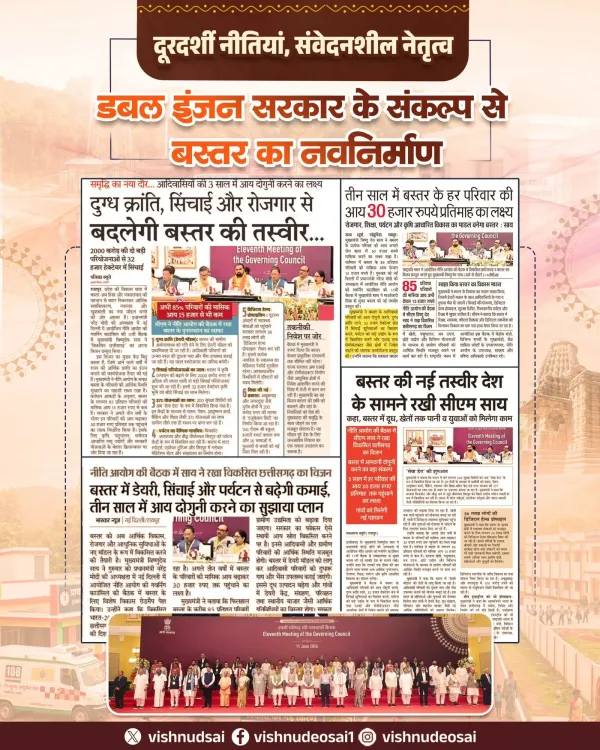
Chhattisgarh Chief Minister Vishnu Deo Sai on 12 June 2026 announced a development roadmap for the Bastar region centred on dairy, irrigation, tourism, forest-produce industries, and skill development, framing it as an outcome of the BJP's 'double engine' coordination between the state and the Modi government.
Key Takeaways
CM Vishnu Deo Sai publicly outlined a sectoral development roadmap for Bastar on 12 June 2026 .
Priority sectors named are milk production, irrigation, tourism, forest-produce-based industries, skill development, and employment generation .
The roadmap is framed within the BJP 's 'double engine government' model coordinating state and central resources.
The stated goal is connecting tribal regions with the mainstream and making them self-reliant and empowered.
Chhattisgarh returned to BJP governance after the 2023 assembly elections, with Sai as Chief Minister.
Progress will be measured against state budget allocations and central ministry approvals for Bastar projects.
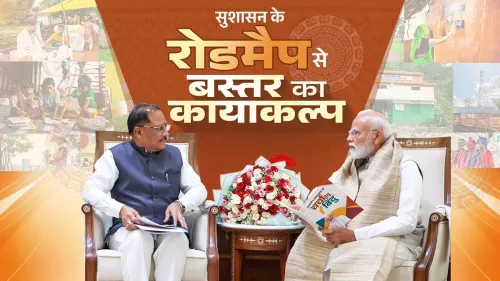
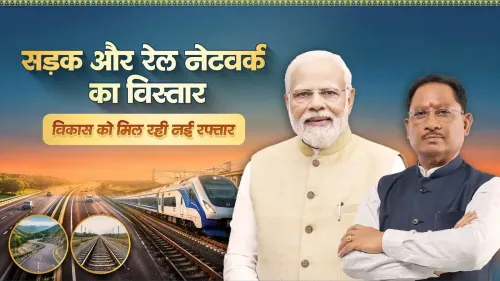
Chhattisgarh Chief Minister Vishnu Deo Sai on Friday, 12 June 2026, outlined a comprehensive development roadmap for the Bastar region, crediting the coordination between the state government and Prime Minister Narendra Modi's central government — a model he described as the 'double engine' approach — for positioning Chhattisgarh as an emerging hub of growth, investment, and new opportunities.
Context
Posting on X, CM Sai stated: 'यशस्वी प्रधानमंत्री श्री नरेंद्र मोदी जी के नेतृत्व में डबल इंजन सरकार के प्रयासों से छत्तीसगढ़ आज विकास, निवेश और नई संभावनाओं का उभरता केंद्र बन रहा है।' ['Under the leadership of the accomplished Prime Minister Shri Narendra Modi Ji, through the efforts of the double engine government, Chhattisgarh is today becoming an emerging centre of development, investment, and new possibilities.'] The post specifically names Bastar as the focal geography of this roadmap, centring on sectors including milk production, irrigation, tourism, forest-produce-based industries, skill development, and employment generation.
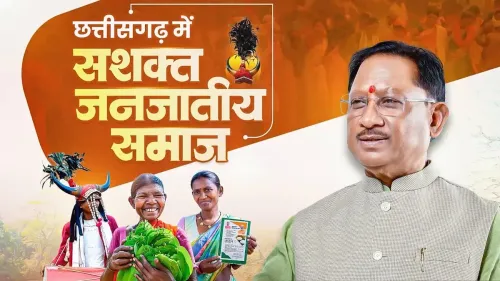
The Chief Minister further expressed a commitment to connecting tribal regions with the mainstream and making them self-reliant and empowered — a goal he framed as 'inclusive and balanced development.'
Policy Backdrop
The 'double engine government' formulation has been a defining slogan of the BJP since the mid-2010s, used to describe the alignment of state and central governments under the same party to fast-track scheme delivery. Chhattisgarh returned to BJP governance after the 2023 state assembly elections, with Vishnu Deo Sai assuming office as Chief Minister thereafter.
Bastar, a division in southern Chhattisgarh, has historically been the focus of targeted central and state interventions aimed at tribal development and addressing Left-Wing Extremism. Successive governments have identified dairy cooperatives, minor forest produce processing, and skill training as key economic levers for scheduled tribe communities in the region — an approach mirrored in neighbouring states including Jharkhand, Odisha, and Madhya Pradesh.
Stakeholders and Impact
The sectors highlighted — dairy, irrigation, tourism, forest-produce industries, and skill development — directly affect tribal communities and local entrepreneurs who form the economic backbone of the Bastar division. Mainstreaming tribal regions through livelihood-linked schemes has been a stated priority for both the state and central governments since 2023.
Forest-produce-based industries in particular hold significance for tribal households, as minor forest produce collection and processing represent a primary source of income for a large share of Chhattisgarh's scheduled tribe population. Skill development and employment initiatives, if implemented at scale, could reduce dependence on subsistence livelihoods in one of India's most resource-rich yet economically marginalised belts.
What's Next
The practical test of the roadmap described by CM Sai will lie in upcoming state budget allocations and central ministry project approvals for Bastar. Observers will watch whether the sectors named — dairy, irrigation, tourism, forest industries, and skill training — receive dedicated line items and institutional frameworks in the months ahead.
The emphasis on self-reliance and mainstreaming of tribal communities also signals a continued political focus on the region, which carries both developmental significance and electoral weight for the BJP in central India.
Point of View
Irrigation, tourism, forest industries, skill development — rather than speaking in abstractions, the statement moves beyond routine rhetoric toward accountability benchmarks. The emphasis on tribal self-reliance aligns with a broader BJP strategy, visible across Jharkhand, Odisha, and Madhya Pradesh, of reframing tribal welfare as economic mainstreaming rather than subsidy dependence. Whether the roadmap translates into verifiable budget commitments will determine how this narrative ages.
NationPress
26 Oct 2026
Frequently Asked Questions
What is the Bastar development roadmap announced by CM Vishnu Deo Sai?
CM Vishnu Deo Sai on 12 June 2026 described a roadmap for Bastar focused on milk production, irrigation, tourism, forest-produce-based industries, skill development, and new employment opportunities, framed within the BJP's 'double engine' coordination with the central government.
What is the 'double engine government' in Chhattisgarh?
The 'double engine government' refers to the BJP's model of aligning a BJP-governed state with the BJP-led central government under PM Narendra Modi to accelerate scheme delivery and development spending.
Why is Bastar significant for Chhattisgarh's development?
Bastar is a tribal-majority division in southern Chhattisgarh rich in forest resources but historically affected by Left-Wing Extremism and economic marginalisation, making it a priority zone for both state and central development interventions.
When did Vishnu Deo Sai become Chief Minister of Chhattisgarh?
Vishnu Deo Sai became Chief Minister of Chhattisgarh after the BJP won the 2023 state assembly elections, returning the party to power in the state.
Which sectors has the Chhattisgarh government prioritised for tribal development?
The Chhattisgarh government has prioritised dairy cooperatives, minor forest produce processing, irrigation, tourism, and skill training as primary economic levers for tribal communities, particularly in the Bastar region.