CM Sai Highlights Super Specialty Hospital Expansion in Bastar
Synopsis
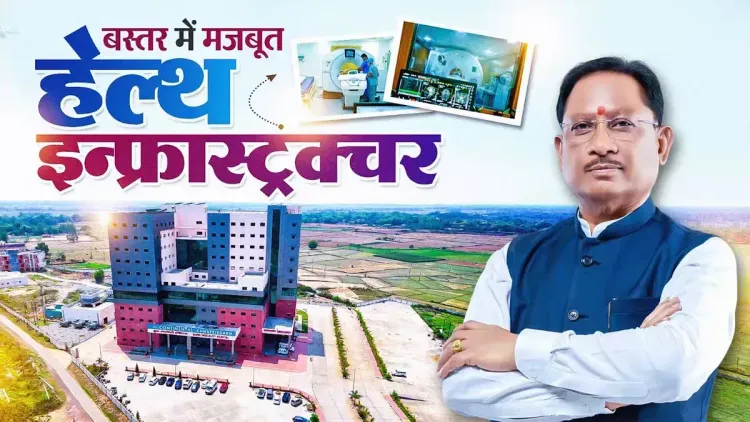
Chhattisgarh CM Vishnu Deo Sai on 25 May 2026 spotlighted the Continental Chhattisgarh Super Specialty Hospital in Jagdalpur, crediting the 'double engine government' for bringing advanced specialist care to Bastar's tribal communities and reducing the need for patients to travel to distant cities.
Key Takeaways
CM Vishnu Deo Sai on 25 May 2026 highlighted healthcare expansion in Bastar via a post on X.
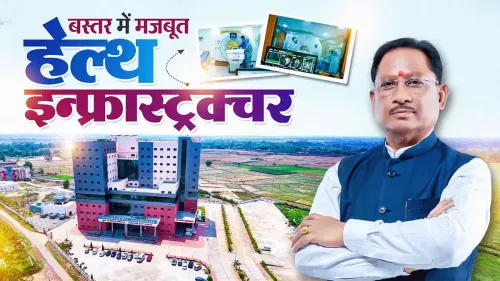
The Continental Chhattisgarh Super Specialty Hospital in Jagdalpur now offers advanced specialist treatment to residents of the Bastar region.
The facility is credited to the 'double engine government' framework of aligned BJP-led state and central administrations.
Bastar, comprising seven districts with a predominantly tribal population, has historically lacked access to tertiary healthcare.
The development aligns with the national Ayushman Bharat framework and BJP's pattern of building super-specialty hospitals in tribal and former conflict-zone districts.
State health budget allocations for 2026-27 and hospital footfall data will be key metrics to watch going forward.
Chhattisgarh Chief Minister Vishnu Deo Sai on Monday, 25 May 2026, highlighted the expansion of healthcare infrastructure in the Bastar region, pointing to the establishment of the Continental Chhattisgarh Super Specialty Hospital in Jagdalpur as a milestone in bringing advanced medical care to one of India's most underserved tribal belts.
Context
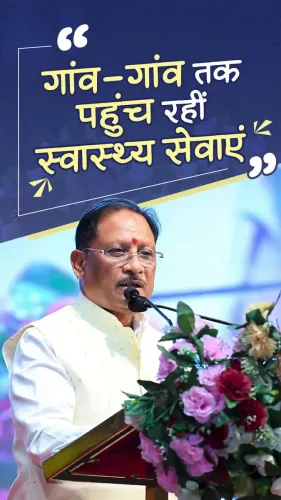
Posting on X, CM Sai wrote: 'बस्तर में हो रहा है स्वास्थ्य सुविधाओं का विस्तार' ('Healthcare facilities are being expanded in Bastar'). He credited the 'double engine government' — a term the BJP uses to describe aligned state and central administrations — for the facility's establishment, saying it has emerged as a 'strong centre of modern healthcare.'
The post noted that the hospital is now equipped with 'cutting-edge technology, specialist treatment, and better medical facilities,' enabling residents of Bastar to access quality care within their own region without travelling to distant metros.
Policy Backdrop
Bastar, a southern division of Chhattisgarh comprising seven districts with a predominantly tribal population, has historically faced acute shortages of tertiary healthcare. Patients requiring specialist intervention routinely travelled to Raipur, Nagpur, or Hyderabad, adding financial and logistical burdens to already vulnerable households.
The broader national framework of Ayushman Bharat Pradhan Mantri Jan Arogya Yojana, launched in 2018, aimed to extend secondary and tertiary care access to low-income households across India. State-level efforts in Chhattisgarh have sought to layer super-specialty infrastructure on top of this foundation, particularly in districts with a history of left-wing extremism where public health systems lagged for decades.
Since 2019, BJP-governed states have prioritised super-specialty hospital projects in former conflict zones through central-state co-ordination under the 'double engine' framework, which involves shared funding and land allocation to accelerate such facilities in tribal and eastern Indian belts.
Stakeholders and Impact
The primary beneficiaries are the tribal and rural communities of Bastar's seven districts, who previously had limited access to specialist care in disciplines such as cardiology, oncology, and neurology. The availability of such services locally is expected to reduce out-of-pocket expenditure on travel and accommodation for patients and their families.
For the state government, the hospital represents a visible governance deliverable in a region that has long been at the centre of security and development debates. Improved health outcomes in Bastar are also seen as integral to broader efforts to strengthen civilian institutions and community trust in the area.
What's Next
CM Sai signalled that health infrastructure expansion in Bastar will continue, stating the region is 'rapidly moving towards better medical services and a healthier future.' Analysts and health administrators will watch the 2026-27 state budget allocations for healthcare infrastructure to gauge the pace and scale of further investment. Patient footfall and procedure volumes at the Jagdalpur facility will be key indicators of whether the hospital is translating physical capacity into measurable health outcomes for the region's population.
Point of View
Linking central and state coordination to tangible outcomes in one of India's most politically sensitive regions. The emphasis on in-region specialist care addresses a long-standing grievance of tribal communities who bore heavy costs travelling to metros for treatment. This messaging fits a broader BJP pattern of using infrastructure visibility in former Maoist-affected districts to consolidate development credentials ahead of future electoral cycles. The real test, however, lies in operational metrics — occupancy rates, specialist availability, and Ayushman Bharat claim volumes — which will determine whether the facility delivers at scale.
NationPress
10 Oct 2026
Frequently Asked Questions
What is the Continental Chhattisgarh Super Specialty Hospital in Jagdalpur?
The Continental Chhattisgarh Super Specialty Hospital is an advanced medical facility established in Jagdalpur, the headquarters of Bastar district, to provide specialist and tertiary care to residents of the Bastar region who previously had to travel to distant cities for treatment.
Why is healthcare expansion in Bastar significant?
Bastar is a predominantly tribal region in southern Chhattisgarh with a history of left-wing extremism and chronic underinvestment in public services. Lack of specialist healthcare has long forced patients to travel to metros, imposing heavy financial burdens on vulnerable households.
What is the 'double engine government' CM Sai referred to?
'Double engine government' is a term used by the BJP to describe the alignment of a BJP-led state government with the BJP-led central government, arguing that this coordination accelerates infrastructure and welfare projects through shared funding and policy support.
How does Ayushman Bharat relate to the Bastar hospital?
Ayushman Bharat Pradhan Mantri Jan Arogya Yojana, launched in 2018, provides health coverage for secondary and tertiary care to low-income households. State-level super-specialty hospitals like the one in Jagdalpur are intended to serve as facilities where Ayushman Bharat beneficiaries can access advanced treatment locally.
What should we watch for regarding healthcare development in Bastar?
Key indicators include the Chhattisgarh state budget allocations for health infrastructure in 2026-27, reported patient footfall at the Jagdalpur hospital, and the range of specialist services made available to tribal communities across Bastar's seven districts.