US Supreme Court lifts block on Trump mail-in voting order ahead of midterms
Synopsis
The US Supreme Court has cleared the procedural path for Trump's mail-in voting restrictions — but explicitly refused to call them lawful. With parallel Democratic lawsuits still active and November approaching fast, the ruling may have reopened a door without deciding what lies behind it.
Key Takeaways
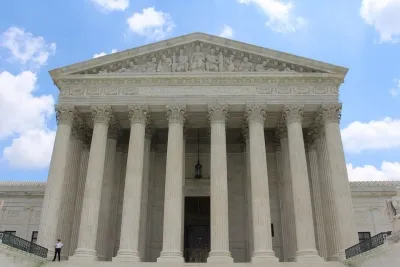
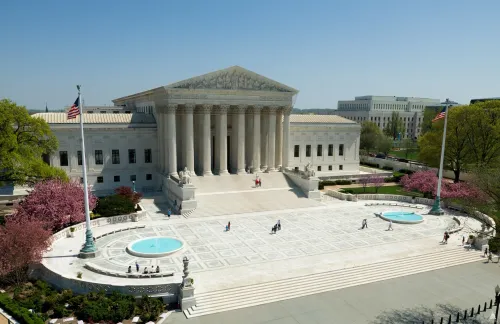
The US Supreme Court on Monday lifted a lower court injunction blocking part of President Trump's executive order on mail-in voting.
The court clarified its ruling 'does not mean that any measure taken by the Government to implement the Order will necessarily be lawful.' Trump's March order directed the Department of Homeland Security and the US Postal Service to compile state-level voter eligibility lists.
Whether the measures can be implemented before the November midterm elections remains uncertain, with additional legal challenges still pending.
Separate lawsuits led by Democratic officials and voting rights groups continue to advance through the courts.
The US Supreme Court on Monday lifted a lower court injunction that had blocked part of President Donald Trump's executive order seeking to restrict mail-in voting, in a significant development ahead of the November midterm elections. The high court's ruling, however, stopped short of endorsing the order's legality, leaving the ultimate legal battle unresolved.
What the Supreme Court Said
The court was measured in its language, making clear that lifting the injunction was a procedural step — not a green light for the administration. 'The Court's disposition of this application does not mean that any measure taken by the Government to implement the Order will necessarily be lawful. On that score, time will tell,' the court stated.
The justices further held that the executive order itself did not directly harm the states, and therefore the district court had lacked jurisdiction to bar the government from attempting implementation. 'That injunction is likely to irreparably harm the Government if it remains in place while the appellate process runs its course,' the court added.
Background: Trump's March Executive Order
The order in question was issued in March and directed the Department of Homeland Security to develop state-level lists of adult US citizens, while also requiring the United States Postal Service to obtain lists of eligible mail voters from individual states. Critics and voting rights advocates have argued the measures could suppress legitimate voter participation, particularly among communities that rely heavily on mail-in ballots.
Road to Midterms: Implementation Uncertain
Despite the Supreme Court's intervention, the practical impact on the November midterm elections remains deeply uncertain. Legal analysts and US media outlets have noted that additional court challenges could still delay or derail implementation before voting begins. 'It remains unclear what impact the high court's order will actually have on eligible mail-in voters,' according to one report.
Notably, a separate set of lawsuits — led by Democratic Party officials and voting rights organisations — continues to advance through the courts, keeping the legal front active even as the election calendar tightens. 'The legal fight is far from over, with a separate set of lawsuits led by Democrats and voting rights groups continuing to play out as this fall's election draws closer,' one report noted.
What Comes Next
With the appellate process still ongoing and multiple parallel legal challenges in motion, the Supreme Court's order effectively returns the fight to lower courts while preventing the injunction from freezing government action in the interim. Election law experts say the timeline is tight: any further court orders blocking implementation would need to come swiftly to have effect before November. The outcome could reshape how millions of Americans cast their ballots in one of the most closely watched midterm cycles in recent memory.
Point of View
Not substantive — and that distinction matters enormously. By lifting the injunction without affirming the order's legality, the court has handed the Trump administration a temporary operational reprieve while leaving the core constitutional questions entirely open. The real story is the race against the calendar: with November approaching and multiple Democratic-led lawsuits still live, the administration faces a narrow window to operationalise voter-list requirements that remain legally contested. If history is a guide, voting-rights litigation tends to compress and intensify as election day nears — making the next few weeks in appellate courts arguably more consequential than Monday's Supreme Court order itself.
NationPress
25 Aug 2026
Frequently Asked Questions
What did the US Supreme Court rule on Trump's mail-in voting order?
The Supreme Court lifted a lower court injunction that had blocked part of President Trump's executive order restricting mail-in voting. The court stressed, however, that its ruling does not confirm the order's measures are lawful — that question remains for further legal proceedings.
What does Trump's executive order on mail-in voting require?
Issued in March, the order directs the Department of Homeland Security to compile state-level lists of adult US citizens and requires the US Postal Service to obtain lists of eligible mail voters from states. Critics argue the measures could restrict access to mail-in ballots for eligible voters.
Will the restrictions be in place before the November midterm elections?
That remains uncertain. Legal analysts note that additional court challenges could delay or prevent implementation before November. A separate set of lawsuits led by Democratic officials and voting rights groups is still active in the courts.
Why did the Supreme Court say the lower court lacked jurisdiction?
The Supreme Court held that Trump's executive order itself does not directly harm the states, meaning the district court did not have the jurisdiction to bar the government from attempting to implement it. The injunction, the court said, would irreparably harm the government while the appellate process played out.
What happens next in the legal battle over mail-in voting?
The appellate process continues, and parallel lawsuits by Democratic officials and voting rights organisations remain active. Further court rulings — potentially including additional injunctions — are expected as the November midterm election approaches.