Will the US Supreme Court Uphold Trump's Order to End Birthright Citizenship?
Synopsis
The US Supreme Court has agreed to review President Trump's executive order aimed at ending birthright citizenship, a contested legal issue. This decision could reshape immigration policies and citizenship rights in America, impacting countless families and individuals.
Key Takeaways
The US Supreme Court will review President Trump's executive order on birthright citizenship.
This order has faced legal challenges since its inception.
The concept of birthright citizenship has been a part of US law for over a century.
The implications of this ruling could affect countless families across the nation.
Supporters and critics are divided on the constitutionality of the order.
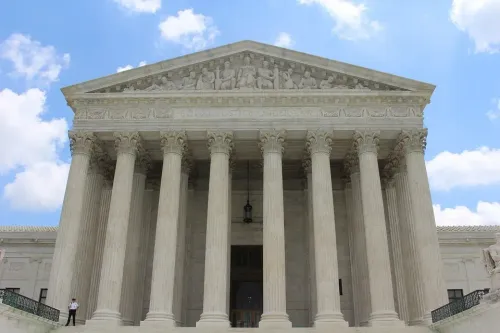
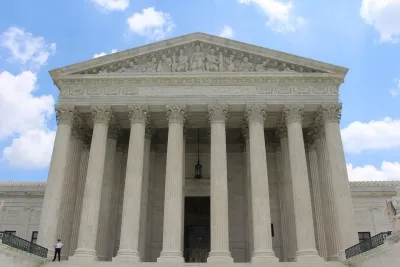
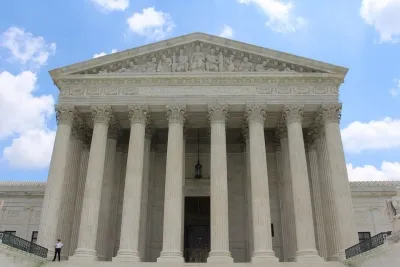
Washington, Dec 6 (NationPress) The US Supreme Court has decided to evaluate the validity of President Donald Trump's executive action aimed at abolishing birthright citizenship, a principle that has been regarded as established law for over a century.
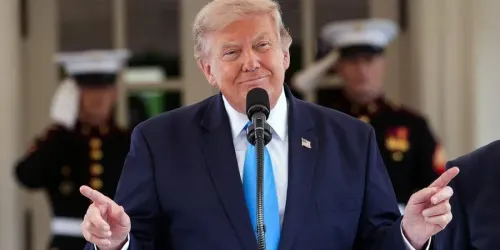
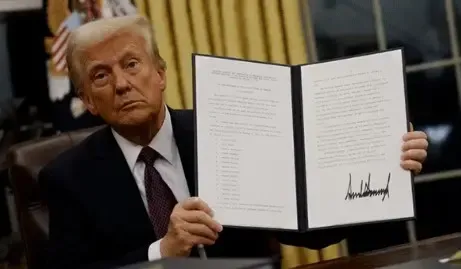
Following his inauguration on January 20, Trump issued an executive order instructing federal agencies to cease recognizing citizenship for children born after February 19, if neither parent is a US citizen or a permanent resident, according to reports from Xinhua news agency.
The Trump administration contends that the constitution does not confer citizenship upon the offspring of "temporary visitors or illegal aliens," asserting that these parents are not "subject to the jurisdiction" of the United States in a constitutional context.
In the aftermath of the executive order's announcement, numerous lawsuits were initiated to challenge it. Several federal judges have temporarily suspended the enforcement of the order.
On June 27, in a 6-3 decision, the Supreme Court determined that federal district courts do not possess the authority to issue broad nationwide or universal injunctions that would obstruct the implementation of the executive order.
By agreeing to hear the appeal on Friday, the Supreme Court is opting to confront the issue directly.
The administration argues that the offspring of noncitizens are not “subject to the jurisdiction” of the United States and thus are not entitled to automatic citizenship. A coalition of 24 Republican-led states and 27 GOP lawmakers, including Senator Ted Cruz and Lindsey Graham, have urged the court to validate this policy.
This case represents one of several challenges to Trump's immigration policies where the Supreme Court's involvement has been sought.
Point of View
The Supreme Court's decision to take up this case signals a crucial moment in the ongoing debate surrounding immigration and citizenship in the United States. As the nation grapples with these fundamental questions, it is essential to consider the broader implications of altering a precedent that has stood for over a century.
NationPress
27 Sept 2026
Frequently Asked Questions
What is birthright citizenship?
Birthright citizenship is the legal right of anyone born in the territory of a state to nationality or citizenship.
What was President Trump's executive order about?
President Trump's executive order aimed to end birthright citizenship for children born in the US to parents who are not citizens or permanent residents.
What is the Supreme Court's role in this case?
The Supreme Court will determine the legality of the executive order and whether it aligns with constitutional principles regarding citizenship.
What arguments are being made against the executive order?
Critics argue that the executive order undermines established law and could have detrimental effects on families and individuals born in the US.
How have federal courts responded to the executive order?
Several federal judges have temporarily blocked the enforcement of the executive order, leading to multiple legal challenges.