US Supreme Court Backs Trump on Two Asylum Rulings
Synopsis
The US Supreme Court on 25 June 2026 delivered two rulings favouring President Donald Trump's drive to restrict asylum claims, the White House announced. The decisions continue a years-long judicial battle over executive immigration powers that began in Trump's first term and resumed after his 2024 election win.
Key Takeaways
The US Supreme Court issued two rulings on 25 June 2026 backing President Trump's asylum-restriction efforts.
Both decisions relate to the Trump administration's push to reduce asylum claims at the southern border.
The rulings extend a pattern of Supreme Court review of executive immigration powers dating to 2018 .
The Migrant Protection Protocols (Remain in Mexico) policy, first introduced in 2019 , forms part of the broader policy lineage behind Thursday's cases.
Related expedited-removal and parole cases are scheduled for the October 2026 Supreme Court term.
The decisions affect asylum seekers , immigration enforcement agencies, and border-state governments across the United States .
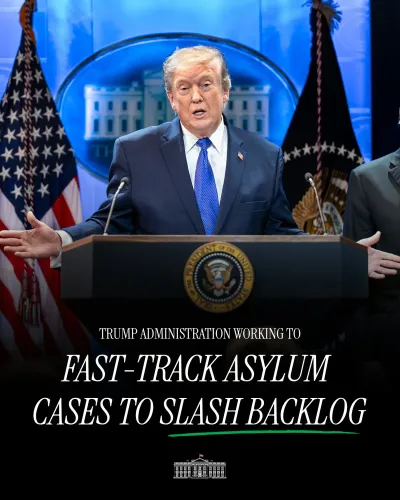
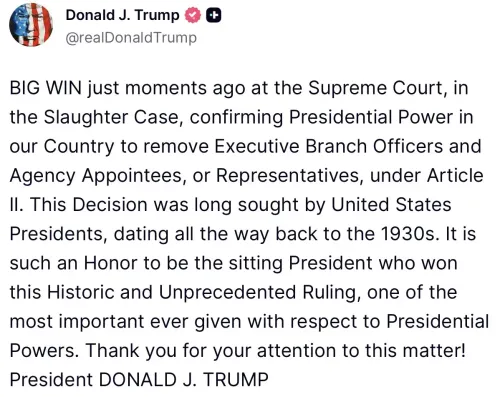
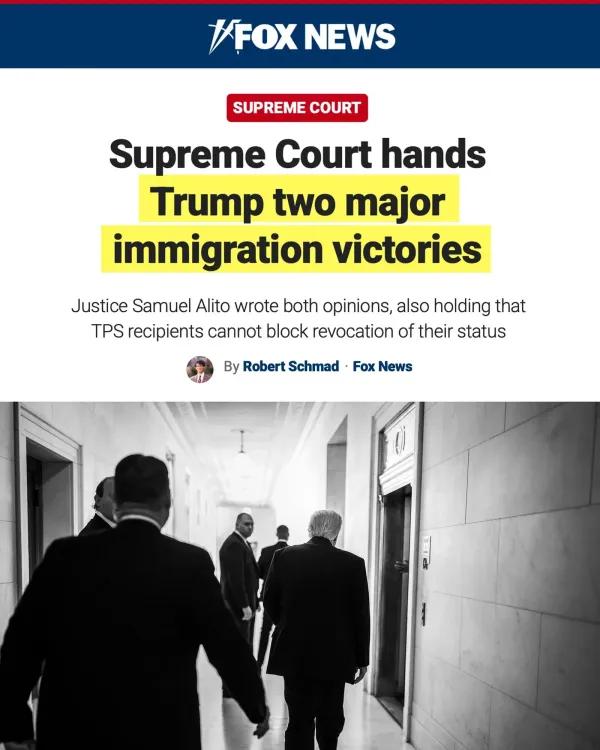
The White House on Thursday, 25 June 2026 amplified a report that the United States Supreme Court handed President Donald Trump two significant immigration victories, both centred on his administration's drive to reduce asylum claims at the southern border.
Context
The White House post cited reporting stating: 'The Supreme Court handed President Donald Trump two major immigration victories on Thursday morning, both having to do with his administration's efforts to reduce asylum claims.' The rulings arrive as the Trump administration, back in office since January 2025, has aggressively pursued executive action to tighten asylum eligibility and accelerate removals. The Supreme Court has now weighed in on at least two distinct aspects of those efforts in a single morning.
The precise holdings, case names, and vote margins of the two 25 June 2026 decisions have not been independently detailed in the administration's post, but the White House framing makes clear both rulings favour the executive's position on asylum restriction.
Policy Backdrop
The legal contest over asylum policy stretches back to 2018, when the first Trump administration issued an interim final rule barring asylum for migrants who crossed between official ports of entry — a rule subsequently blocked by lower courts. The 2019 Migrant Protection Protocols, commonly known as 'Remain in Mexico', required many asylum claimants to await their US immigration hearings on Mexican soil rather than being admitted to the United States, a policy designed to deter what the administration described as frivolous claims.
The Supreme Court has periodically intervened in this long-running executive-judicial conflict, issuing procedural rulings during 2019 and 2020 that preserved broad executive discretion in immigration enforcement. Successive administrations have used regulatory and prosecutorial tools to narrow 'credible fear' screening standards and expedite removals, generating repeated rounds of Supreme Court review. The pattern underscores how federal courts have become the principal arena for shaping operational border policy in the absence of comprehensive congressional immigration reform.
Stakeholders and Impact
Asylum seekers arriving at the southern border are the most directly affected group; rulings that uphold restrictions on asylum eligibility or processing can sharply curtail their legal pathways into the United States. Immigration enforcement agencies — including Customs and Border Protection and Immigration and Customs Enforcement — gain operational latitude when courts sustain executive rules, allowing faster processing and removal of individuals who do not meet narrowed credible-fear thresholds.
Border-state governments, particularly in Texas and Arizona, have frequently aligned with federal enforcement efforts, while advocacy groups and several Democratic-led states have consistently challenged the restrictions in court. Thursday's twin rulings are likely to intensify that litigation dynamic heading into the October 2026 Supreme Court term.
What's Next
The Supreme Court's October 2026 term already has related expedited-removal and parole cases on its docket, meaning the judicial review of Trump immigration policy is far from concluded. The administration may also seek to leverage Thursday's decisions to defend or expand additional regulatory proposals currently facing injunctions in lower courts.
For India and other countries whose nationals make up a meaningful share of asylum applicants at the US border, the rulings carry practical consequences: tighter asylum standards and faster removals could affect thousands of pending cases. The broader question — whether Congress will step in with legislative reform — remains unanswered, leaving the courts as the decisive venue for US immigration policy in the near term.
Point of View
The executive pushes regulatory boundaries and the Supreme Court becomes the de facto policymaker. For a second-term Trump White House that has made border enforcement its signature issue, favourable Supreme Court outcomes carry both operational and political weight, signalling to enforcement agencies that contested rules can now be implemented more broadly. The October 2026 term will test whether Thursday's momentum extends to the harder questions of expedited removal and humanitarian parole that remain unresolved.
NationPress
24 Sept 2026
Frequently Asked Questions
What did the US Supreme Court rule on 25 June 2026 regarding asylum?
The Supreme Court issued two rulings on 25 June 2026 that the White House described as major victories for President Trump, both supporting his administration's efforts to reduce asylum claims at the US southern border. The precise holdings and case names have not been fully detailed in official communications.
How does this affect asylum seekers from India trying to enter the US?
Tighter asylum standards upheld by the Supreme Court can narrow the legal pathways available to all asylum seekers, including Indian nationals. Individuals who do not meet stricter credible-fear thresholds may face faster removal proceedings.
What is the Migrant Protection Protocols or Remain in Mexico policy?
The Migrant Protection Protocols, introduced in 2019, required asylum claimants to wait in Mexico while their US immigration cases were processed, rather than being admitted into the United States. The policy was a key tool in the first Trump administration's effort to deter what it called frivolous asylum claims.
Has the Supreme Court ruled on Trump immigration policies before?
Yes. During Trump's first term, the Supreme Court issued multiple procedural rulings in 2019 and 2020 that preserved broad executive discretion in immigration enforcement. The current rulings continue that pattern of judicial review of executive immigration powers.
What immigration cases are coming up at the Supreme Court next?
The Supreme Court's October 2026 term is expected to include arguments on related expedited-removal and humanitarian parole cases, meaning judicial scrutiny of Trump-era immigration policy will continue well beyond Thursday's rulings.