CM Sai: Mukhyamantri Swasth Bastar Yojana reaches every home
Synopsis
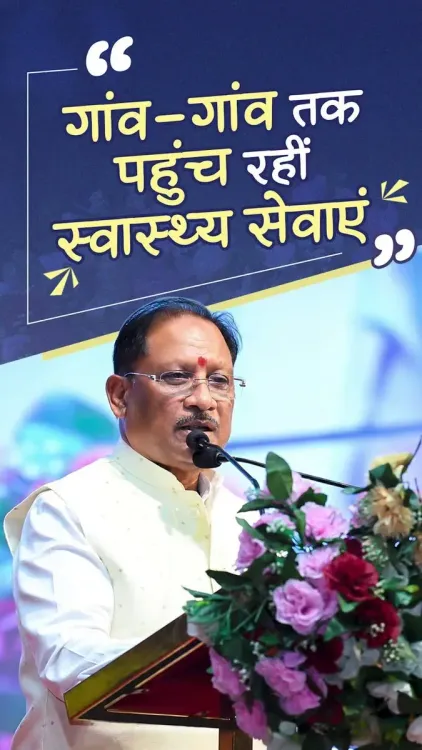
Chief Minister Vishnu Deo Sai says Chhattisgarh's Mukhyamantri Swasth Bastar Yojana is taking health teams door-to-door across Bastar's villages to screen and treat every resident, with most screenings nearly complete as of June 2026.
Key Takeaways
The Chief Minister's Office of Chhattisgarh announced on 13 June 2026 that the Mukhyamantri Swasth Bastar Yojana is actively delivering healthcare across Bastar division .
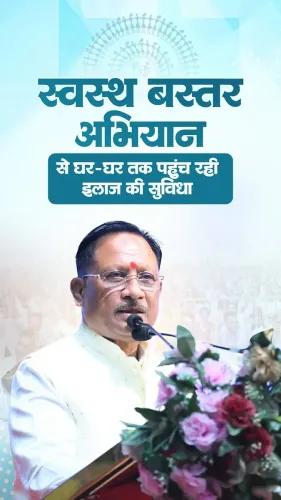
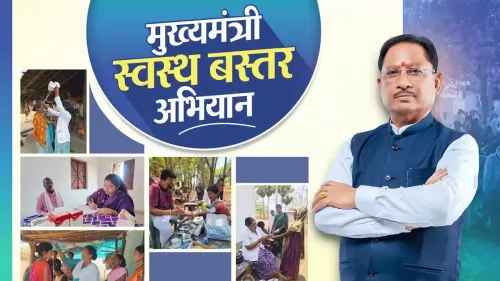
Health department teams are conducting door-to-door screenings in villages across Bastar, examining every individual and ensuring necessary treatment.
CM Vishnu Deo Sai stated that the health screening of most residents would have been completed by the time of the announcement.
Bastar has a large tribal population and has historically faced acute barriers to healthcare access, including conflict-related disruption.
The initiative fits a broader pattern of door-to-door health drives in tribal and remote districts across central and eastern India.
Follow-up treatment, specialist referrals, and integration with national health schemes such as Ayushman Bharat will determine the programme's long-term impact.
The Chief Minister's Office of Chhattisgarh announced on Saturday, 13 June 2026 that the state government is actively extending healthcare to every resident of Bastar through the Mukhyamantri Swasth Bastar Yojana, with health department teams conducting door-to-door screenings and ensuring treatment across villages in the region.
Context
In a statement attributed to Chief Minister Vishnu Deo Sai, the government said health teams are reaching gaon-gaon aur ghar-ghar (village to village and house to house) to examine every individual and provide necessary treatment. CM Sai expressed satisfaction that 'the health screening of most people would have been completed by now,' calling the initiative 'an important and commendable step towards building a healthy Bastar.'
Bastar, a southern division of Chhattisgarh, encompasses a predominantly tribal population that has historically faced significant barriers to healthcare access, including poor road connectivity, a shortage of medical personnel, and decades of disruption linked to Left-Wing Extremism in the region.
Policy Backdrop
Targeted health outreach in tribal belts is not new to Chhattisgarh. Earlier administrations ran mobile medical units and haat-bazaar clinics since the early 2010s to serve remote communities. The current BJP government under CM Sai, who assumed office in December 2023, has framed the Mukhyamantri Swasth Bastar Yojana as a flagship welfare initiative specifically designed for Bastar's geography and demographics.
Across central and eastern India, state governments have increasingly deployed door-to-door screening drives to detect both communicable and non-communicable diseases in tribal and remote populations. Chhattisgarh's Bastar drive fits within this broader pattern, while also serving the government's stated goal of integrating welfare delivery into districts that were long affected by conflict.
Stakeholders and Impact
The primary beneficiaries are tribal and rural households across Bastar division, which includes districts such as Bastar, Kondagaon, Kanker, Narayanpur, Dantewada, Sukma and Bijapur. Health workers — auxiliary nurse midwives, ASHA workers, and district health teams — are the frontline implementers, conducting screenings and referrals at the household level.
For communities where visiting a government health facility often requires travelling long distances, a home-based screening model can meaningfully improve early detection of diseases and maternal and child health outcomes. The scheme also carries symbolic weight as an assertion of state presence in areas where governance delivery has historically been contested.
What's Next
The government has indicated that a majority of screenings are nearing completion, suggesting the current phase of the drive is in its final stages. Attention will now shift to whether identified cases receive follow-up treatment and specialist referrals, and how the scheme integrates with national programmes such as Ayushman Bharat or state health insurance frameworks.
Official coverage data, health outcome metrics, and any formal announcement of the scheme's next phase from Bastar division will be closely watched as indicators of whether the initiative translates into measurable improvements in public health for one of Chhattisgarh's most underserved regions.
Point of View
Particularly referral pathways and treatment outcomes. The scheme also signals an intent to compete on welfare delivery metrics in a region where the BJP is consolidating its political base among tribal voters. Whether the programme produces verifiable health data will determine if it becomes a replicable model or remains a one-cycle outreach exercise.
NationPress
27 Oct 2026
Frequently Asked Questions
What is Mukhyamantri Swasth Bastar Yojana?
Mukhyamantri Swasth Bastar Yojana is a Chhattisgarh government health scheme under which state health department teams visit villages and households across Bastar division to screen every resident and provide necessary medical treatment.
Who announced the Mukhyamantri Swasth Bastar Yojana update?
Chief Minister Vishnu Deo Sai announced the update through the official Chief Minister's Office of Chhattisgarh on 13 June 2026, stating that most screenings in Bastar were nearing completion.
Why is healthcare access a challenge in Bastar?
Bastar is a predominantly tribal region in southern Chhattisgarh with poor road connectivity, a shortage of medical personnel, and decades of disruption linked to Left-Wing Extremism, all of which have historically limited residents' access to health services.
How does the Bastar health drive work?
Health department teams, including ASHA workers and district health staff, travel to individual villages and homes across Bastar division to conduct physical health screenings and ensure that those who need treatment receive it.
Will Mukhyamantri Swasth Bastar Yojana be linked to Ayushman Bharat?
The government has not officially confirmed integration with Ayushman Bharat as of the June 2026 announcement, but analysts expect future phases may align with national health insurance frameworks for seamless treatment coverage.