CM Sai's Vision Turns Chhattisgarh Villages Into Tourism Hubs
Synopsis
The Chhattisgarh CMO on 30 May 2026 announced that CM Vishnu Deo Sai's home-stay policy and Tourism Village initiative are transforming tribal villages into centres of tourism and livelihood, benefiting rural families, youth, and women's self-help groups.
Key Takeaways
CM Vishnu Deo Sai has articulated a three-pillar vision: heritage preservation, nature conservation, and rural prosperity through tourism.
The state's Home-Stay Policy channels tourism revenue directly to rural households, tribal youth, and women self-help groups.
The Tourism Village initiative designates specific villages for experiential tourism built around tribal customs, cuisine, and natural landscapes.
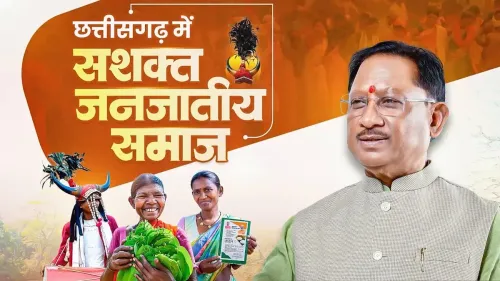
Chhattisgarh has over 30 per cent tribal population, with regions like Bastar offering a distinct cultural and ecological draw for domestic and international visitors.
The model aligns with national Swadesh Darshan and post-2020 sustainable tourism guidelines, emphasising community ownership and low-impact infrastructure.
Expansion of the home-stay network to additional blocks and the release of income and visitor data are the key developments to watch.
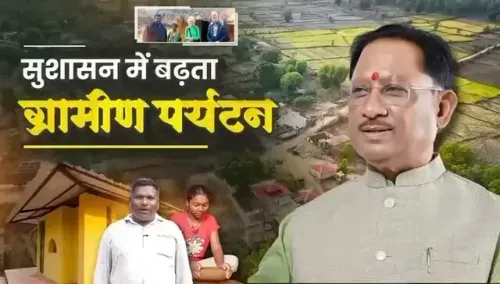
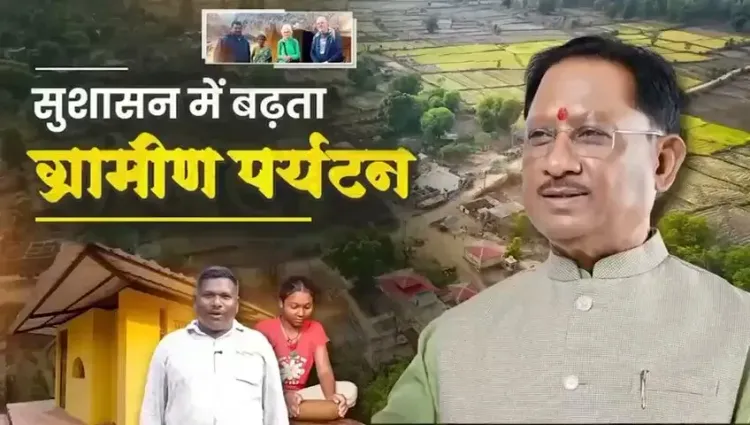
The Chief Minister's Office of Chhattisgarh on Saturday, 30 May 2026, highlighted how the state's villages are emerging as new centres of tourism, culture, and livelihood under the vision of Chief Minister Vishnu Deo Sai, with the government's home-stay policy and Tourism Village initiative driving economic opportunity for rural families, tribal youth, and women's self-help groups.
Context
The official post states: 'छत्तीसगढ़ के गांव अब पर्यटन, संस्कृति और आजीविका के नए केंद्र बन रहे हैं' ('The villages of Chhattisgarh are now becoming new centres of tourism, culture, and livelihood'). It credits the state's rich tribal traditions, natural beauty, folk culture, and warm rural lifestyle with drawing tourists from across India and abroad. The post frames CM Sai's vision around three pillars: safeguarding heritage, conserving nature, and opening new doors of prosperity in villages.
Policy Backdrop
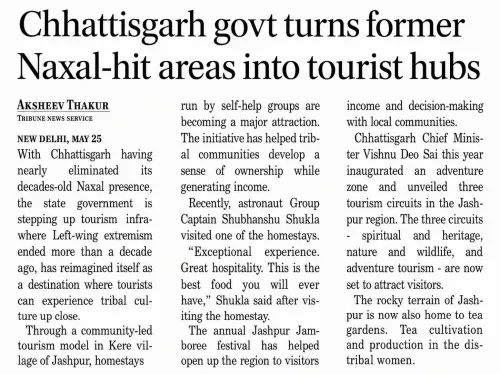
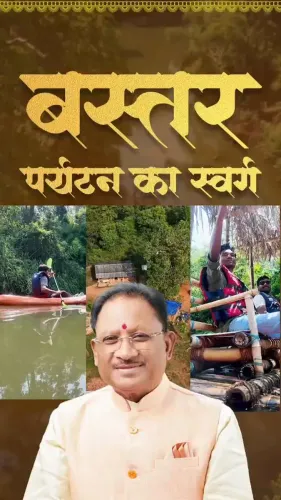
At the heart of this push is the state's Home-Stay Policy, which enables rural households to host visitors and earn supplementary income while showcasing local traditions, crafts, and cuisine. Running alongside it is the Tourism Village initiative, which designates select villages for experiential tourism centred on tribal customs and natural landscapes. Chhattisgarh, with over 30 per cent of its population belonging to tribal communities and dense forest belts including the iconic Bastar region, offers a distinct canvas for this model.
The approach aligns with the national Swadesh Darshan scheme launched in 2014, which supported thematic tourism circuits including tribal and rural routes across Indian states. Post-2020 sustainable tourism guidelines from the central government further encouraged low-impact, community-owned infrastructure in Scheduled Areas — a direction Chhattisgarh's current model explicitly follows.
Stakeholders and Impact
The primary beneficiaries identified in the post are rural families, tribal youth, and women self-help groups, all of whom gain new income and employment avenues through the home-stay network and village tourism circuits. By anchoring economic activity in local ownership, the model aims to prevent the displacement of communities that often accompanies large-scale resort or infrastructure-led tourism. Several other Indian states have pursued similar community-based rural tourism strategies in tribal belts, but Chhattisgarh's emphasis on cultural authenticity and ecological sensitivity is positioned as a differentiator on the national tourism map.
The integration of tribal culture, local experiences, and natural heritage into a single destination proposition is described in the post as an 'innovative model' (अभिनव मॉडल) that is giving Chhattisgarh a distinctive identity in tourism.
What's Next
The government's stated direction points toward expanding the home-stay network and deepening the Tourism Village programme across more blocks and districts. Observers will watch for the release of visitor statistics and household income data from participating villages, which would allow an evidence-based assessment of the model's reach. If the programme scales as envisioned, Chhattisgarh could serve as a reference case for other states seeking to blend tribal heritage preservation with grassroots economic decentralisation in Scheduled Areas.
Point of View
CM Sai is also signalling a social equity dimension ahead of what remains a politically competitive landscape in Scheduled Areas. The convergence with central schemes like Swadesh Darshan positions the state to attract matching funds and national visibility. The real test will be whether measurable income gains at the household level materialise and are publicly documented.
NationPress
19 Sept 2026
Frequently Asked Questions
What is the Chhattisgarh Home-Stay Policy?
The Chhattisgarh Home-Stay Policy is a state government scheme that allows rural households to register as accommodation providers for tourists, earning supplementary income while offering visitors an authentic experience of local tribal culture, food, and lifestyle.
What are Tourism Villages in Chhattisgarh?
Tourism Villages are government-designated villages in Chhattisgarh selected for experiential tourism focused on tribal customs, traditional cuisine, folk culture, and natural surroundings, forming the core of the state's rural tourism model.
Who benefits from Chhattisgarh's rural tourism scheme?
The primary beneficiaries are rural families, tribal youth, and women's self-help groups, who gain income and employment through home-stays, guided experiences, and local craft and food enterprises linked to the tourism circuit.
How does Chhattisgarh's tribal tourism connect to national schemes?
The state's approach aligns with the central government's Swadesh Darshan scheme, which since 2014 has supported thematic tourism circuits including tribal routes, and with post-2020 sustainable tourism guidelines encouraging community-owned, low-impact tourism in Scheduled Areas.
Which areas of Chhattisgarh are known for tribal tourism?
The Bastar region is the most prominent area associated with Chhattisgarh's tribal heritage and eco-tourism, but the Tourism Village initiative aims to extend this model to rural communities across the state.