CM Sai Highlights Dhudmaras as Bastar Tourism Model
Synopsis
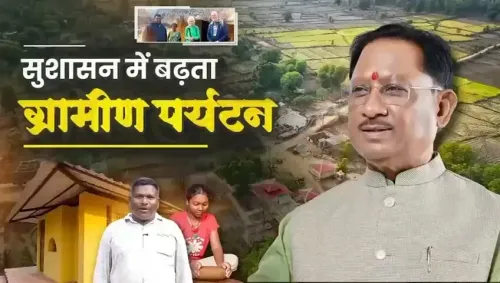
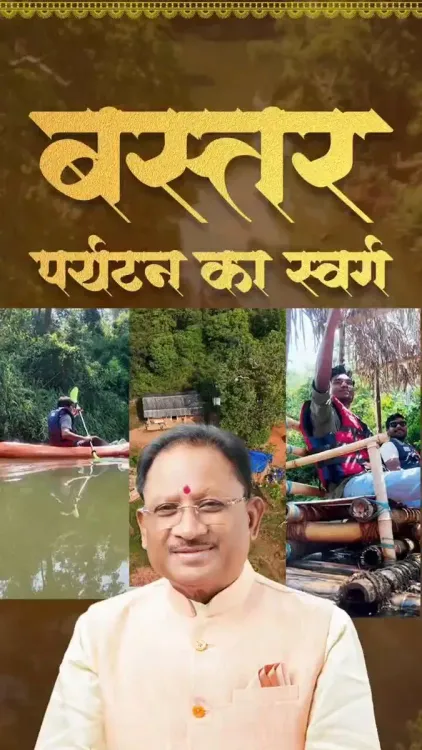
Chhattisgarh CM Vishnu Deo Sai on 25 May 2026 spotlighted Dhudmaras village in Bastar as a model of rural tourism growth, saying the state's home-stay policy has generated local employment and brought the tribal region global recognition as a tourism destination.
Key Takeaways
CM Vishnu Deo Sai posted on 25 May 2026 highlighting Dhudmaras village in Bastar as a rural tourism success story.
The state's home-stay policy has been credited with developing quality rural accommodation and generating local employment in the village.
Bastar has historically been a focus of post-insurgency economic diversification, with tourism identified as a key driver.
The central government's Swadesh Darshan scheme (launched 2014-15 ) laid the national policy foundation for tribal tourism circuits in Chhattisgarh.
Primary beneficiaries are tribal communities and rural entrepreneurs who earn supplementary income through homestay hosting.
The Dhudmaras model may be extended to additional villages in the 2026-27 budget cycle .
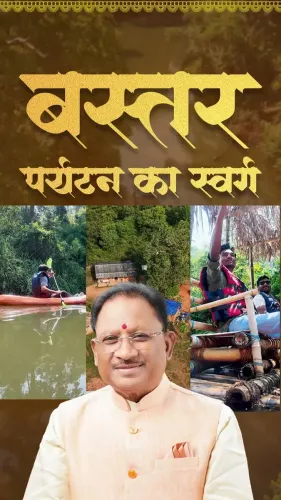
Chhattisgarh Chief Minister Vishnu Deo Sai on Monday, 25 May 2026, highlighted the transformation of Dhudmaras village in Bastar into a rural tourism destination, crediting his government's home-stay policy with generating local employment and putting the region on the global tourism map.
Context
In his post, CM Sai wrote: 'सुशासन सरकार में संभावनाएं हो रहीं साकार' ('Under good governance, possibilities are being realised'). He described Dhudmaras as having become a 'global identity of Bastar tourism', with the state government developing tourism infrastructure to promote local employment and the tourism industry.
The Chief Minister further noted that the state's home-stay policy has enabled the development of quality rural accommodation facilities in the village, calling Dhudmaras a 'confluence of nature, culture and self-reliance' that presents a 'new picture of Bastar to the world'.
Policy Backdrop
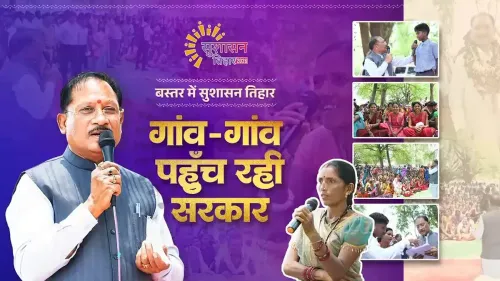
Bastar, a forested region in southern Chhattisgarh long associated with tribal culture and, historically, Left-wing insurgency, has been a focus of economic diversification efforts by successive state governments. Promoting tourism infrastructure in the region is seen as a strategy to channel revenue to local communities and reduce dependence on a conflict-affected economy.
The state's home-stay policy sits within a broader national framework. The central government's Swadesh Darshan scheme, launched in 2014-15, funded thematic tourism circuits across India, including tribal circuits in Chhattisgarh, providing a policy foundation on which state-level initiatives have been built. Community homestays are designed to ensure tourism revenue flows directly to rural households rather than outside operators.
Stakeholders and Impact
Tribal communities and rural entrepreneurs in and around Dhudmaras are the primary beneficiaries of the home-stay model, which offers households a supplementary income stream from tourism. The model also preserves local culture by positioning it as an attraction rather than a barrier to development.
For the Chhattisgarh government, the success of Dhudmaras provides a replicable template. State tourism officials have been watching visitor numbers and employment figures in Bastar's homestay clusters as indicators of whether the model can be scaled to additional villages.
What's Next
The state tourism department's data on visitor footfall and employment generated in Bastar's homestay clusters is expected to inform decisions in the 2026-27 budget cycle, with the possibility of extending the Dhudmaras model to other villages in the region. CM Sai's public emphasis on the village signals continued political priority for rural tourism as a pillar of Chhattisgarh's economic strategy under the current BJP government.
If the home-stay model demonstrates measurable employment gains at scale, it could strengthen the case for deeper integration of tribal eco-tourism into the state's mainstream development planning.
Point of View
Framing a single village's tourism development as proof of the BJP government's 'good governance' dividend in Chhattisgarh. Bastar carries symbolic weight beyond economics — it is the region most associated with the Maoist insurgency that defined the state's security narrative for two decades, so showcasing it as a thriving tourism destination serves a dual purpose of normalisation and development optics. The home-stay model also aligns neatly with the central government's self-reliance and rural entrepreneurship agenda, allowing the state leadership to demonstrate ideological coherence with New Delhi. Whether the Dhudmaras example can be systematically replicated across Bastar's hundreds of villages will be the real test of the policy's depth.
NationPress
10 Oct 2026
Frequently Asked Questions
What is Dhudmaras village and why is it in the news?
Dhudmaras is a village in Bastar district, Chhattisgarh, that has been developed as a rural tourism destination. It is in the news after CM Vishnu Deo Sai highlighted it on 25 May 2026 as a model of how the state's home-stay policy is generating local employment and tourism growth.
What is the Chhattisgarh home-stay policy?
The Chhattisgarh home-stay policy is a state government initiative that encourages rural families to offer accommodation to tourists, channelling tourism revenue directly to local households while preserving the village's natural and cultural character.
How has Bastar's tourism developed under the BJP government in Chhattisgarh?
Since the BJP government led by CM Vishnu Deo Sai took office in December 2023, it has emphasised tourism infrastructure in Bastar as part of economic diversification, building on the central Swadesh Darshan scheme's tribal circuits and expanding community homestay facilities.
What is the Swadesh Darshan scheme and how does it relate to Bastar?
Swadesh Darshan is a central government scheme launched in 2014-15 to fund thematic tourism circuits across India. Chhattisgarh's Bastar region was included in the tribal tourism circuit, providing national funding that supported the state's broader rural tourism development efforts.
Will the Dhudmaras home-stay model be expanded to other villages in Bastar?
State tourism officials are monitoring visitor numbers and employment data in Bastar's homestay clusters, and a possible expansion of the model to additional villages is expected to be considered during the 2026-27 budget cycle.