CM Sai: Chhattisgarh villages rising as tourism hubs
Synopsis
Chhattisgarh Chief Minister Vishnu Deo Sai says the state's home-stay policy is transforming tribal villages into tourism and livelihood centres, benefiting rural families, youth, and women's self-help groups while preserving indigenous culture and nature.
Key Takeaways
CM Vishnu Deo Sai announced on 30 May 2026 that Chhattisgarh villages are becoming new hubs of tourism, culture, and livelihood.
The state's home-stay policy is the core instrument, enabling local households to host tourists and earn directly from visitor spending.
Primary beneficiaries identified are rural families, tribal youth, and women's self-help groups .
The model integrates tribal culture, folk traditions, and nature-based experiences to differentiate Chhattisgarh on the national tourism map.
The initiative aligns with the Swadesh Darshan scheme and the broader Atmanirbhar Bharat framework for rural economic diversification.
Key metrics to watch include home-stay registrations, tourist footfall in tourism villages, and future budget provisions for tribal tourism infrastructure.
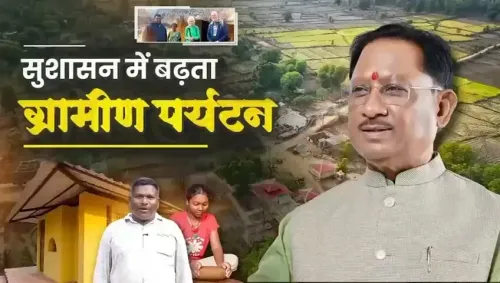
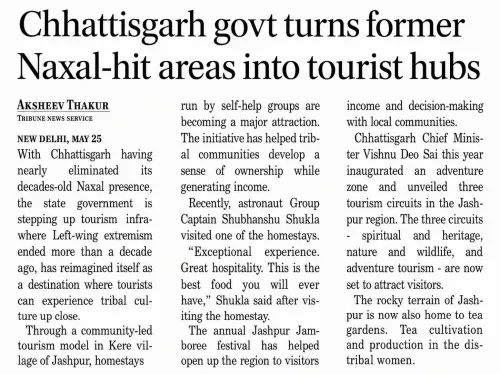
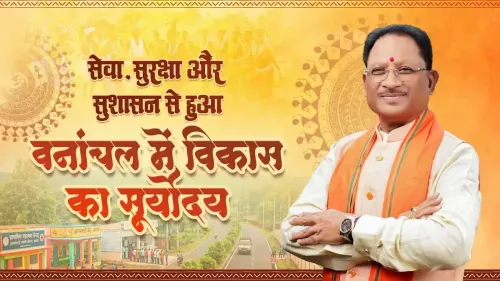
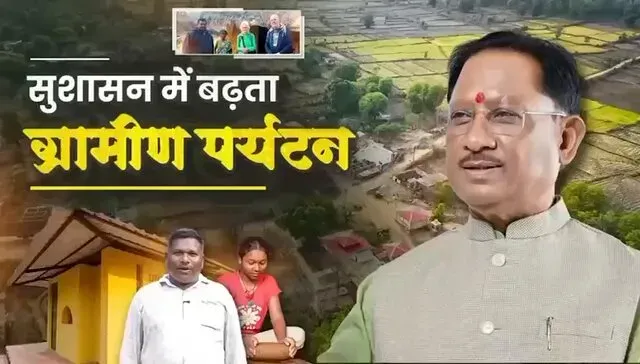
Chhattisgarh Chief Minister Vishnu Deo Sai on Saturday, 30 May 2026, highlighted how villages across the state are emerging as new centres of tourism, culture, and livelihood under his government's 'good governance' push, pointing specifically to a home-stay policy that is generating income for rural families, tribal youth, and women's self-help groups.
Context
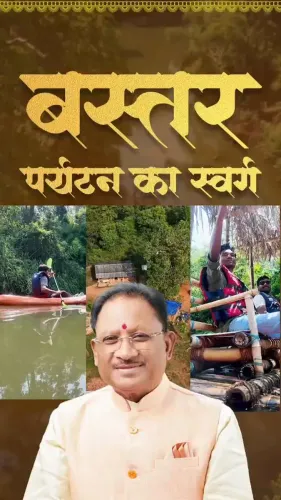
In a post on X, CM Sai said, 'सुशासन सरकार के प्रयासों से छत्तीसगढ़ के गांव अब पर्यटन, संस्कृति और आजीविका के नए केंद्र बन रहे हैं' ('Through the efforts of the good-governance government, villages of Chhattisgarh are now becoming new centres of tourism, culture, and livelihood'). He credited the state's rich tribal traditions, natural beauty, folk culture, and rural lifestyle for attracting visitors from across the country and the world.
The Chief Minister added that the government's vision is threefold: safeguard heritage, conserve nature, and open new doors of prosperity in villages — describing this as 'एक नए युग की ओर' ('towards a new era') for tourism in the state.
Policy Backdrop
Chhattisgarh's home-stay policy is the centrepiece of this push, enabling local households to register as visitor accommodation units and earn directly from tourist footfall. The model bundles accommodation with exposure to tribal culture, local cuisine, and nature-based experiences, positioning villages as destinations rather than transit points.
The initiative aligns with the Swadesh Darshan scheme launched by the Union Ministry of Tourism in 2014-15, which funds thematic circuits — including tribal and rural tourism — across states. Chhattisgarh, with a tribal population exceeding 30 per cent of its total, holds significant potential under such frameworks, given its dense forests, waterfalls, and living indigenous cultural practices.
Across India, multiple states have adopted home-stay and tourism-village models under the broader Atmanirbhar Bharat framework to curb rural-to-urban migration and diversify local economies.
Stakeholders and Impact
Rural families, tribal youth, and women self-help groups are identified as the primary beneficiaries of the home-stay policy. By converting existing homes into visitor lodgings, participants avoid large capital investment while tapping a growing market for authentic, off-the-beaten-path travel experiences.
The 'Tourism Village' model described by CM Sai also carries cultural preservation value: when tribal traditions, crafts, and folk performances become economic assets, communities gain a material incentive to sustain them. This dual function — livelihood creation alongside heritage protection — is a recurring argument in sustainable-tourism policy circles.
Women's self-help groups stand to benefit not only from hosting income but from ancillary opportunities in food, handicrafts, and guided cultural experiences, potentially expanding their economic agency beyond traditional agriculture.
What's Next
The effectiveness of the programme will be measured by concrete indicators: the number of home-stay units formally registered, tourist footfall in designated tourism villages, and whether the state's next budget allocates additional funds for tribal tourism infrastructure such as connectivity, sanitation, and visitor interpretation centres.
If the model scales, Chhattisgarh could strengthen its position on India's cultural and eco-tourism map, drawing visitors who currently bypass the state in favour of more established destinations. The broader test will be whether income gains reach the most marginalised tribal households or remain concentrated among better-connected rural families.
Point of View
The BJP-led state government is also signalling to its tribal voter base that development need not come at the cost of cultural identity — a politically potent argument in a state where tribal communities are a decisive electoral bloc. The home-stay model, if it scales equitably, could serve as a replicable template for other tribal-majority states navigating the tension between economic development and heritage preservation. The real test, however, lies in whether the programme's benefits penetrate the most marginalised communities or stall at the first layer of rural connectivity.
NationPress
23 Sept 2026
Frequently Asked Questions
What is Chhattisgarh's home-stay policy?
Chhattisgarh's home-stay policy allows rural and tribal households to register their homes as tourist accommodation, earning income by hosting visitors and offering cultural experiences. The scheme targets rural families, tribal youth, and women's self-help groups as primary beneficiaries.
What did CM Vishnu Deo Sai say about Chhattisgarh tourism?
CM Vishnu Deo Sai said that through his government's efforts, Chhattisgarh's villages are becoming new centres of tourism, culture, and livelihood, with the state's tribal traditions and natural beauty attracting domestic and international tourists.
How does Chhattisgarh's tribal tourism model work?
The model bundles home-stay accommodation with tribal cultural experiences, folk traditions, local cuisine, and nature-based activities, positioning villages as standalone destinations and giving communities a financial stake in preserving their heritage.
What is the Swadesh Darshan scheme and how does it relate to Chhattisgarh?
The Swadesh Darshan scheme, launched by the Union Ministry of Tourism in 2014-15, funds thematic tourism circuits including tribal and rural routes across India. Chhattisgarh, with over 30 per cent tribal population, is a natural fit for the scheme's tribal circuit component.
Who benefits from village tourism in Chhattisgarh?
Rural families, tribal youth, and women's self-help groups are the identified beneficiaries, gaining income from hosting tourists and from ancillary activities such as food, handicrafts, and guided cultural experiences.