CM Sai: Development Reaching Chhattisgarh's Remote Forest Belts
Synopsis
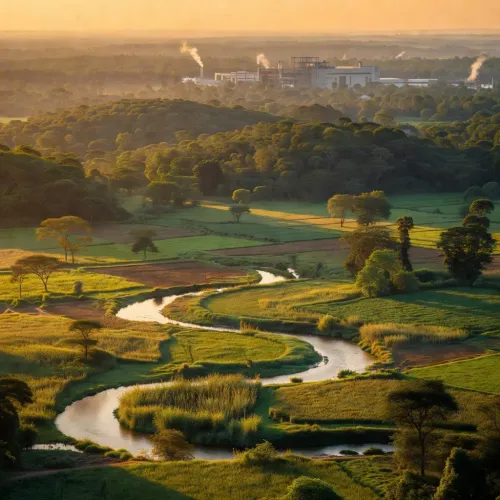
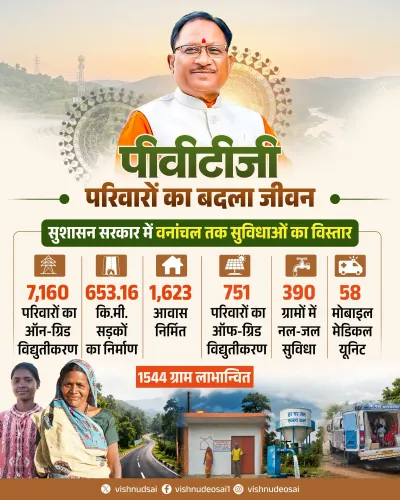
Chief Minister Vishnu Deo Sai says his government's 'Sushasan' agenda is reaching Chhattisgarh's most remote tribal forest belts, with digital connectivity, infrastructure and tourism opening new opportunities for forest dwellers and indigenous communities.
Key Takeaways
CM Vishnu Deo Sai declared on 26 May 2026 that development is now reaching the remote forest regions of Chhattisgarh .
The government cites expansion of digital connectivity , mobility infrastructure and basic amenities as key drivers of change.
The post frames the transformation as delivering 'trust, opportunity and self-respect' to forest dwellers — beyond physical infrastructure.
Tribal tourism is highlighted as a new growth area, leveraging the natural beauty and cultural heritage of forest regions.
Chhattisgarh has over 30 per cent tribal population; the BJP government has prioritised last-mile welfare delivery since taking office in December 2023 .
Analysts will track budget allocations for Bastar and Surguja divisions as a measure of these commitments.
Chhattisgarh Chief Minister Vishnu Deo Sai on Tuesday, 26 May 2026, declared that welfare schemes of his government are now delivering tangible benefits to the most remote forest regions of the state, highlighting gains in digital connectivity, infrastructure, and tribal tourism as markers of a new era of inclusive growth.
Context
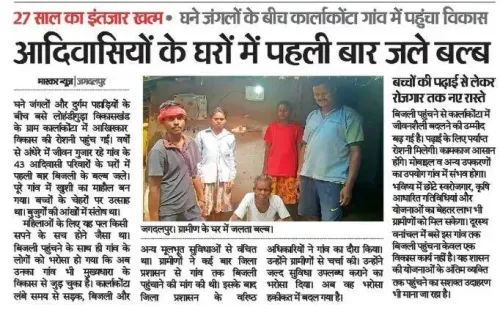
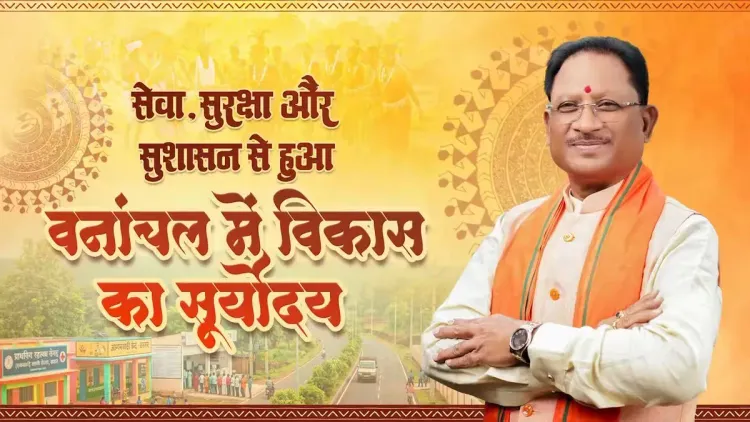
Posting in Hindi on X, CM Sai wrote that a 'new sun of development is rising in the remote forest belts of Chhattisgarh.' He stated: 'डिजिटल कनेक्टिविटी, आवागमन और मूलभूत सुविधाओं के विस्तार से लोगों के जीवन में समृद्धि और खुशहाली आ रही है' — 'Through the expansion of digital connectivity, mobility and basic amenities, prosperity and happiness are coming into people's lives.' The post was accompanied by a video, underscoring the government's effort to visually document progress in these areas.
The Chief Minister also noted that the change is not confined to physical infrastructure alone. He described it as 'the beginning of a new era of trust, opportunity and self-respect in the lives of forest dwellers' — a framing that positions the current administration's work as a social and cultural transformation, not merely a development exercise.
Policy Backdrop
The BJP government, which came to power in December 2023 after winning the state assembly elections, had pledged accelerated welfare delivery and connectivity investment in tribal districts that were previously governed by the Congress. Chhattisgarh has a tribal population exceeding 30 per cent of its total residents and contains some of central India's densest forest cover, including the Bastar and Surguja divisions.
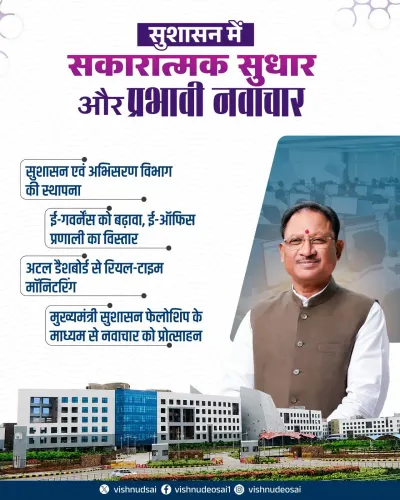
Successive state governments have sought to extend roads, mobile networks and welfare entitlements into remote forest belts, partly to address the long-running left-wing extremism challenge and partly to lift living standards in some of India's most underserved districts. The current administration's emphasis on 'Sushasan' (good governance) as a governing philosophy carries forward this legacy with a sharper focus on last-mile delivery and digital inclusion.
National programmes for aspirational districts and cultural economy promotion in central India have reinforced state-level efforts, making tribal tourism a growing policy priority alongside connectivity and basic services.
Stakeholders and Impact
The primary beneficiaries identified by CM Sai are tribal communities and forest dwellers across Chhattisgarh's interior regions. The post specifically highlights the dual dividend of infrastructure expansion: improved daily livelihoods through better access to services, and a new identity for these regions on the tourism map, drawing on their natural beauty and rich tribal culture.
For tribal communities, digital connectivity can mean access to government welfare portals, banking services, and market linkages that were previously unavailable. Tourism development, if sustainably managed, offers an additional income stream that preserves rather than displaces indigenous culture — a balance that policymakers and civil society groups continue to monitor closely.
What's Next
Observers will watch state budget allocations for rural connectivity schemes and any new tourism circuits formally announced for the Bastar and Surguja divisions as concrete indicators of the government's commitments translating into funded programmes. The BJP government's ability to demonstrate measurable outcomes in these regions will be central to its political narrative ahead of future electoral cycles in Chhattisgarh. Progress on reducing infrastructure deficits in forest belts will also be a key benchmark for the state's aspirational district performance under national frameworks.
Point of View
Long associated with deprivation and left-wing extremism. By coupling infrastructure gains with the language of dignity and self-respect, the administration is making a political argument that development in these regions is qualitatively different under its watch. The emphasis on digital connectivity and tribal tourism also aligns with the national government's aspirational districts framework, positioning the state as a model implementer. Whether the narrative holds will depend on verifiable, on-ground outcomes in districts like Bastar and Surguja in the months ahead.
NationPress
10 Oct 2026
Frequently Asked Questions
What did Chhattisgarh CM Vishnu Deo Sai say about tribal development?
CM Vishnu Deo Sai said that his government's welfare schemes are bringing digital connectivity, improved mobility and basic amenities to the remote forest regions of Chhattisgarh, ushering in a new era of prosperity and self-respect for tribal and forest-dwelling communities.
What is the BJP government's 'Sushasan' agenda in Chhattisgarh?
'Sushasan,' meaning good governance, is the governing philosophy of the BJP administration that took office in Chhattisgarh in December 2023. It focuses on last-mile delivery of welfare schemes, digital inclusion and infrastructure expansion in tribal and forest areas.
How is Chhattisgarh developing tribal tourism?
The state government is positioning Chhattisgarh's forest belts — including regions like Bastar and Surguja — as tourism destinations by leveraging their natural beauty and rich indigenous cultural heritage, alongside infrastructure improvements that make these areas more accessible.
What percentage of Chhattisgarh's population is tribal?
Tribal communities account for over 30 per cent of Chhattisgarh's total population, making the state one of India's most significant tribal-majority states and a key focus for central and state government welfare programmes.
When did the BJP government come to power in Chhattisgarh?
The BJP won the Chhattisgarh state assembly elections and formed the government in December 2023, with Vishnu Deo Sai sworn in as Chief Minister.