CM Sai Highlights PVTG Welfare Push in Chhattisgarh
Synopsis
Chhattisgarh Chief Minister Vishnu Deo Sai on 18 June 2026 highlighted welfare outreach to PVTG settlements, citing delivery of roads, housing, water and health services to remote forest hamlets long deprived of basic facilities, under the 'double engine government' framework.
Key Takeaways
Chhattisgarh CM Vishnu Deo Sai posted on 18 June 2026 highlighting welfare delivery to PVTG (Particularly Vulnerable Tribal Group) settlements.
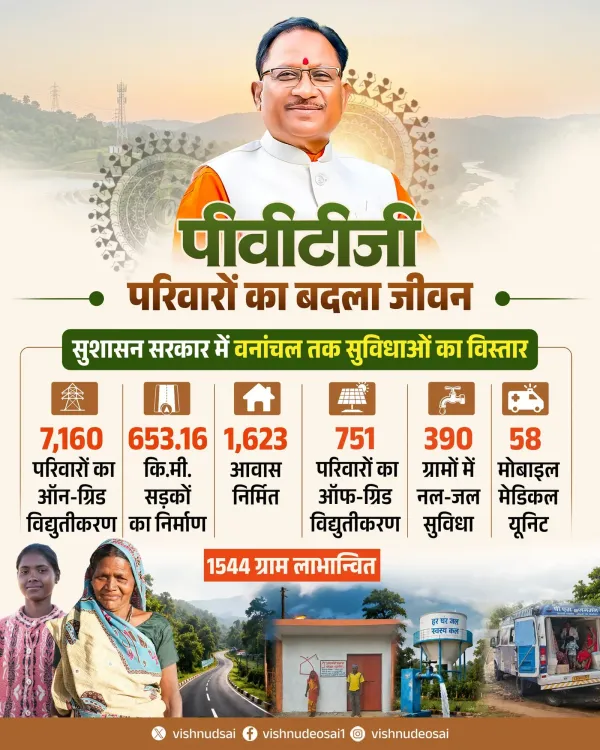
The post cites extension of roads, electricity, pucca housing, clean drinking water and health services to remote forest habitations.
The central PM JANMAN scheme, launched in November 2023 , targets all 75 PVTG communities across India with basic infrastructure saturation.
Chhattisgarh hosts PVTGs including the Baiga , Birhor and Abhuj Maria communities in its remote forest blocks.
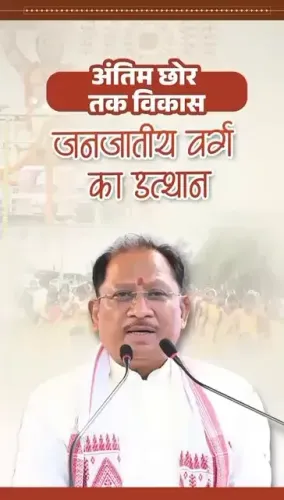
CM Sai reaffirmed the government's resolve that no family should remain outside the mainstream of development.
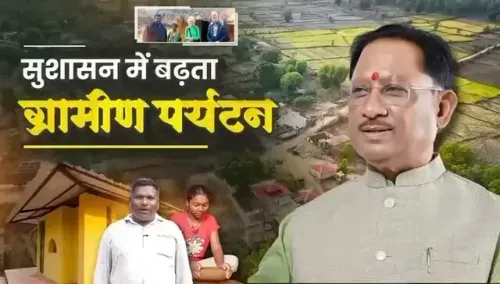
Chhattisgarh Chief Minister Vishnu Deo Sai on Thursday, 18 June 2026 highlighted the state government's outreach to Particularly Vulnerable Tribal Group (PVTG) settlements, saying welfare schemes of the 'double engine government' are now delivering roads, electricity, housing, clean drinking water and health services to hamlets that had long been deprived of basic facilities.
Context
In a post on X, CM Sai wrote in Hindi: 'दूरस्थ वनांचलों तक विकास की किरण, पीवीटीजी परिवारों के जीवन में नया विश्वास' — 'A ray of development reaching remote forest regions, new confidence in the lives of PVTG families.' He stated that thousands of PVTG families now lead more secure, dignified and comfortable lives, and reaffirmed the government's resolve that 'no family should be left behind from the mainstream of development.'
The post comes amid active implementation of central and state welfare programmes targeting India's 75 Particularly Vulnerable Tribal Groups — communities characterised by pre-agricultural livelihoods, low literacy and geographical isolation.
Policy Backdrop
The central government launched the Pradhan Mantri Janjatiya Unnat Gram Abhiyan (PM JANMAN) in November 2023, following its announcement in the Union Budget 2023-24, to saturate PVTG habitations with roads, pucca housing, piped water, electricity and health infrastructure. The scheme covers all 75 PVTG communities across India.
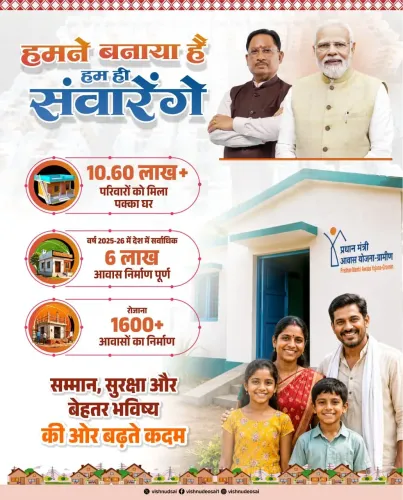
Chhattisgarh is home to several PVTGs including the Baiga, Birhor and Abhuj Maria communities, concentrated in remote forest blocks of the state. Since the BJP returned to power in Chhattisgarh in December 2023 under CM Sai, the state government has sought to align its own welfare delivery with central missions such as PM JANMAN and Pradhan Mantri Awaas Yojana-Gramin (PMAY-G) to accelerate last-mile coverage.
The phrase 'double engine government' — used by CM Sai — refers to the BJP's formulation of coordinated governance when the same party holds power at both the state and central levels, enabling faster convergence of funds and implementation.
Stakeholders and Impact
PVTG families in Chhattisgarh's deep forest settlements are the primary beneficiaries of the push. These communities have historically been among the most marginalised in India, often located in areas with poor road connectivity, limited healthcare access and high rates of poverty.
The delivery of pucca housing, clean drinking water and electricity to such habitations carries significance beyond physical infrastructure — it addresses longstanding gaps in social security and dignity for communities that national welfare frameworks had struggled to reach consistently. State and district administration, along with tribal welfare departments, are the key implementation agencies.
What's Next
Attention will now turn to quarterly progress reports on PM JANMAN saturation targets in Chhattisgarh's PVTG villages, as well as any supplementary allocations in the state budget for 2026-27 directed at tribal welfare. The government's stated resolve to ensure every citizen lives with dignity will be measured against verifiable coverage data from remote forest blocks in the months ahead.
Point of View
Reinforcing party cohesion in messaging. The focus on PVTGs — India's most marginalised tribal communities — reflects a broader BJP strategy since 2023 of making last-mile welfare delivery to historically bypassed communities a visible governance priority. Whether the on-ground saturation of PM JANMAN targets matches the political messaging will be the key test of this narrative's credibility.
NationPress
18 Sept 2026
Frequently Asked Questions
Who are PVTGs and why are they significant in Chhattisgarh?
Particularly Vulnerable Tribal Groups (PVTGs) are 75 identified communities across India characterised by pre-agricultural livelihoods, low literacy and geographical isolation. Chhattisgarh is home to several PVTGs including the Baiga, Birhor and Abhuj Maria, concentrated in remote forest blocks of the state.
What is the PM JANMAN scheme?
PM JANMAN, or Pradhan Mantri Janjatiya Unnat Gram Abhiyan, was launched in November 2023 to saturate PVTG habitations across India with roads, pucca housing, piped water, electricity and health infrastructure. It was announced in the Union Budget 2023-24 and covers all 75 PVTG communities.
What did Chhattisgarh CM Vishnu Deo Sai say about PVTG welfare?
CM Sai stated that welfare schemes of the 'double engine government' are now delivering roads, electricity, pucca housing, clean drinking water and health services to remote forest settlements, and reaffirmed the resolve that no family should be left behind from the mainstream of development.
What does 'double engine government' mean?
'Double engine government' is a BJP formulation referring to coordinated governance when the same party holds power at both the state and central levels, enabling faster convergence of funds and scheme implementation.
Which tribal communities in Chhattisgarh benefit from PVTG welfare schemes?
The Baiga, Birhor and Abhuj Maria are among the PVTG communities in Chhattisgarh that are targeted under central and state welfare programmes including PM JANMAN and PMAY-Gramin.