PM Modi Meets Auckland Industry Leaders, Eyes Stronger India-New Zealand Ties
Synopsis
Prime Minister Narendra Modi met industry leaders in Auckland on 11 July 2026, calling for a stronger India-New Zealand economic partnership. The engagement signals fresh momentum on long-stalled bilateral trade ties, with businesses, innovators and youth identified as key beneficiaries of deeper Indo-Pacific cooperation.
Key Takeaways
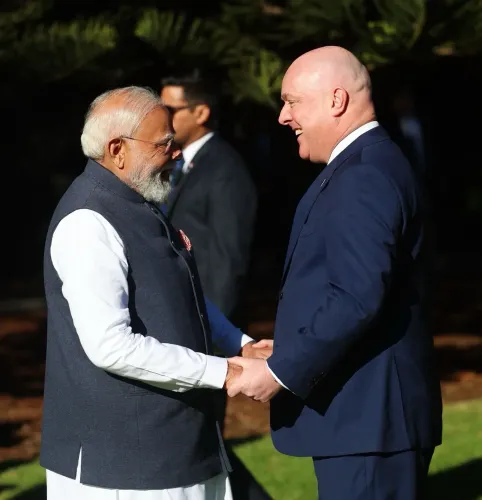
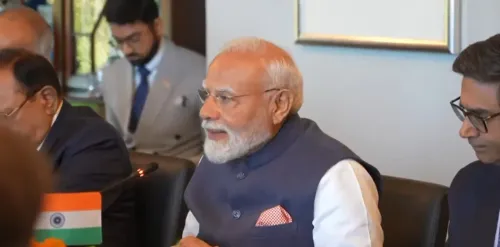
Prime Minister Narendra Modi interacted with industry leaders in Auckland on 11 July 2026 during a bilateral visit to New Zealand .
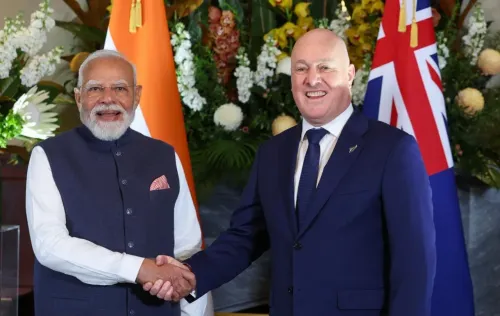
Modi called for a 'stronger economic partnership' that would create opportunities for 'businesses, innovators and our youth.' New Zealand Prime Minister Chris Luxon was tagged in the post, indicating coordinated bilateral messaging.
India and New Zealand first launched Free Trade Agreement negotiations in 2010 ; talks have remained inconclusive for over a decade.
New Zealand holds complementary strengths in agriculture, agri-tech, education and services that align with India's Indo-Pacific trade diversification goals.
The visit is being watched for any announcement on restarting the long-pending India-New Zealand FTA .
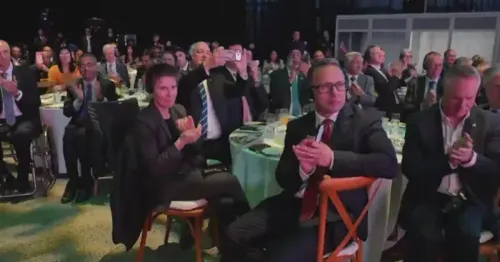
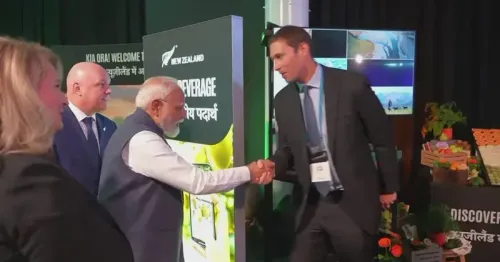
Prime Minister Narendra Modi met with business and industry leaders in Auckland on Saturday, 11 July 2026, underscoring India's intent to deepen economic ties with New Zealand as part of its broader Indo-Pacific engagement strategy.
Expressing his delight at the interaction, Modi said a 'stronger economic partnership between India and New Zealand will create new opportunities for businesses, innovators and our youth.' The meeting, held in New Zealand's largest commercial city, was attended by prominent industry figures and was acknowledged by New Zealand Prime Minister Chris Luxon, who was tagged in the post.
Context
Auckland serves as New Zealand's primary business hub, making it the natural venue for high-level bilateral economic engagement. Modi's outreach to the local industry community signals that the visit goes beyond diplomatic formality, targeting concrete commercial outcomes. The interaction brought together stakeholders from both nations to explore avenues for trade, investment and innovation-led collaboration.
Policy Backdrop
India and New Zealand launched negotiations for a bilateral Free Trade Agreement in 2010, but talks stalled and have remained inconclusive for over a decade. India, now the world's fifth-largest economy, has been actively pursuing diversified trade partnerships across the Indo-Pacific, including the landmark Economic Cooperation and Trade Agreement signed with Australia. New Zealand, with complementary strengths in agriculture, agri-tech, education and services, fits naturally within this framework of like-minded Indo-Pacific democracies.
The bilateral relationship has historically been modest in volume but carries significant potential given overlapping interests in dairy, education, technology and people-to-people links. Modi's Auckland engagement builds on a pattern of targeted bilateral outreach designed to unlock stalled frameworks and inject fresh momentum into economic ties.
Stakeholders and Impact
Indian businesses seeking market diversification and New Zealand exporters — particularly in agriculture, dairy and education services — stand to benefit most from renewed bilateral momentum. Youth entrepreneurs and innovators in both countries were specifically named by Modi as intended beneficiaries of a stronger partnership, reflecting the visit's emphasis on forward-looking, knowledge-economy collaboration.
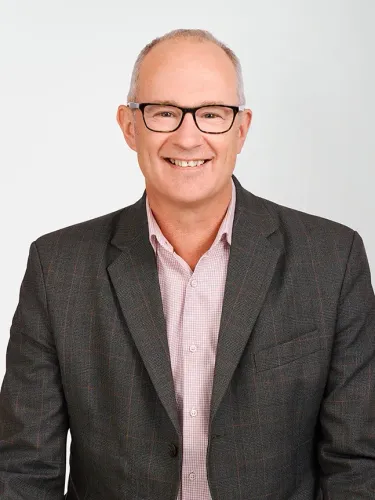
New Zealand Prime Minister Chris Luxon, who took office in 2023, has prioritised expanding trade and investment links with major economies. His acknowledgement in Modi's post indicates coordinated messaging from both governments around the Auckland engagement.
What's Next
Observers will watch closely for any announcement on restarting or concluding the long-pending India-New Zealand Free Trade Agreement, which would represent the most substantive outcome of the visit. Follow-up business council meetings and sector-specific working groups are also expected to be on the agenda. If the two sides signal a renewed negotiating timeline, it would mark a significant step in translating diplomatic warmth into binding economic architecture across the Indo-Pacific.
Point of View
Innovators and youth as beneficiaries, the messaging is calibrated to resonate with both domestic audiences and New Zealand's trade community. The tagging of Prime Minister Luxon suggests both governments are aligning on a joint narrative, possibly ahead of a concrete trade announcement. Set against the backdrop of the long-stalled FTA, this visit could serve as the political catalyst needed to restart a framework that has languished for over fifteen years.
NationPress
11 Jul 2026
Frequently Asked Questions
Why did PM Modi visit Auckland in July 2026?
PM Modi visited Auckland as part of a bilateral engagement with New Zealand, where he met industry leaders to explore stronger economic ties between the two countries, with a focus on trade, innovation and opportunities for youth.
What is the India-New Zealand Free Trade Agreement?
India and New Zealand launched negotiations for a bilateral Free Trade Agreement in 2010 to boost trade and investment, but talks stalled and have not been concluded as of 2026. Modi's Auckland visit has renewed focus on potentially restarting these negotiations.
Who is Chris Luxon and what is his role in India-New Zealand relations?
Chris Luxon has been Prime Minister of New Zealand since 2023. He has prioritised expanding trade and investment links with major economies, and was tagged by PM Modi in the post about the Auckland industry interaction, signalling close coordination between the two leaders.
How important is New Zealand as an economic partner for India?
New Zealand is a like-minded Indo-Pacific democracy with complementary strengths in agriculture, dairy, agri-tech, education and services. While bilateral trade volumes have historically been modest, the partnership carries significant growth potential, particularly as India diversifies its trade relationships across the Indo-Pacific.
What could be the outcome of PM Modi's Auckland business meeting?
Key outcomes to watch include a possible announcement on restarting India-New Zealand Free Trade Agreement negotiations, the formation of new business council working groups, and sector-specific collaboration in agriculture, technology and education.